
‘They think they can beat us into submission,’ Neha Bora says in Kolkata
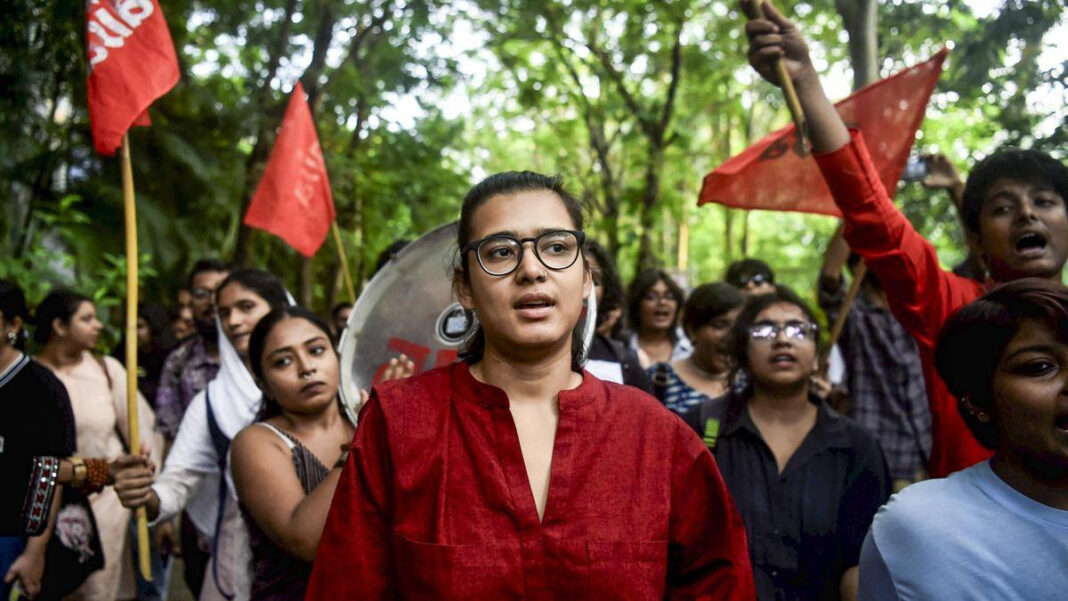
All India Students’ Association (AISA) national president Neha Bora on Monday accused authorities of attempting to crush dissent “into submission,” as students from multiple institutions convened at Jadavpur University in Kolkata to protest a widening crackdown on campus activism and what they described as a “voter crisis” across West Bengal and beyond. Participants at the convention called for action against Chief Election Commissioner Gyanesh Kumar, alleging disenfranchisement through recent electoral roll revisions.
Student convention targets crackdown on dissent
Students from the Satyajit Ray Film and Television Institute (SRFTI), the Indian Statistical Institute, Jadavpur University, and various student organisations gathered on October 5, 2026, citing what they termed repeated attacks on educational institutions and student voices. Speakers framed the meeting as a defence of democratic rights amid intensifying pressure on campuses.
“West Bengal has always defended itself and the entire country… It is now upon Bengal to defend not just itself but our country’s democracy,” Ms. Bora said, urging students and citizens to mobilise. She added that the mandate that had brought the Bharatiya Janata Party (BJP) to power in West Bengal had “proven to be a lie” and needed to be challenged. She further asserted that “people in power have been shown what it means to speak truth to power,” and warned that “even the highest authorities” could be brought to justice when people unite against wrongdoing.
Calls for action against the CEC over ‘voter crisis’
Delegates at the convention demanded action against Chief Election Commissioner Gyanesh Kumar over what they described as a “voter crisis” affecting West Bengal and other parts of the country. Ms. Bora accused authorities of designing measures to tighten control in the State. “They think they will rule Bengal with an iron hand; to do that, they designed something special and built the SIR [Special Intensive Revision]… The common people of the country have one power, it is the power to vote, but that has been stripped from us through a lie,” she said.
Monday’s appearance marked Ms. Bora’s first public address since she was detained on three consecutive days in Delhi during protests targeting the Chief Election Commissioner. Emphasising what she called the resilience of the student movement, she added: “They think they can beat us into submission and bring us to our knees with the use of brutal force. But they do not understand that we have come from the legacy of the Left and we have never been beaten into submission.” Throughout history, she said, the Left has shown “what people’s power can do.”
SRFTI students decry repeated attacks
Speakers from SRFTI described a climate of fear following consecutive incidents at the film institute. “As students of art and cinema, we will continue to fight against every sense of oppression and fascism, and against every government that tries to promote fascism,” said SRFTI student union president Blossom Hazarika. He said students were now “living in a state of fear” and alleged that attacks on educational institutions were part of a pattern undertaken by the current government.
“The authorities wanted to silence the voices of students and the marginalised, which is why there were repeated attacks on multiple educational institutes,” Mr. Hazarika said.
On Sunday, October 4, a group of miscreants attempted to force their way into SRFTI while students stood guard at the gate. It was the second such incident reported at the institute in 10 days. On Monday, October 5, students said various wall paintings and murals on campus were whitewashed. “You can attack our bodies, but you cannot attack our art and our imagination,” said Subham, vice president of the SRFTI student union.
Broader pushback and next steps
Participants framed the Kolkata convention as part of a broader pushback against what they called systemic efforts to intimidate student activists and suppress dissent. While no specific programme of action was announced from the stage, speakers repeatedly urged collective mobilisation to safeguard democratic norms and restore voting rights they allege have been compromised.
The convention closed with calls for solidarity across campuses and civil society, with students vowing to continue their protests against the perceived erosion of institutional autonomy and electoral integrity.