
Rayalaseema ryots who battle the odds deserve every support, says Nirmala Sitharaman
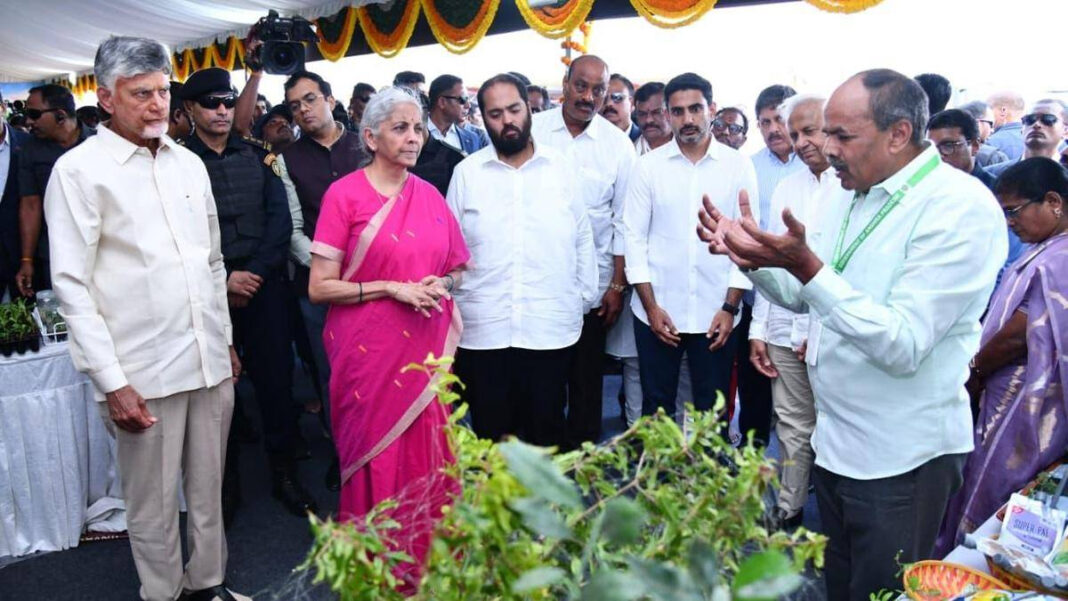
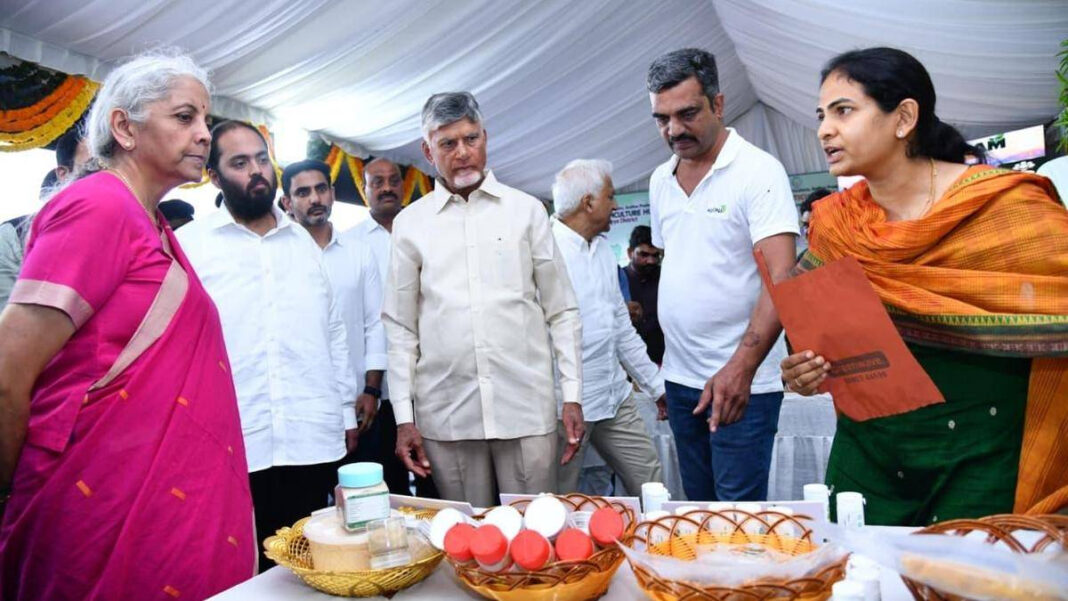
Union Finance Minister Nirmala Sitharaman on Friday said farmers in Rayalaseema “rightly deserve every support” from both the Centre and the State, praising their determination to cultivate their land despite inadequate rainfall and persistent hardships. She was speaking at Madanapalle in Annamayya district, where she jointly launched the ₹1 lakh crore Global Horticulture Hub – Rayalaseema Rising plan and laid the foundation stone for the Indian School of Agriculture (ISA).
The event, held on October 2, brought together a high-profile lineup including Andhra Pradesh Chief Minister N. Chandrababu Naidu, Deputy Chief Minister Pawan Kalyan and Reliance Industries Executive Director Anant Ambani.
A ‘historic moment’ built around farmer-centric growth
Calling the launch “a historic moment for the region,” Ms. Sitharaman said the twin initiatives reflected the spirit of the day—Mahatma Gandhi and former Prime Minister Lal Bahadur Shastri’s birth anniversaries—whose messages of “Swadeshi-Swarajya” and “Jai Jawan, Jai Kisan” placed farmers at the heart of nation-building. “Prime Minister Narendra Modi continues that focus through initiatives such as PM-Kisan Samman Nidhi, subsidised fertilizers, crop insurance and climate-resilient crop varieties,” she said.
Underscoring the Centre’s partnership with states, she said support across agriculture and allied sectors had been expanded, including the deployment of mobile veterinary units and veterinarians across districts to bolster dairy and fisheries livelihoods. With the decisive mandate given to the NDA in 2024, she added, the Governments of India and Andhra Pradesh are committed to transforming Rayalaseema into “Ratnala Seema” (land of gems and prosperity).
₹1 lakh crore horticulture push aimed at 10 districts
The Global Horticulture Hub – Rayalaseema Rising plan is envisioned to transform 10 districts of Andhra Pradesh into a globally competitive horticulture centre. According to Ms. Sitharaman, the project will be backed by efficient water management, better technology and improved crop varieties to raise productivity, resilience and market linkages for growers across the value chain.
She said the horticulture initiative aligns with ongoing efforts to strengthen allied sectors such as aquaculture and livestock, areas that are crucial to incomes in drought-prone regions and where targeted interventions can help stabilise livelihoods during climate and market shocks.
Fertiliser subsidies and supply assurance
Highlighting the government’s outlay on input support, Ms. Sitharaman said a bag of urea costing around ₹3,000 internationally was being supplied to Indian farmers for about ₹300, with the Centre bearing nearly ₹2,700 as subsidy per bag. “Despite global conflicts, efforts are continuing to ensure that farmers do not face fertilizer shortages,” she said, adding that uninterrupted supplies and rational pricing remained core priorities.
Climate resilience, clean energy and risk protection
Expanding on measures to make agriculture more sustainable and shock-resistant, the Finance Minister listed several central schemes tailored to farmer needs:
- Scientifically developed, climate-resilient seed varieties to withstand extreme heat and dry spells.
- GOBARdhan, which converts rural waste into clean biogas for on-farm use and local energy security.
- PM-KUSUM, enabling the installation of solar-powered agricultural pumps to provide reliable, cost-free solar electricity for irrigation.
- PM Fasal Bima Yojana, offering crop insurance to protect against losses and unforeseen risks.
Her office also amplified the themes on social media, noting the Centre’s work with states to expand support “across agriculture and allied sectors,” including deployments to “boost dairy and fisheries livelihoods,” and reiterating the shared commitment to turn Rayalaseema into “Ratnala Seema.”
Indian School of Agriculture: Reliance-backed institution
At the same venue, Ms. Sitharaman laid the foundation stone for the Indian School of Agriculture, an institution being established by Reliance. She said the ISA could deliver specialised support to farmers and agripreneurs, similar to how the Indian School of Business reshaped management education and industry engagement. Congratulating Reliance, she expressed hope the ISA would evolve into a world-class centre for agricultural learning and innovation with strong industry and field linkages.
Symbolism and political messaging
Ms. Sitharaman framed the day’s announcements within the broader narrative of national priorities since 2014, emphasising that farmer welfare, input affordability and climate preparedness have been central to policy. She said the timing—Gandhi Jayanti and Lal Bahadur Shastri’s birth anniversary—underlined the continuity from foundational ideas about self-reliance and food security to present-day programmes conceived to raise incomes and resilience in rural India.
She also referenced the region’s difficult agro-climatic conditions, acknowledging farmers’ perseverance despite water scarcity. “Rayalaseema ryots, who relentlessly struggle to cultivate their land with determination despite inadequate rainfall and hardships, rightly deserve every support from the Central and State governments,” she said.
Light moment and local connections
In a lighter vein, acknowledging Anant Ambani’s request that she accept him as a “son of Andhra Pradesh,” Ms. Sitharaman quipped, “I am a daughter-in-law of Andhra Pradesh, not merely a daughter,” drawing a warm response from the audience and underscoring her longstanding personal ties to the State.
What lies ahead
While specific timelines were not detailed at the event, Ms. Sitharaman reiterated that the Centre and Andhra Pradesh government are working in tandem to execute the horticulture plan and allied-sector support. With major focus areas including efficient water use, technology adoption, improved varieties, renewable energy and risk mitigation, the initiatives launched in Madanapalle are positioned as a multi-pronged push to raise farm productivity, stabilise livelihoods and unlock new value chains across the region.
The announcements marked a significant moment for Rayalaseema, with both infrastructure for skills and knowledge (through the ISA) and an ambitious investment plan in horticulture aligned to longstanding demands from farmers for comprehensive, on-ground support to counteract climate and market risks.