
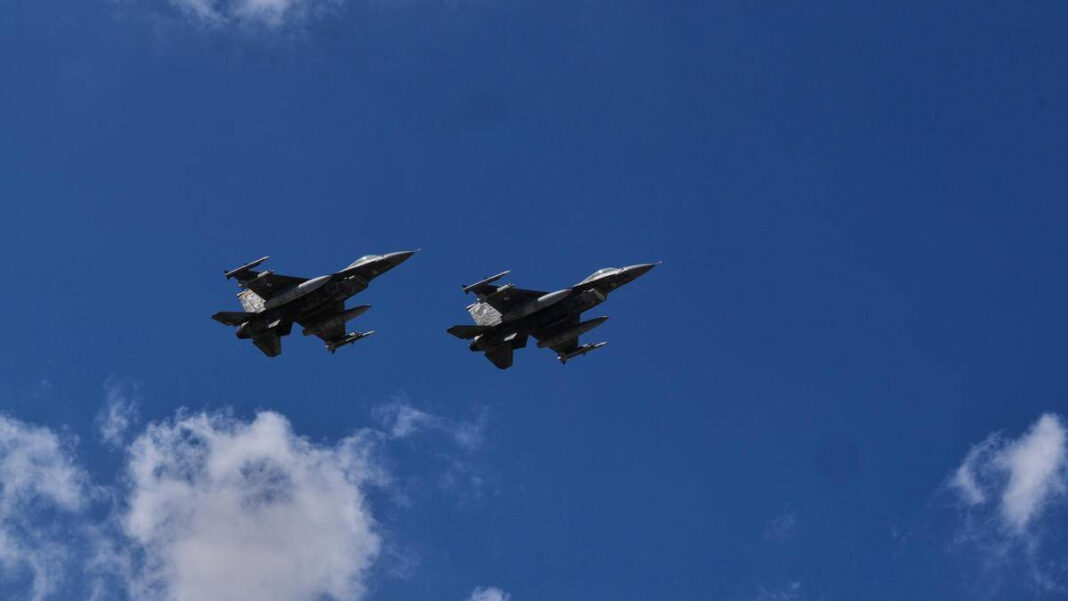

Taiwan Receives Long-Delayed U.S. F-16Vs Amid Geopolitical Tensions: A Step Forward in Air Defense
In a significant development for Taiwan’s defense capabilities, the island nation has recently welcomed the arrival of two long-awaited F-16V fighter jets from the United States, marking a pivotal moment in its ongoing efforts to modernize its military amid rising tensions with China. This delivery, although modest in number, represents a crucial step in fortifying Taiwan’s air defense and signals the unwavering support of the U.S. amidst ongoing geopolitical challenges in the region.
Context of the Delivery
The F-16V, also known as the Viper, is the latest variant of the F-16 Fighting Falcon, featuring advanced avionics, upgraded weapon systems, and enhanced combat capabilities. The jets are equipped with state-of-the-art radar systems and have been designed to maintain air superiority in increasingly contested environments. Taiwan’s procurement of these aircraft is part of a broader initiative to evolve its military capabilities in response to a more assertive stance from China, which has ramped up military activities near the island in recent years.
The delivery of these two fighter jets, although initially expected much earlier, has been affected by a range of factors including supply chain disruptions and complications arising from complex international relations. However, their arrival has been well-received by Taiwanese officials, who view this as a critical reinforcement of their defensive posture.
Strategic Implications
The arrival of the F-16Vs comes at a time of heightened military activity and rhetoric from Beijing. China views Taiwan as a breakaway province and has not ruled out the use of force to bring it under its control. In response to such threats, Taiwan has been actively seeking to enhance its military capabilities, and the acquisition of the F-16Vs plays a significant role in this strategy.
The F-16Vs will be integrated into Taiwan’s existing fleet of F-16s, increasing the air force’s overall operational effectiveness. As tensions escalate, this modernization effort aims not only to improve Taiwan’s defense readiness but also to signal to both domestic audiences and potential adversaries that Taiwan is prepared to defend itself against any coercive actions.
Awaiting Additional Fighter Jets
While the two F-16Vs mark a step forward, Taiwan is eagerly anticipating the delivery of additional aircraft, which are crucial for maintaining a robust air defense strategy. The U.S. has committed to delivering a total of 66 F-16Vs to Taiwan, with further batches anticipated in the coming years. The completion of this acquisition will significantly enhance Taiwan’s aerial combat capabilities and provide a more comprehensive defense against potential threats.
The Taiwanese government has been proactive in seeking a diversified defense procurement strategy, looking not only to the U.S. but also to other nations for arms sales and technology transfers. This approach aims to build a more resilient military that can operate effectively in conjunction with allies in the region, particularly as the geopolitical landscape continues to evolve.
Conclusion
The arrival of Taiwan’s two F-16Vs is a notable milestone in the ongoing defensive strategies employed by the Taiwanese government amid rising tensions with China. As the island nation awaits the additional fighter jets and continues to modernize its military, it aims to reinforce its sovereignty and deterrence capabilities. The U.S. commitment to Taiwan’s defense remains a critical component of this equation, reflecting the broader geopolitical dynamics in the Asia-Pacific region.
As the situation develops, the focus will remain on how Taiwan integrates these advanced systems into its air defense strategy and how this reinforces international commitments to maintaining peace and stability in the face of aggressive posturing from Beijing. Taiwan’s determination to strengthen its defense capabilities will undoubtedly continue to shape the security landscape in the region for years to come.