
Akhilesh fields senior Reliance honcho for Rajya Sabha poll
The Samajwadi Party (SP) on Wednesday named senior leader Ram Gopal Yadav and industrialist Dhanraj Parimal Nathwani as its candidates for the upcoming Rajya Sabha elections from Uttar Pradesh, setting off political ripples by elevating a top Reliance Industries executive to the national legislature’s upper house.
Candidate slate and filing of nominations
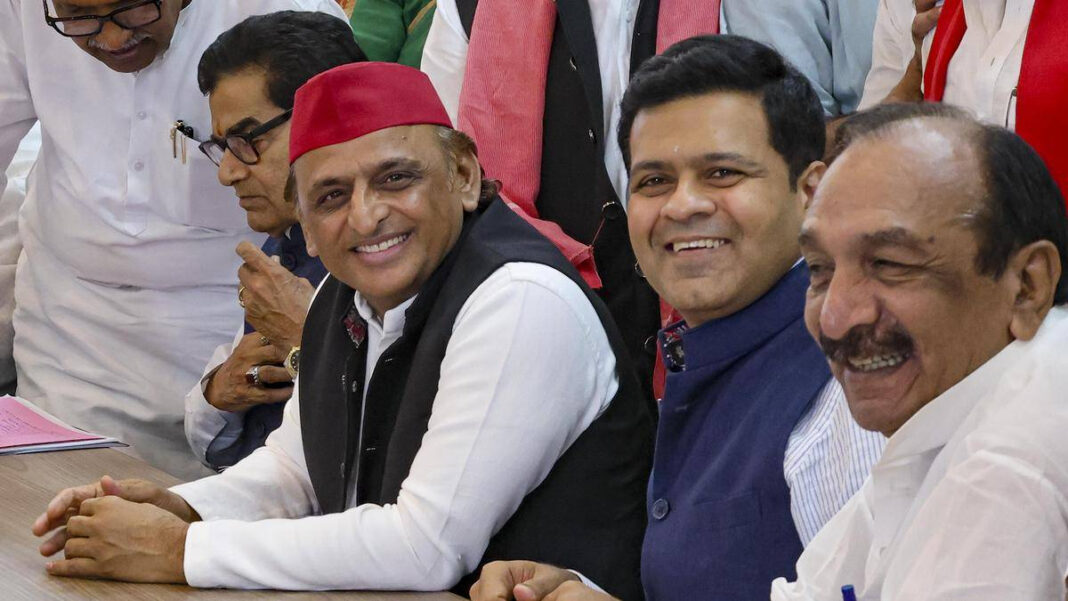
SP president Akhilesh Yadav personally accompanied Professor Ram Gopal Yadav and Dhanraj Nathwani to file their nomination papers in Lucknow on September 30, skipping an INDIA alliance meeting scheduled in Delhi the same day. Ram Gopal Yadav, the party’s principal strategist and Akhilesh Yadav’s uncle, had been widely expected to be renominated. The choice of Nathwani, however, immediately drew attention in both political and corporate circles.
Why the pick matters
Party insiders and observers framed the move as a pragmatic pivot ahead of Assembly elections, suggesting the SP is foregrounding resources and relationships to counter the ruling party’s dominance rather than leaning solely on its oft-stated PDA (Pichhda, Dalit, Alpsankhyak) formula. The nomination was also read as a calibrated signal to the Congress within the opposition bloc about the SP’s strategic autonomy and focus on development credentials in Uttar Pradesh.
Who is Dhanraj Nathwani?
Dhanraj Parimal Nathwani serves as group president at Reliance Industries Limited, is a director on the board of Reliance New Energy Limited, and is president of the Gujarat Cricket Association. He is the son of Parimal Nathwani, a senior Reliance corporate affairs director and veteran politician who, in June, secured a fourth consecutive Rajya Sabha term from Jharkhand as an NDA-backed independent. Over two earlier terms, he had been supported by regional players such as the Jharkhand Mukti Morcha and the YSR Congress Party.
Party precedent and message
The SP has a history of sending well-connected corporate voices with cross-party networks to the Rajya Sabha. During the Mulayam Singh Yadav era, figures such as Amar Singh and Anil Ambani found a place in the Upper House with SP backing. In subsequent years, Sanjay Seth and Surendra Nagar were among those elevated. Party leaders argue the latest nominations reflect a consistent emphasis on development and investment alongside the party’s social justice plank.
“Akhileshji has a track record of bringing investment in the State, and after the Lok Sabha polls, the corporate world sees him as the only credible face for development in UP,” senior SP leader Udaiveer Singh told The Hindu, adding that the party “stands as much for development and prosperity as equality and social justice.”
Political reactions
The picks immediately drew fire from the ruling alliance’s ranks. BJP ally Om Prakash Rajbhar mocked the SP’s slate on X, saying Professor Yadav’s nomination “makes it P for Parivar,” and with Nathwani in the fray, “D stands for Daulatmand (affluent),” a dig at the party’s PDA narrative. With the Nathwani family’s close ties to the BJP leadership, however, some observers said the ruling alliance may find it difficult to attack the candidate’s individual credentials, and may instead frame the choice as ideological inconsistency by the SP.
The numbers game in Uttar Pradesh
Ten Rajya Sabha seats from Uttar Pradesh are up for election on October 16. Based on the current composition of the State Assembly and alliance alignments, the BJP-led NDA is projected to secure seven seats, while the SP is positioned to claim two. The contest for the 10th seat is expected to be tight: calculations suggest the BJP could have a surplus of 31–32 votes, with the SP holding about 29 surplus votes after comfortably electing their primary candidates.
Given the effective strength of the UP Assembly, approximately 37 first-preference votes are required to win one Rajya Sabha seat. This threshold elevates the importance of smaller parties and unattached MLAs. Two legislators from Raghuraj Pratap Singh’s Jansatta Dal Loktantrik are being closely watched as potential swing votes in what could become a finely balanced battle for the final seat.
Amid jockeying for positions, senior SP leader and five-time MP Salim Sherwani, who had earlier staked a claim and met Akhilesh Yadav, told reporters he “will not contest to lose,” signaling reluctance to be the party’s third candidate if the numbers do not assure victory.
Context and implications
The SP’s candidate choices underscore a dual messaging strategy: reaffirming party veterans like Ram Gopal Yadav while simultaneously elevating a corporate leader with national stature and bipartisan networks. The latter move, supporters argue, is aimed at strengthening the SP’s development image in India’s most populous state and improving its outreach to investors and industry.
At the same time, the decision has opened space for the BJP and its allies to accuse the SP of abandoning its PDA plank when politically expedient. The final electoral outcome will hinge on meticulous vote management, cross-party negotiations, and the disposition of smaller players and independents in the Assembly.
What to watch next
With nominations filed, attention now turns to formal campaigning, alliance floor management, and potential last-minute shifts in support as parties run their arithmetic against the 37-vote quota. The SP’s ability to consolidate its bloc and attract smaller groups will determine whether it can contest the 10th seat or settle for two. For the BJP-led NDA, maintaining discipline among its ranks and securing swing votes will be key to translating its numerical advantage into a seventh—and possibly the final—seat.
Conclusion
By fielding Ram Gopal Yadav and Dhanraj Parimal Nathwani, the SP has blended continuity with calculated outreach to corporate India ahead of a high-stakes Rajya Sabha contest. The choice has sharpened political narratives around ideology versus pragmatism, even as both camps prepare for a numbers-driven showdown in the Uttar Pradesh Assembly on October 16.