 "
/>
"
/>

Krishna on Stage: How Technology is Transforming Mythological Theatre in Hyderabad
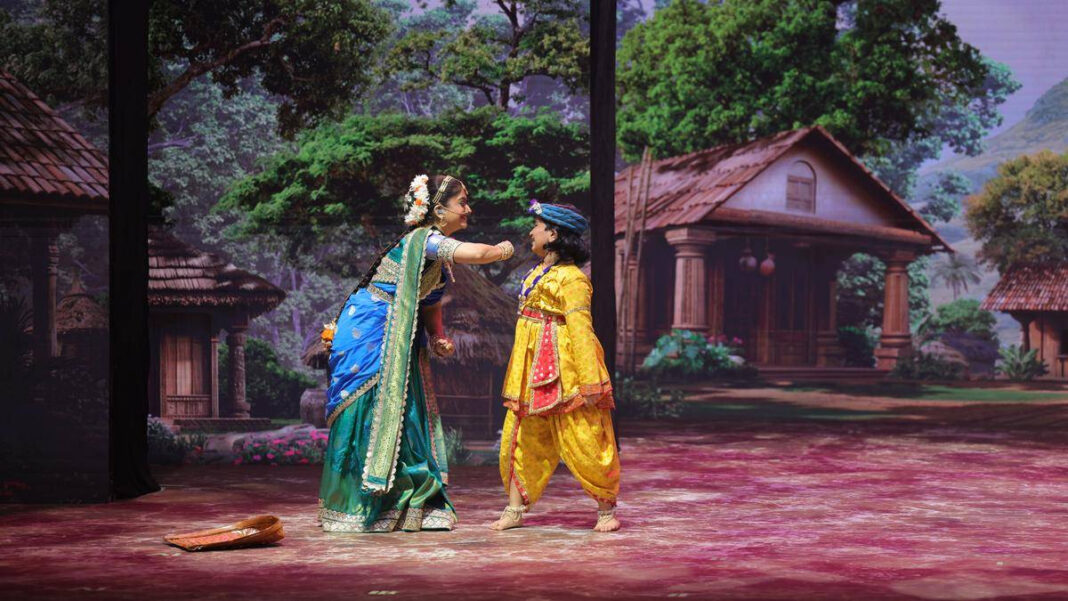
October is set to be a remarkable month for theatre enthusiasts in Hyderabad, as two grand productions focusing on Lord Krishna are scheduled to grace the stage. The first, titled Rajadhiraaj Yatra – Krishna Leela Aapke Dwar, will be presented on October 2, followed by the Zenith Dance Group’s Krishna Katha on October 31. Both productions aim to bring the divine tales of Krishna to life through innovative storytelling and modern technology.
Background and Overview
Rajadhiraaj Yatra, a musical inspired by the life and teachings of Lord Krishna, has been conceptualized by Dhanraj Nathwani and directed by Shruti Sharma. The production is notable for its grand scale, involving approximately 100 performers and over 500 costumes, showcasing a combination of live singing, intricate choreography, and LED-enhanced scenes to create a truly cinematic experience on stage. “The intent is to celebrate stories we grew up listening to and bring them alive in the most beautiful form,” Shruti explained, highlighting the production’s core vision.
Originally staged in August 2024 at the Nita Mukesh Ambani Cultural Centre in Mumbai, Rajadhiraaj Yatra has since toured several cities, including Delhi, Ahmedabad, Surat, Bengaluru, Chennai, and even Dubai, before making its way to Hyderabad.
Key Developments
Mythological theatre has a rich history in Hyderabad, with traditional troupes like the Surabhi Theatre (Sri Venkateswara Surabhi Theatre) captivating audiences for nearly 140 years. Known for their iconic mythological dramas, Surabhi continues to perform classics such as Bhakta Prahalada and Sri Krishna Leelalu, with the legendary Maya Bazaar being a standout production in their repertoire.
According to Jayachandra Varma, actor-director of Surabhi, “The Mayabazar movie released in 1957 was inspired by the play staged by Surabhi in 1952.” This historical connection illustrates the longstanding impact of live theatre on popular cinema. Surabhi’s incorporation of special effects began in 1910, evolving from simple rolling curtains to elaborate stage mechanics that enhance the storytelling.
Special Effects: Tradition Meets Technology
In a fascinating contrast, traditional and modern theatre productions approach special effects differently. Recent iterations of Maya Bazaar, performed during the Taramgam festival, featured notable highlights such as Ghatotkacha’s illuminated gadha and Abhimanyudu’s arrows. Jayachandra described the innovative techniques employed: “When Ghatotkacha gets angry, the lights inside the gadha are switched on remotely to symbolize his anger, while blue light emanates from his eyes,” showcasing the craftsmanship of combining theatrical mechanics with visual symbolism.
One of the key jaw-dropping moments in Surabhi’s productions is the prison-door opening scene in Sri Krishna Leelalu, where a key appears to move magically towards the jail door and unlock it. Jayachandra explained that this effect relies on a well-coordinated effort among four performers and six technicians, exemplifying the intricate planning that goes into each performance.
Stories on Stage: Contemporary Innovations
Rajadhiraaj skillfully blends tradition with cutting-edge technology, relying on extensive pre-production and meticulous planning across twelve departments, with around 300 cues and 100 dedicated solely to lighting and sound design. As part of the narrative, a young girl poses questions to two storytellers, guiding the audience through various locales—from Mathura and Gokul to Vrindavan.
Shruti elaborated, “It feels like a film on stage, taking the audience from one world to another flawlessly and seamlessly.” The ambitious Vrindavan sequence includes dancers portraying peacocks and features LED lighting effects that recreate the enchanting gardens associated with Krishna’s tales. “A lot of technology has gone into it, but in an organic way. In the end, we hope the audience does not identify the technology but simply enjoys the experience,” she added, emphasizing the importance of storytelling over visual distraction.
Conclusion
Through productions like Rajadhiraaj Yatra – Krishna Leela Aapke Dwar and Krishna Katha, the city of Hyderabad is positioning itself as a hub for innovative mythological theatre that bridges tradition and modernity. Tickets for both performances, slated for Shilparamam on October 2 and October 31 respectively, are available via BookMyShow, offering audiences an opportunity to witness the convergence of classic narratives with contemporary theatrical techniques.