
CEC row: Former Home Secretary urges Opposition to boycott polls until Gyanesh Kumar resigns; CWC to meet today on ‘internal differences’ in ECI
A growing dispute surrounding the Election Commission of India (ECI) escalated on Tuesday with a former Union Home Secretary urging Opposition parties to boycott upcoming elections until Gyanesh Kumar steps down from his position. The call came as the Congress Working Committee (CWC) scheduled a meeting for September 29 to discuss reported “internal differences” within the ECI, underscoring intensifying political scrutiny of the poll body.
Background
The latest developments revolve around concerns flagged as “internal differences” within the ECI. While specific details of the disagreements have not been formally outlined, the matter has prompted high-level political responses. Central to the unfolding row is Gyanesh Kumar, whose resignation has been sought by the former Home Secretary as a precondition for the Opposition’s participation in future electoral contests.
Key developments
According to information shared publicly on Tuesday, a former Home Secretary has urged all Opposition parties to collectively boycott elections unless Gyanesh Kumar resigns from his post. The statement signals a hardening of positions and a potentially contentious political phase if Opposition parties heed the call.
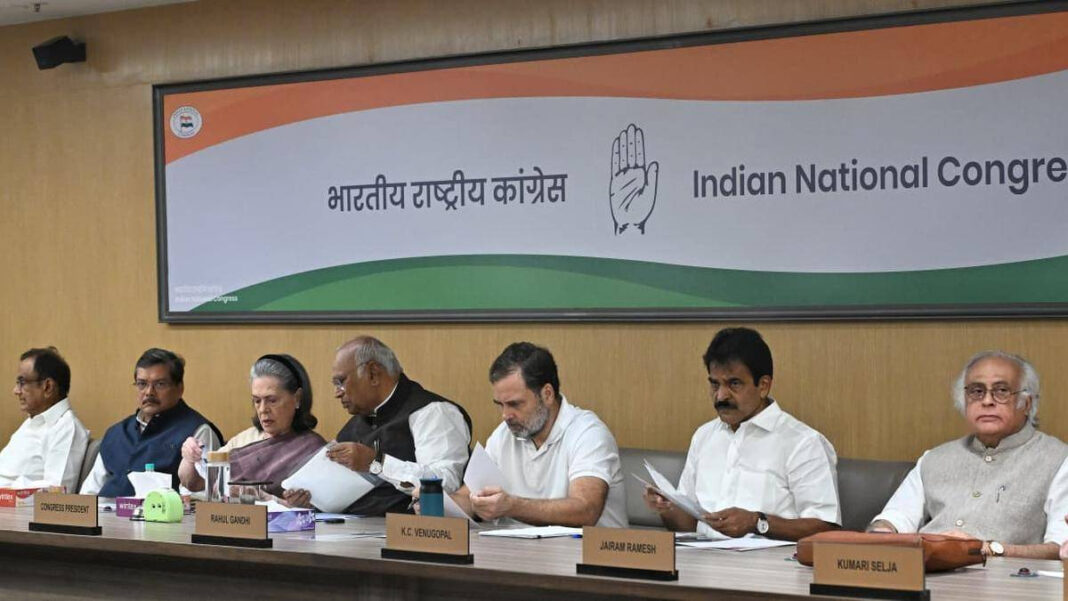
Separately, the Congress Working Committee, the party’s highest decision-making body, is slated to meet today, September 29, to deliberate on the reported internal rifts within the Election Commission. The CWC’s agenda, as indicated, will focus on the implications of these alleged differences and potential courses of action in response.
Context and significance
The ECI is constitutionally mandated to conduct free and fair elections. Questions about its internal functioning—particularly when raised in the midst of active political cycles—carry significant weight. The former Home Secretary’s intervention, coupled with the CWC’s decision to convene on the matter, highlights the seriousness with which the issue is being treated by segments of the political establishment.
Although the contours of the ECI’s reported differences have not been publicly detailed in full, the row has already had tangible political consequences, including calls for electoral boycotts and high-level party deliberations. Any prolonged uncertainty around the Commission’s internal cohesion could bear upon public confidence in upcoming polls.
Statements and reactions
In the appeal made on Tuesday, the former Home Secretary pressed Opposition parties to refrain from participating in elections until Gyanesh Kumar vacates his position. The statement did not immediately elicit a unified public response from Opposition formations, and it was not clear whether any parties had formally committed to a boycott.
The Congress Working Committee’s meeting is expected to canvass the party’s stance, assess available information regarding the ECI’s internal situation, and consider coordinated responses. No official party resolution had been issued at the time of writing.
What to watch next
Outcomes from the CWC meeting will be closely watched for clarity on the Congress leadership’s position and any proposals for joint action with other Opposition parties. It also remains to be seen whether the call for a boycott gains traction across the political spectrum or results in further dialogue among stakeholders.
There was no immediate official response from the Election Commission regarding the reported internal differences or the demand for Gyanesh Kumar’s resignation. Any formal communication from the Commission could shape the next phase of the debate.
Conclusion
The dispute over the ECI’s internal dynamics has moved to the forefront of national political discourse, prompting calls for extreme measures and high-level consultations within major parties. As the CWC meets to consider its response and the broader Opposition weighs the boycott appeal, the coming days will be pivotal in determining whether the issue leads to institutional clarifications and political consensus—or deepens existing divisions ahead of the electoral calendar.