 "
/>
"
/>

Widespread Support
‘U.P. Anticipating Change’
Former BSP Minister, Others Join Congress in Run-Up to Uttar Pradesh Assembly Polls
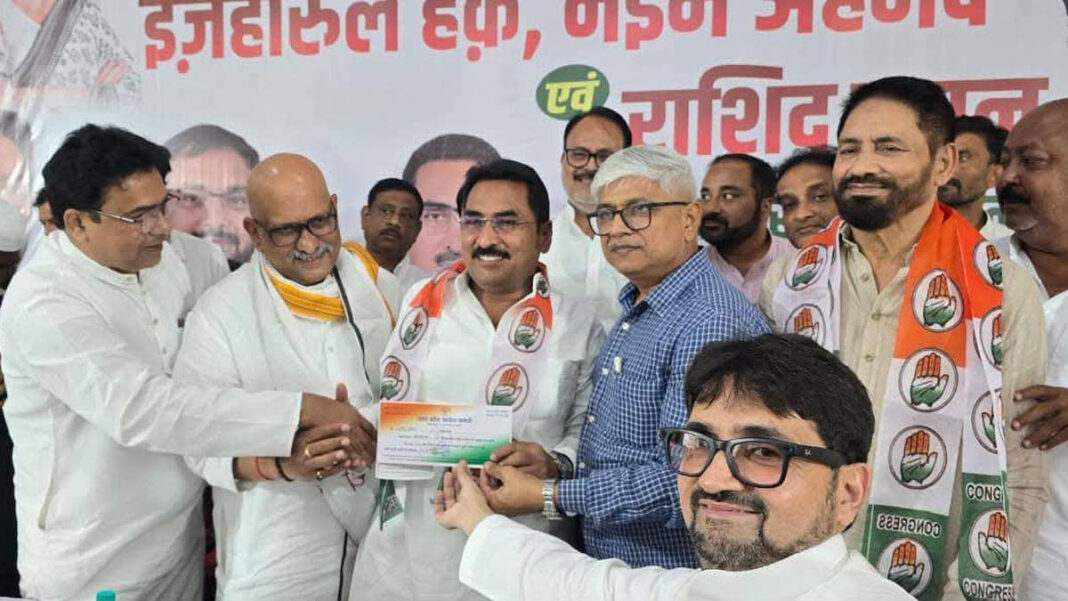
In a significant political development ahead of the Uttar Pradesh Assembly elections, a former minister from the Bahujan Samaj Party (BSP) has made headlines by officially joining the Indian National Congress (INC). This strategic move is indicative of the shifting political landscape in the state, as various factions and leaders reassess their alliances and political ambitions in anticipation of the upcoming polls.
Key Players in the Political Shift
The former BSP minister, whose name has been associated with powerful grassroots movements in the state, has been vocal about the need for a strong opposition against the ruling Bharatiya Janata Party (BJP). He, along with several other senior leaders and party workers from different factions, has taken this bold step to bolster the Congress’s position in Uttar Pradesh, a state that holds immense significance in Indian politics.
This shift is not merely about individual aspirations; it reflects a broader trend of realignment as political parties prepare for the election battleground. The Congress, long overshadowed by the rise of the BJP and regional parties such as the BSP and Samajwadi Party (SP), aims to reclaim its influence in Uttar Pradesh, a state crucial for any party hoping to secure a substantial presence in national politics.
Strategies and Implications
With the Assembly elections scheduled to be held in early 2024, the induction of leaders from other parties is part of Congress’s strategy to consolidate the anti-BJP vote. The party hopes to attract disillusioned voters and those seeking an alternative to the current ruling government. The influx of experienced politicians could also help the Congress streamline its campaign, capitalizing on the established connections and support bases of these new entrants.
Moreover, the former BSP minister’s decision to join the Congress signals a potential fragmentation of the BSP’s voter base. The BSP has traditionally garnered support from Dalit and backward caste communities, and the departure of a prominent leader could adversely impact their electoral prospects. This is a point of concern for BSP chief Mayawati, who now faces the dual challenge of retaining her party’s relevance while battling an increasingly competitive political environment.
Reactions from the Political Spectrum
Reactions to this political shake-up have varied across the board. Congress leaders have welcomed the new entrants, viewing it as a validation of their party’s vision and ideologies. Meanwhile, the BSP has downplayed the significance of the defection, asserting that their organizational strength and loyal voter base remain intact.
BJP spokespersons, on their part, have expressed confidence in their government’s track record, arguing that no amount of political realignment could sway the electorate, who they believe will favor stability and continuity.
The Road Ahead
As the political scenario in Uttar Pradesh continues to evolve, the resounding question remains: will these shifts be enough for the Congress to reclaim its lost ground? The party faces the dual challenge of re-establishing its brand and effectively countering the BJP’s extensive outreach.
Polls in Uttar Pradesh have historically been seen as a litmus test for national political trends, making the upcoming elections crucial not just for local parties but for the national narrative as well. The Congress’s ability to galvanize support from diverse demographics, including but not limited to the supporters of the BSP, will be vital in the coming months.
In conclusion, the entry of a former BSP minister and other notable political figures into the Congress is likely to set the stage for a dramatic electoral battle in Uttar Pradesh. As alliances are formed and strategies become clearer, all eyes will be on the state as it heads toward polls that promise to be intense and consequential.