 "
/>
"
/>

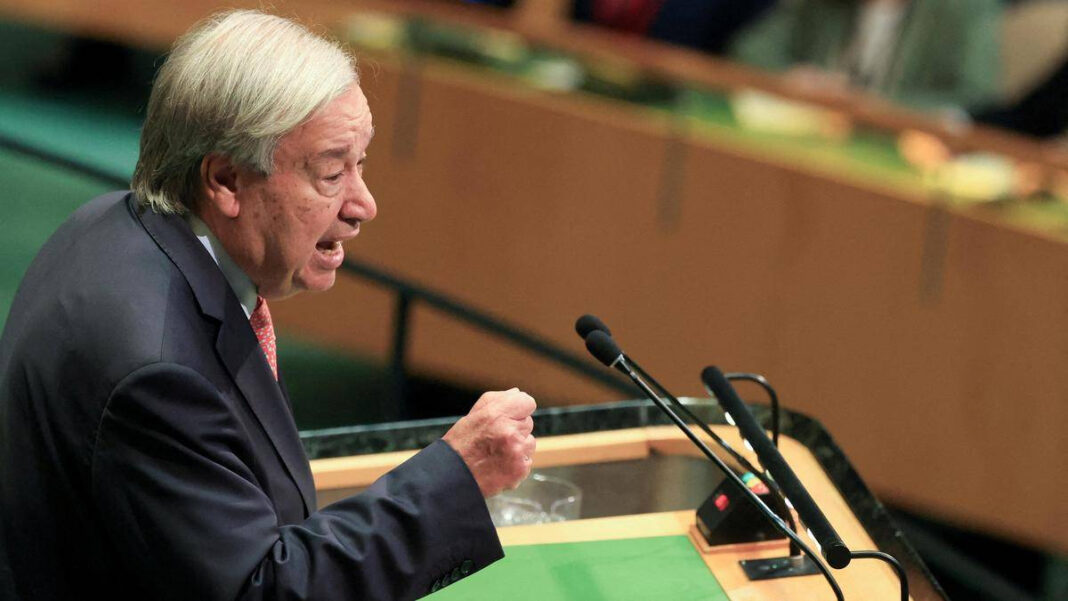
Reforming the Security Council: A Call to Action by UN Chief Guterres in His Final UNGA Address
In a poignant moment during his final address to the United Nations General Assembly (UNGA), UN Secretary-General António Guterres urged member states to undertake a critical reassessment of one of the organization’s most significant bodies: the Security Council. His remarks, echoing years of calls for reform, highlighted the urgent need to adapt to the changing global landscape and address the complex challenges facing the world today.
The Need for Reform
Established in the aftermath of World War II, the Security Council was intended to maintain international peace and security. With its five permanent members (the United States, Russia, China, France, and the United Kingdom) wielding veto power, the Council’s structure reflects a bygone era. As Guterres pointed out, the current geopolitical realities are drastically different from those of 1945, leading to growing discontent among UN member states regarding the Council’s effectiveness and representativeness.
Guterres highlighted that the Security Council’s inability to consistently act on pressing global issues, such as humanitarian crises, climate change, and emerging conflicts, underscores the urgent need for reform. The Council’s stagnation, often exemplified by the paralysis of its decision-making processes due to vetoes, limits its legitimacy and undermines the UN’s broader mission of fostering global peace and cooperation.
Voices from the Global South
In his address, Guterres emphasized that the call for reform is not solely a demand from powerful nations but is also echoed by many developing countries, particularly those in the Global South. As global power dynamics shift, there is an increasing call for a more inclusive representation in the Security Council that reflects the realities of the modern world. Countries from Africa, Asia, and Latin America contend that their voices, perspectives, and interests are not adequately represented in high-stakes international decision-making processes.
Guterres reiterated that a reformed Council could enhance its legitimacy and effectiveness, allowing it to respond more robustly to contemporary security challenges. This would involve considering the expansion of both permanent and non-permanent members, as well as reevaluating the criteria for maintaining the power to influence critical decisions.
The Road Ahead
Despite the acknowledgment of the need for reform, progress on this front has been sluggish. Guterres’s predecessor, Ban Ki-moon, and many other leaders have advocated for change, but entrenched interests and intergovernmental politics have often stymied efforts. In his address, Guterres remains hopeful, asserting that the momentum for reform may finally be gathering speed, particularly as nations grapple with unprecedented challenges such as pandemics, climate change, and geopolitical tensions.
The call for transformation is not just about revising the composition of the Council but also about reimagining how it functions. Guterres proposed evaluating its decision-making processes to ensure they are more transparent, inclusive, and adaptive to the global context. Emphasizing the importance of multilateralism, he argued that a reformed Security Council could serve as a model for cooperation and dialogue in an increasingly fractured world.
Conclusion
António Guterres’s final address to the UN General Assembly serves as a clarion call for revitalizing the UN Security Council at a time when the world is in dire need of effective governance and collective action. His proposals for reform encapsulate the aspirations of many member states for a fairer, more dynamic, and responsive UN system. As Guterres steps down from his role, it remains to be seen if the international community will heed his call and rise to the occasion, setting the stage for a Security Council that truly reflects the world it serves. If the lessons of history teach us anything, it is that adaptation and reform are essential to the survival and relevance of any institution aimed at fostering peace and cooperation in our interconnected world.