
 "
/>
"
/>

‘Draconian Provisions’
Title: “Enter at Your Own Risk: The Impact of Anti-Conversion Laws on Churches in Chhattisgarh”
Introduction
In a significant development, the state of Chhattisgarh in India has enacted an anti-conversion law aimed at regulating religious conversions and addressing concerns surrounding forced or coerced conversions. This law is viewed by many as an attempt to safeguard religious sentiments, but it has produced a ripple effect that resonates through the fabric of society, particularly affecting churches and their interactions with non-Christian individuals. As the law takes effect, some churches have begun putting up signs declaring “Enter at Your Own Risk,” a symbol of the trepidation that stems from the legal landscape surrounding religious expression and conversion.
Background of the Anti-Conversion Law
The anti-conversion law in Chhattisgarh aims to prohibit conversions that occur through inducement, coercion, or fraudulent means. Proponents of the law argue that it protects individuals, especially vulnerable communities, from being misled by religious groups. However, critics point to its potential for misuse as a vehicle for intolerance, especially against minority religions, particularly Christianity, which has faced scrutiny and hostility in various regions of India.
Under this new legal framework, non-Christians seeking to enter churches or participate in church activities may find themselves in precarious situations. The fear of being reported for attempting conversion or facing social ostracization leads to a chilling effect on interfaith dialogue and community engagement.
Church Response: “Enter at Your Own Risk”
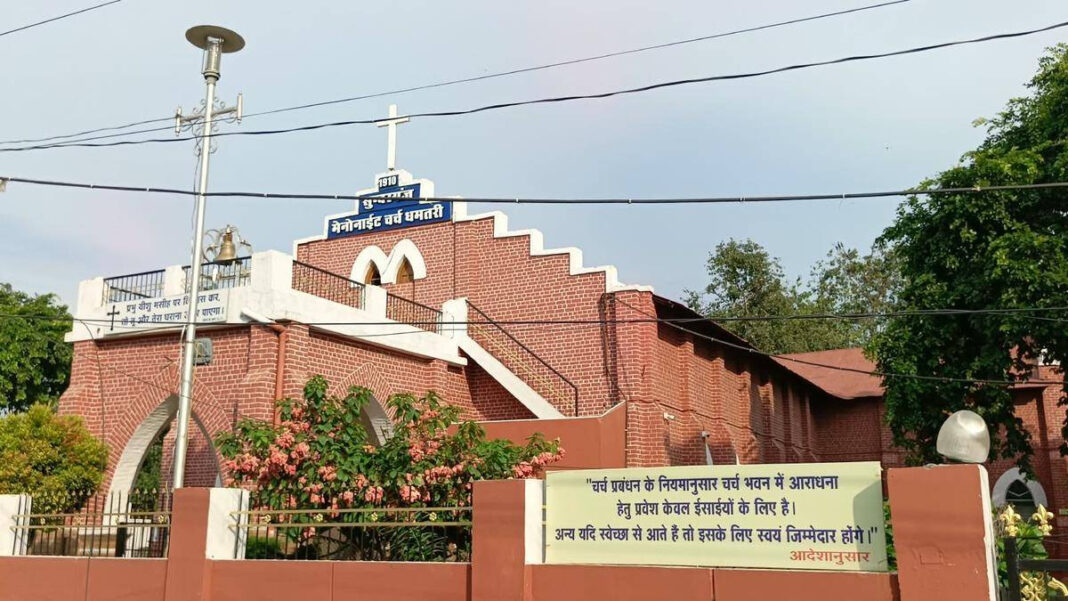
In response to the new law, some churches in Chhattisgarh have taken the unusual step of posting signs stating “Enter at Your Own Risk.” This phrase underscores the precarious atmosphere in which these religious institutions now operate. For church leaders and congregants, this reflects a dual concern: the legal implications of the anti-conversion law and the potential for backlash from a society that feels increasingly polarized along religious lines.
The signs serve both as a warning and an invitation. They signal to potential visitors, especially non-Christians, that while they are welcome, the current legal climate might pose unforeseen challenges. Church leaders express frustration, noting that such measures detract from their core mission of spreading love and compassion.
The Broader Impact on Interfaith Relations
The implications of the anti-conversion law extend beyond the church walls. Interfaith relationships, already fragile in some areas of India, risk deterioration as suspicion and fear mount. Non-Christians may hesitate to engage with Christian communities or participate in communal activities, fearing allegations of conversion or social backlash.
Additionally, this environment can foster division rather than understanding, thus inhibiting efforts toward communal harmony. Many leaders from diverse religious backgrounds have spoken out against the law, advocating for respect, dialogue, and coexistence rather than fear and division.
Legal and Social Ramifications
Legally, the anti-conversion law presents challenges for clergy and laypersons alike. They must navigate complex regulations that could see church leaders facing legal repercussions for merely sharing their beliefs or inviting others to church services. This predicament fosters an environment where the spirit of evangelism—a core tenet of Christianity—clashes with the legal restrictions imposed by the state.
Socially, the law has implications for community activities that were once inclusive and open to all. Events that encouraged interreligious dialogue, charitable work, and cooperative social endeavors may now be overshadowed by apprehension, hindering collaborative efforts aimed at community betterment.
Conclusion
The anti-conversion law in Chhattisgarh presents a challenging landscape for churches and their interactions with non-Christians. The phrase “Enter at Your Own Risk” encapsulates the fears, uncertainties, and complexities that come with navigating this new reality. As the law takes effect, it is critical for society to engage in meaningful dialogue about religious freedom, coexistence, and mutual respect. Only through understanding and compassion can communities hope to move beyond fear and division, fostering an inclusive society that honors diverse beliefs and practices.
In a country rich with cultural and religious diversity, it remains essential that all voices are heard and respected. The future of interfaith relations in Chhattisgarh, and India at large, may depend on the ability to strike a balance between legal frameworks and the spirit of coexistence.