
 "
/>

Comments
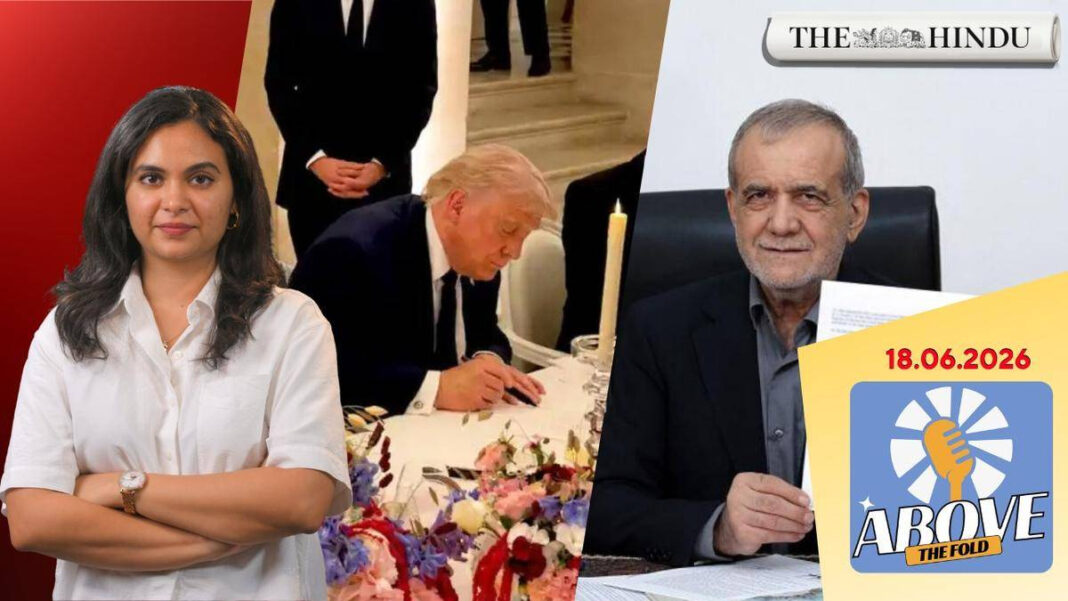
Watch: U.S.-Iran Peace Deal Signed: Does Iran Come Out on Top?
Above the Fold | June 18, 2026
In a historic and unexpected turn of events, the United States and Iran have officially signed a peace deal aimed at ending decades of animosity and conflict. The agreement, marked by high-profile negotiations that involved multiple stakeholders, raises critical questions about the implications for both countries and the broader geopolitical landscape. As details of the accord emerge, many analysts are left pondering whether Iran ultimately comes out on top in this transformative shift in U.S.-Iran relations.
Historical Context
The relationship between the U.S. and Iran has been fraught with tension since the 1979 Iranian Revolution and the subsequent hostage crisis. Over the years, various attempts at diplomatic engagement have been undermined by sanctions, military undertakings, and mutual distrust. This new peace deal is seen as a significant pivot, considering that just a few years ago, the two nations were closer to military confrontation than cooperation.
The peace talk breakthrough can be attributed to a variety of factors, including the global political climate, internal pressures within Iran, and a shifting focus of U.S. foreign policy back toward diplomatic solutions rather than military interventions.
Key Components of the Deal
The peace agreement encompasses several critical elements:
-
Military De-escalation: Both nations have pledged to withdraw troops from conflict zones in the Middle East where their interests conflict, particularly focusing on areas such as Syria and Iraq.
-
Economic Cooperation: The deal includes provisions for lifting sanctions on specific sectors of the Iranian economy, especially those impacting the civilians, healthcare, and intellectual property, while maintaining restrictions related to military developments.
-
Regional Stability Initiatives: The accord promotes shared commitments to counteract extremist groups that have thrived in the regional chaos, with the inclusion of collaborative efforts for intelligence sharing and joint task forces.
- Cultural Exchange Programs: As a means of fostering understanding between the two nations, the agreement outlines programs aimed at enhancing cultural, educational, and people-to-people exchanges.
Analysis: Does Iran Come Out on Top?
Critics of the deal argue that Iran stands to gain significant leverage from this agreement, particularly given the lifting of sanctions that have plagued its economy for years. The prospect of increased foreign investment and economic revival could translate into stronger national stability and even bolster the Iranian government’s domestic standing.
Conversely, supporters claim that the U.S. benefits through the reduction of hostilities in the Middle East and the potential for a safer geopolitical environment. Furthermore, this agreement might allow the U.S. to pivot its resources towards other international conflicts, namely in Asia and Europe.
Regional Implications
The peace deal comes at a time when Middle Eastern dynamics are shifting. With a peace accord in place, Gulf states may experience new pressures to normalize relations with Iran, potentially leading to a more balanced regional equilibrium. However, this could also provoke tensions with U.S. allies who remain wary of Tehran’s influence, raising questions about the long-term sustainability of such a diplomatic approach.
Public Reaction
Reactions to the peace deal have been mixed. In Iran, many citizens express cautious optimism, hopeful for the economic benefits that could derive from improved relations with the West. However, hardliners within Iran view this deal with skepticism, fearing it may undermine their grip on power.
In the U.S., the response has been similarly diverse. While some politicians herald the agreement as a diplomatic triumph, others express concern over Iran’s past actions and assert that the deal could embolden its regional ambitions.
Conclusion
As the world watches the implementation of this landmark peace agreement, it remains to be seen whether Iran indeed comes out on top. While immediate benefits for Iran are evident, particularly in economic terms, the true test lies in the deal’s implementation and whether it fosters a lasting and transformative peace in the region. Only time will tell if this historic moment heralds a new era of cooperation or merely resets the stage for future conflicts.
Overall, this peace deal could be a critical pivot point, setting the tone for U.S.-Iran relations for decades to come, and challenging conventional narratives about power and diplomacy in the region.



