 "
/>
"
/>

Title: Russia’s Top Diplomat Rejects German Calls to De-escalate Tensions
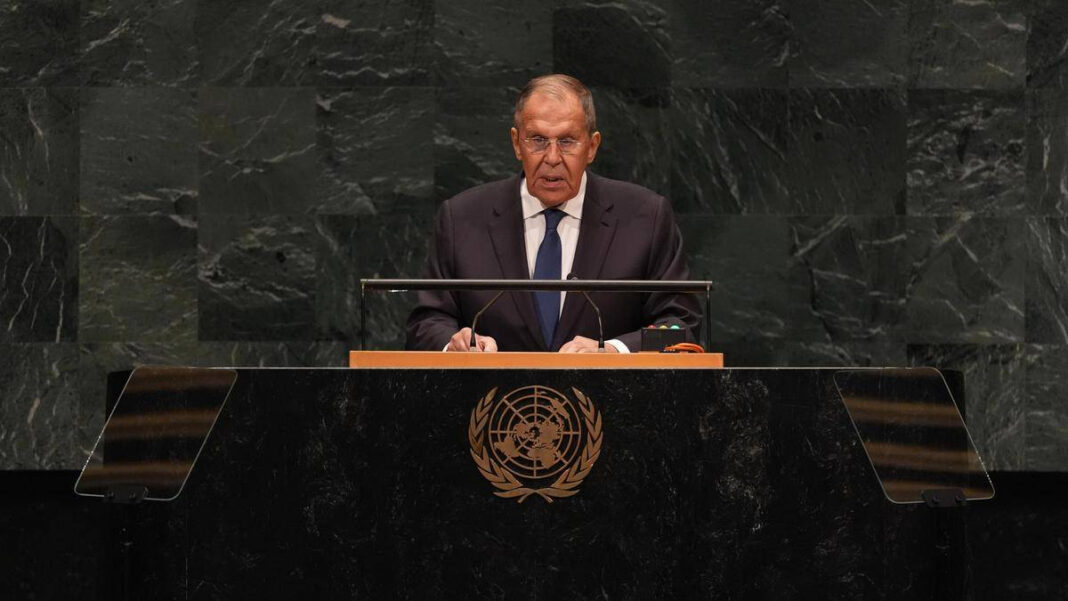
In a recent development that has further strained relations between Moscow and Berlin, Russia’s top diplomat, Foreign Minister Sergey Lavrov, firmly dismissed Germany’s calls for a de-escalation of what he termed “dangerous” tensions between the two countries. The remarks come amid a backdrop of heightened geopolitical tensions in Europe, particularly in the wake of Russia’s actions in Ukraine, and persistent concerns about European security.
Context of the Tensions
The diplomatic rift between Russia and Germany has been exacerbated by issues that extend beyond the conflict in Ukraine. Allegations of election interference, cyberattacks, and the Nord Stream pipeline debacle have all contributed to a significant cooling of relations. Germany, a key player in European Union politics, has increasingly aligned itself with Ukraine and NATO allies in response to perceived Russian aggression.
Lavrov’s Responses
During a press briefing held on Tuesday, Lavrov emphasized that Russia would not succumb to external pressure to alter its course, underscoring a broader narrative that Moscow has pursued since the onset of the Ukraine crisis in 2014. He characterized the German calls for de-escalation as an attempt to unfairly portray Russia as the aggressor, arguing instead that the West’s support for Ukraine has incited further instability in the region.
Lavrov stated, “We are not the ones escalating the situation; it is the West that continues to arm Ukraine and deploy troops near our borders. Any attempts to pressure us into changing our strategic course will not succeed.” This statement serves as a clear indication of Russia’s intention to maintain its current policies despite international pressure.
Germany’s Concerns
German officials have expressed deep concern about the implications of Russia’s military posture, particularly in relation to NATO’s eastern flank. As part of its efforts to bolster collective security in Europe, Germany has increased its military support to Ukraine and strengthened its alliances within NATO. German Defense Minister Christine Lambrecht has warned that ignoring Russia’s increasing military capabilities poses a serious threat to regional stability.
Calls for a diplomatic resolution have been echoed by various European leaders who advocate for dialogue as a means of reducing tensions. However, as Lavrov’s remarks indicate, the Kremlin appears reluctant to engage in discussions that might be perceived as compromising its strategic interests.
International Implications
The standoff between Russia and Germany is indicative of a larger pattern of increasingly polarized relations between Russia and the West. As countries navigate the complexities of energy dependence, economic sanctions, and military alliances, the risk of miscalculation and escalation remains a pressing concern.
Moreover, the European Union faces the challenge of presenting a united front against Russian aggression while dealing with internal divisions about how to approach the situation. In the wake of Lavrov’s rejection of German overtures, the potential for a sustained diplomatic impasse looms large, raising questions about the future of European security architecture.
Conclusion
The rejection of Germany’s calls for de-escalation by Russia’s top diplomat signals a troubling continuation of hostilities that have characterized East-West relations in recent years. As both nations navigate their respective strategic interests, the prospect of finding common ground appears increasingly distant. With tensions running high, the international community watches closely, hoping for a resolution that prioritizes peace and stability over confrontation.