 "
/>
"
/>

This revision uses more up-to-date HTML standards, simplifies class names, and enhances readability while retaining the main structure and content of the original code.
Title: Russia Endorses India’s Bid for a Permanent Seat on the United Nations Security Council
Introduction
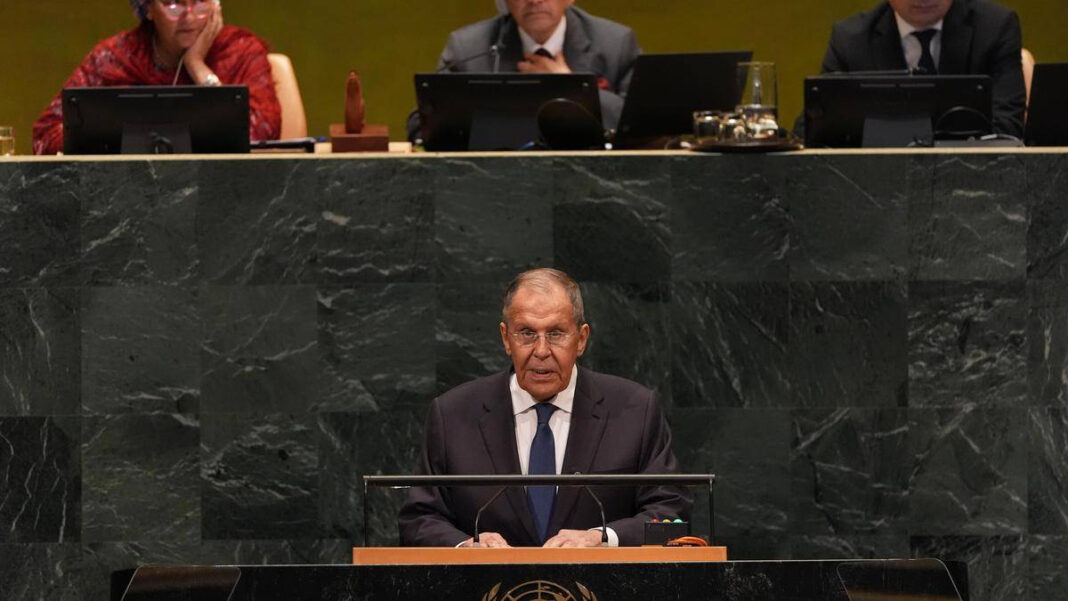
In a significant diplomatic development, Russia has formally endorsed India’s candidacy for a permanent seat on the United Nations Security Council (UNSC). This announcement reflects the strengthened ties between the two nations and signals a potential shift in the global balance of power as nations push for reform of international institutions to better reflect contemporary geopolitical realities.
Background of the UNSC
The United Nations Security Council, established in 1945, is tasked with maintaining international peace and security. It comprises five permanent members (the United States, United Kingdom, France, China, and Russia) and ten non-permanent members elected for two-year terms. The five permanent members wield significant power, including the ability to veto decisions, which has led to calls for reform in light of the changing global landscape.
India has been advocating for a permanent seat at the UNSC for decades, arguing that its growing economic power, large population, and contributions to global peacekeeping missions justify its inclusion among the permanent member ranks.
Strengthening Bilateral Ties
The endorsement from Russia is a testament to the long-standing relationship between Moscow and New Delhi. Historically, the two countries have maintained a strategic partnership, primarily during the Cold War era, which has evolved over time into a multifaceted relationship encompassing defense, trade, and technology.
Both nations have consistently supported each other on various international platforms, reflecting a mutual understanding of their strategic interests. Russia’s support for India’s UNSC bid underscores its commitment to fostering a multipolar world where multiple powers can assert their influence without the dominance of a single nation.
Geopolitical Significance
The backing of such a prominent international player as Russia has garnered attention in the geopolitical arena. India’s inclusion as a permanent member of the UNSC could lead to a significant shift in decision-making dynamics within the Council. India’s foreign policy has often focused on non-alignment, cooperation, and peaceful resolution of conflicts, thus its presence could contribute to a more balanced approach to global governance.
Furthermore, this move aligns with the ongoing conversations about reforming the UNSC to reflect the realities of the 21st century. The current makeup, dominated by the five permanent members from the post-World War II era, is increasingly seen as outdated amid a rapidly evolving global landscape that includes rising powers like India.
Challenges Ahead
Despite the strategic backing from Russia, India’s path to a permanent UNSC seat is fraught with challenges. Many nations, including some existing permanent members, have expressed skepticism regarding enlarging the Security Council. Concerns range from the potential dilution of power to fears of complicating the decision-making process within the UN.
Moreover, each of the current permanent members holds veto power, and any bid for reform would require their consensus, making the process particularly intricate. India’s challenge will be to navigate the complex international relations landscape while building a broader coalition to support its bid.
Conclusion
Russia’s endorsement of India’s candidacy for a permanent seat on the UNSC marks a pivotal moment in international diplomacy, highlighting the growing camaraderie between two historically significant nations. As the world grapples with evolving power dynamics and the need for institutional reform, India’s aspiration to join the UNSC could pave the way for a more equitable global governance structure.
The road ahead may be fraught with obstacles, but with sustained dialogue and collaboration among member states, the vision of a more representative United Nations Security Council could soon become a reality.