 "
/>
"
/>

Title: Putin Acknowledges PM Modi’s ‘Good Ideas’ for Resolving Ukraine Conflict
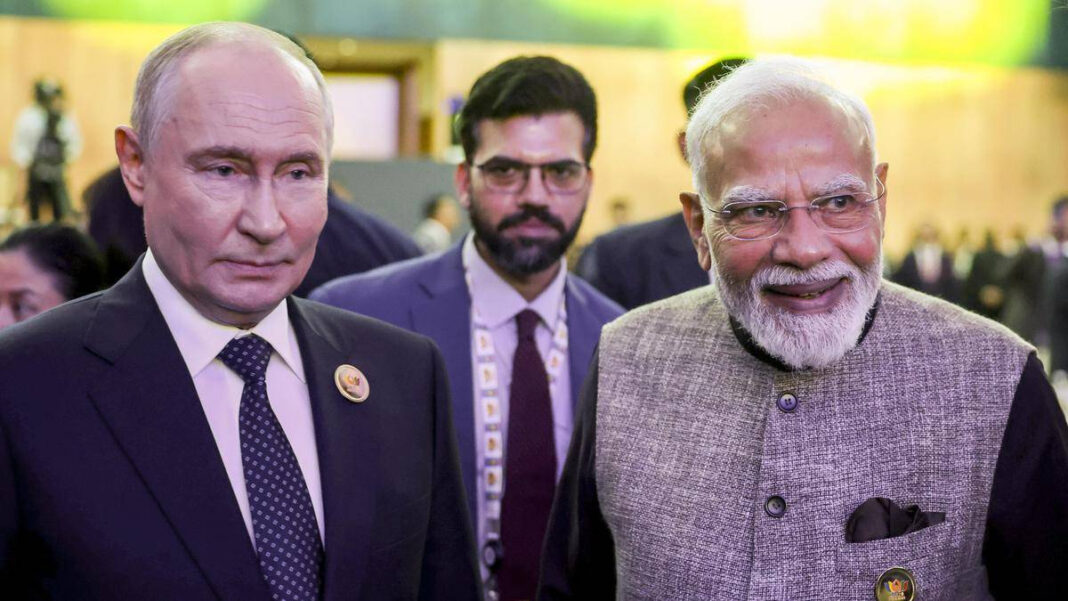
In a notable diplomatic exchange, Russian President Vladimir Putin recently characterized Indian Prime Minister Narendra Modi as a leader with “good ideas” pertaining to the settlement of the ongoing conflict in Ukraine. This recognition underscores India’s growing role as a mediator in global conflicts and highlights the potential of collaborative diplomatic efforts in addressing complex geopolitical issues.
Context of the Conflict
The Ukraine conflict, which erupted in February 2022 following Russia’s invasion, has resulted in significant loss of life, displacement, and economic repercussions not only for Ukraine and Russia but for the global community as well. Western nations have largely supported Ukraine through military aid and sanctions against Russia, leading to a protracted stalemate in the conflict. Amid this turmoil, various nations have called for dialogue and peace talks to resolve the crisis.
India’s Position on the Conflict
India has maintained a balanced stance throughout the conflict. While it has expressed concern over the humanitarian impact of the war, it has refrained from directly condemning Russia, adhering to its long-standing relationship with Moscow. India’s position reflects its strategic interests, particularly in defense and energy, while also addressing its role as a responsible global player advocating for dialogue, peace, and stability.
Prime Minister Modi has reiterated the importance of diplomatic engagement during various international forums. Notably, during a meeting with President Putin in September 2021 at the Shanghai Cooperation Organization (SCO) summit, Modi emphasized the necessity of dialogue and discussed the urgent need for peace in the region. His approach aligns with India’s broader foreign policy objective of promoting multipolarity and enhancing its diplomatic clout.
Putin’s Recognition
Putin’s remarks acknowledging Modi’s “good ideas” signify a shift towards recognizing alternative perspectives on the conflict, particularly from nations that are not directly involved. This acknowledgment could be seen as an invitation for India to play a more prominent role in facilitating discussions aimed at achieving a resolution. The Russian President’s comments highlight the significance of India’s strategic insight, drawing attention to New Delhi’s potential as a mediating force in global diplomacy.
The Role of Global Diplomacy
As the conflict continues to escalate, the international community is increasingly aware of the need for consensus-driven approaches to peace. India, given its historical ties with both Russia and Ukraine, is uniquely positioned to facilitate dialogue. Modi’s suggestions could involve confidence-building measures, promoting humanitarian assistance, and creating channels for negotiation that respect the sovereignty and integrity of the involved nations.
Furthermore, India’s non-aligned stance and commitment to fostering partnerships across political divides could help bridge gaps in negotiations. Globally, the emphasis on diplomatic solutions over military engagement resonates with a growing number of nations advocating for peace, leading to a broad coalition seeking to address the Ukrainian crisis constructively.
Conclusion
Vladimir Putin’s acknowledgment of Prime Minister Narendra Modi’s approach to the Ukraine conflict reflects an opening for deeper dialogue and collaboration among nations. As international dynamics evolve, India’s role as a mediator could be crucial in shaping the path towards a peaceful settlement. The world is watching closely, eager to witness whether the ideas and initiatives floated by Modi can lead to meaningful outcomes in this complex geopolitical landscape. With a commitment to dialogue and a spirit of cooperation, the potential for a resolution may gradually take shape, benefiting not just the immediate parties involved, but the broader global community as well.