
 "
/>

Israel’s Military Readiness: Netanyahu Asserts the Nation is Primed for Any Threat
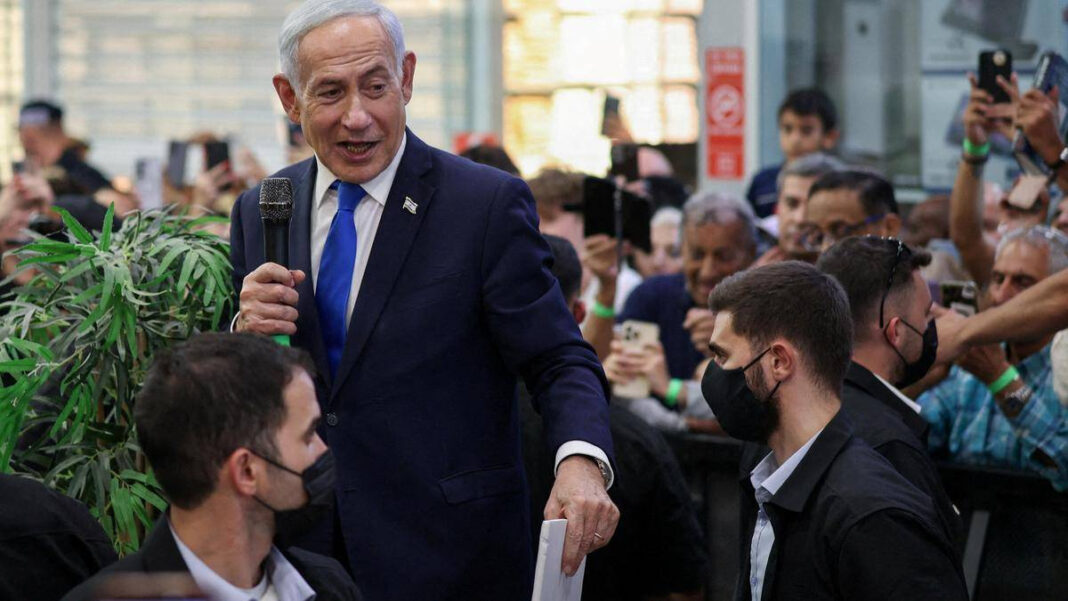
In a recent address that has reverberated through international diplomatic circles, Israeli Prime Minister Benjamin Netanyahu asserted that Israel is fully prepared to respond to any threat against its sovereignty “at a moment’s notice.” This declaration underscores Israel’s ongoing commitment to national security amid a backdrop of escalating regional tensions.
Context of the Statement
Netanyahu’s remarks come as Israel navigates a complex landscape of hostile relations with neighboring countries, alongside threats from non-state actors. The rhetoric of imminent readiness serves a dual purpose: reassuring the Israeli populace about their safety and sending a clear message to adversaries regarding the consequences of hostile actions.
Recent developments in the region, including confrontations with militant groups such as Hezbollah in Lebanon and renewed tensions with Palestinian factions, have amplified the urgency of Netanyahu’s statements. The Prime Minister emphasized that Israel’s defense forces are on high alert and equipped with advanced technology and strategic capabilities to address any impending threats.
Strategic Implications
The Israeli military strategy emphasizes deterrence, and Netanyahu’s speech reinforces this approach. The acknowledgment of being “ready to strike” highlights Israel’s long-standing policy of preemptive action. Historical precedents demonstrate that Israel has undertaken military operations in response to perceived threats, often prioritizing pre-emptive and defensive measures to safeguard its national interests.
Netanyahu’s statements also serve to bolster both domestic and international support for Israel’s military funding and advancement of defense systems. As regional tensions grow, the Israeli government consistently seeks to secure military assistance from allies, particularly the United States, to maintain its qualitative military edge.
Regional Reactions
Reactions to Netanyahu’s declaration have varied across the region. Some neighboring nations view Israel’s readiness as a threat, further straining diplomatic relations. Others, particularly those grappling with their internal security issues, recognize the pragmatism of Netanyahu’s approach and the reality of regional instability.
In Palestinian territories, Palestinian leaders have condemned Netanyahu’s remarks, arguing that such assertions heighten the climate of fear and perpetuate the cycle of violence. In contrast, hardline factions may interpret this rhetoric as an invitation to escalate confrontations, prompting a potential cycle of retaliatory attacks.
The International Perspective
The international community remains watchful of Netanyahu’s comments, with nations weighing the implications for regional stability. Some allies support Israel’s right to defend itself, while others urge restraint and dialogue to address underlying conflicts. Multilateral efforts toward peace in the region have faced renewed challenges, as provocative statements on military readiness can derail diplomatic negotiations.
Conclusion
Benjamin Netanyahu’s assertion that Israel is ready to strike its enemies at a moment’s notice encapsulates the precarious state of security in the Middle East. As regional dynamics continue to evolve, Israel’s commitment to its military preparedness remains unwavering. The path ahead requires a delicate balance between military readiness and diplomatic overtures, as the nation strives for a sustainable peace in an often tumultuous environment. As tensions persist, the eyes of the world remain fixed on Israel, keenly aware that the ramifications of such declarations extend far beyond its borders.