 "
/>
"
/>

India Criticizes Pakistan’s ‘Falsehoods’ and ‘Deceit’ at the United Nations; Warns of Consequences for Terrorism
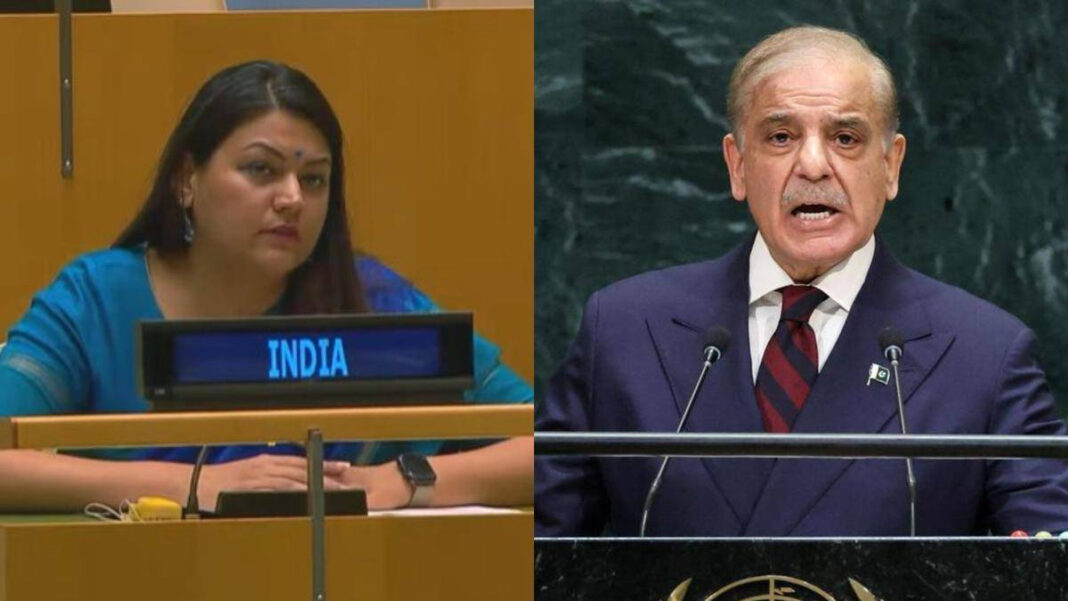
In a significant address to the United Nations General Assembly, India has firmly rebutted the allegations made by Pakistan regarding its engagement in terrorism and cross-border extremism. India’s Permanent Representative to the UN, Ruchira Kamboj, emphasized the need for accountability and the serious consequences of harboring and supporting terrorist activities. The verbal confrontation at the UN highlights the escalating tensions between the two neighboring nations, which have been mired in conflict since their independence in 1947.
During the session, Kamboj described Pakistan’s claims as “falsehoods and deceit,” asserting that its narrative aims to distract from its own record as a state that has actively supported terrorism. India has consistently accused Pakistan of harboring and facilitating terrorist groups which perpetrate violence against Indian citizens, particularly in the region of Jammu and Kashmir. Kamboj underscored the urgency of international cooperation to combat terrorism, arguing that deceptive tactics employed by nations like Pakistan only exacerbate global security threats.
“One cannot afford to turn a blind eye to the realities at hand,” Kamboj stated. “The world must recognize that terrorism, irrespective of where it comes from, must be condemned unequivocally.” She called on the international community to take a firm stance against terrorism and its sponsors, urging nations to reject narratives that undermine collective efforts to combat this scourge.
Pakistan’s recent maneuvers at the United Nations have included attempts to position itself as a victim of regional instability, a strategy that India vehemently contests. Kamboj’s intervention served as a direct rebuttal, accusing Islamabad of manipulating the discourse around conflicts to avoid accountability for its actions and support for terrorist proxies.
The Indian representative further elaborated on the consequences of terrorism, asserting that it extends beyond national boundaries and directly threatens global peace and security. “The narratives we promote today will shape the world of tomorrow,” she warned, underscoring that the failure to address terrorism decisively today carries the risk of greater instability in the future.
Kamboj reiterated India’s commitment to combating terror at a domestic and international level, referencing India’s active role in multinational coalitions aimed at eradicating the threat of terrorism. In contrast, she stressed that Pakistan must confront its own complicity and stop using terrorism as a means to achieve geopolitical objectives.
The tension between India and Pakistan remains a flashpoint in South Asian politics, with both nations possessing nuclear capabilities and enduring a historical backdrop of conflict. While India advocates for peace and cooperation, it continues to emphasize the necessity of addressing the root causes of terrorism – a condition it believes is not met as long as Pakistan fosters a culture of militancy.
As discussions continue at the UN, the world watches closely, aware that the stakes are high and that the implications of inaction can resonate far beyond the subcontinent. India’s clarification and strong stance against Pakistan’s alleged deceit serve as a reminder of the ongoing complexities in the region, as well as the pressing need for a united front against terrorism. The challenge lies not only in addressing the immediate threats but also in reworking narratives that can shape a more stable future for all nations involved.
In these fraught times, India’s call for truth, accountability, and robust action against terrorism underscores a crucial point: that the fight against extremism is as much about the narratives we accept and propagate as the actions we take on the ground.