
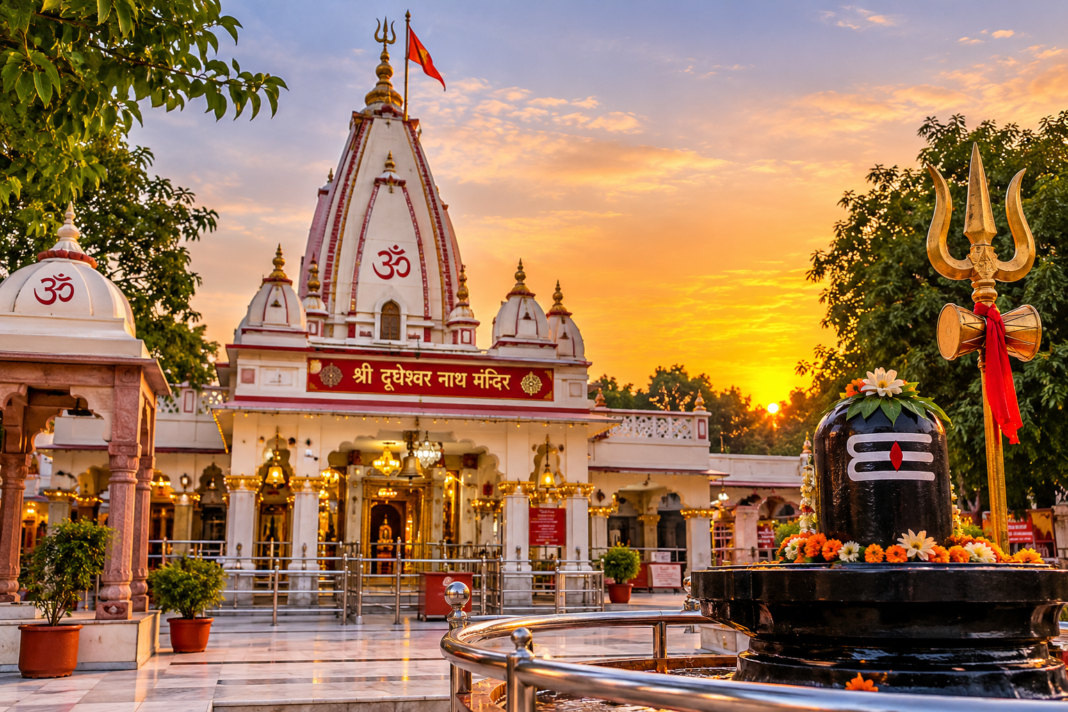

There are some places that feel different the moment you enter them. Shri Dudheshwar Nath Temple in Ghaziabad is one such place. Located in the heart of the city, this ancient Shiva temple attracts devotees throughout the year and becomes especially lively during Mondays, Sawan and Maha Shivratri.
The first thing a visitor notices is the devotional atmosphere. The sound of bells, the chanting of “Har Har Mahadev,” and devotees carrying offerings for Lord Shiva give the temple a distinctly spiritual character. Despite being surrounded by a busy urban area, stepping inside the temple complex offers a noticeable change of pace.
A Temple Surrounded by Ancient Beliefs
Dudheshwar Nath Temple Ghaziabad is dedicated to Lord Shiva and is traditionally associated with a Swayambhu, or self-manifested, Shiva Lingam. The Ghaziabad district administration describes it as an ancient Shiva temple popular with devotees across the Delhi-NCR region.
The temple’s history is also closely connected with local mythology. According to traditional accounts, the area was once associated with the Hindon River, known in older references as Harnandi. One popular belief connects the site with Vishrava, the father of Ravana, who is said to have performed intense penance here.
Another well-known story explains the temple’s name. Local tradition says that cows from the nearby area would regularly come to a particular spot and milk would flow naturally over the Shiva Lingam. The discovery eventually led people to the sacred spot, giving rise to the name “Dudheshwar,” associated with milk and Lord Shiva. These accounts are part of the temple’s religious tradition rather than independently established historical facts.
What Makes the Temple Special?
For devotees, the importance of Dudheshwar Nath is not limited to its age or stories. The temple has a long-standing mahant tradition and remains an active centre of worship and spiritual practice.
The temple’s official history records the manifestation of the Shiva Lingam in 1454 CE and describes the shrine as a significant historical and religious centre. It also records a connection with the traditional Nath and Juna Akhara monastic lineage.
The temple complex is also associated with educational and spiritual activities. A Ved Vidyapeeth was established within the temple premises in 2002, adding another dimension to the site’s religious and cultural role.
When Should You Visit?
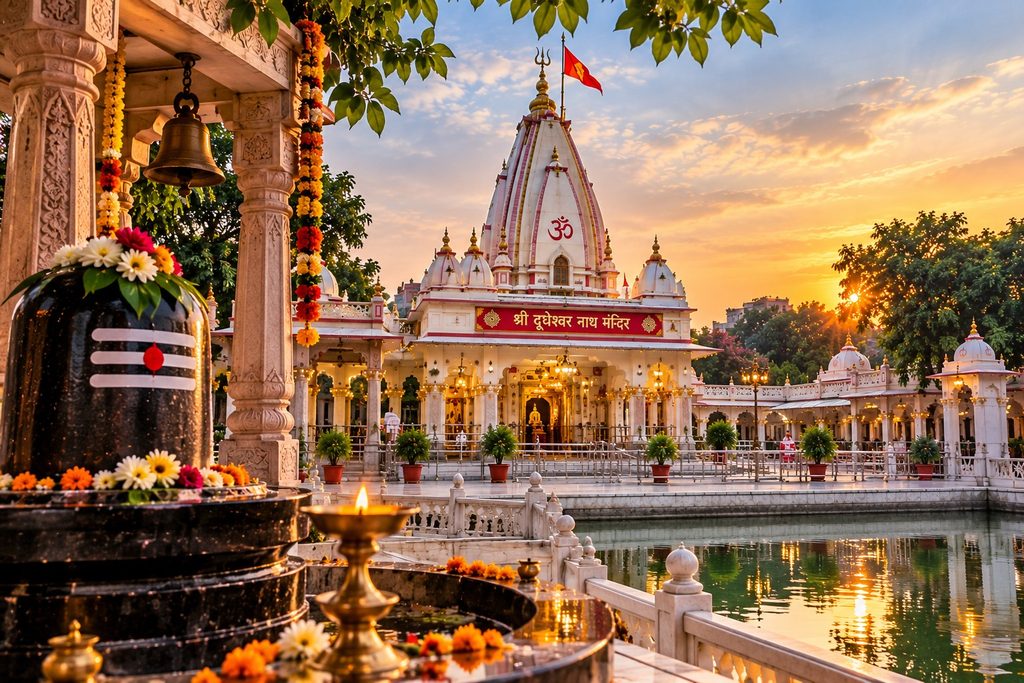
The temple is open in two daily sessions. According to its official website, the morning opening hours are 4:00 AM to 12:00 PM, while the evening session is 5:00 PM to 9:00 PM.
If you prefer a relatively peaceful visit, an early morning darshan can be a good choice. Mondays and major Shiva festivals can be considerably busier, so visitors should be prepared for crowds during these periods.
What Visitors Should Keep in Mind
A visit to Dudheshwar Nath Temple is best approached as a spiritual and cultural experience rather than simply another sightseeing stop. Dress respectfully, follow the temple’s instructions, and be patient when the complex is crowded.
Photography rules and access arrangements may vary, so it is sensible to follow instructions from temple authorities rather than assuming that every area is open for photography.
For someone exploring Ghaziabad beyond its modern roads, markets and commercial areas, Dudheshwar Nath Temple offers a glimpse into the city’s older spiritual identity. Its stories, rituals and continuing traditions are what make the temple meaningful to generations of devotees.
Short Summary
Dudheshwar Nath Temple is one of Ghaziabad’s best-known Shiva temples, combining religious tradition, local mythology and a long-standing spiritual heritage. Known for its Swayambhu Shiva Lingam and strong connection with devotees from the Delhi-NCR region, the temple remains an important place of worship. Visitors can experience its devotional atmosphere, learn about its traditions and discover a different side of Ghaziabad’s cultural history.