
Galouti Kebab is not just food. It is an invention of compassion, creativity, and culinary genius. Its story begins in the royal kitchens of Lucknow, where cooking was not about luxury alone but about emotion, respect, and innovation.
The Art of Making Galouti Kebab
The legend says Nawab Asaf-ud-Daula, a great patron of food and culture, had grown old and lost most of his teeth. He loved meat deeply but could no longer chew it. The royal chefs were challenged to create something that could be eaten without biting, without effort, yet without compromising flavor. What emerged was a dish that could dissolve on the tongue like poetry: the Galouti Kebab.
The word “Galouti” itself comes from galna, meaning “to melt.” And melt it truly does.
Unlike ordinary kebabs, Galouti uses extremely fine minced meat, traditionally tenderized with raw papaya paste. What made it legendary was not only softness but its spice composition. It is said the original recipe used more than 160 spices. While modern versions use fewer, the philosophy remains the same: complexity without heaviness.
Each spice had a purpose. Some for aroma. Some for digestion. Some to create warmth. Some simply to make the kebab unforgettable.
What makes Galouti Kebab extraordinary is its balance. Despite its richness, it never feels overpowering. The texture is silky, the aroma subtle, the taste layered. It is indulgent without being aggressive.
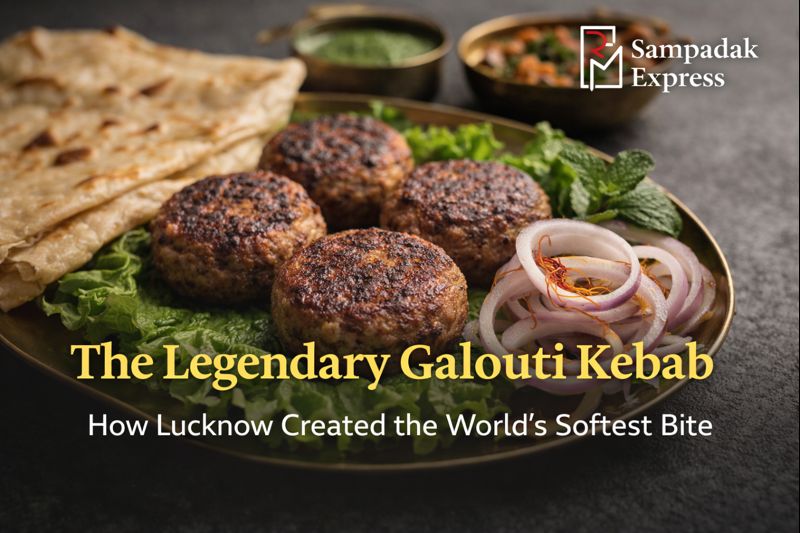
Galouti is traditionally cooked on a flat tawa with pure desi ghee. The kebabs are flattened gently and flipped carefully so they remain intact. A slight crisp on the outside while remaining soft inside is the hallmark of perfection.
It is usually served with:
- Roomali roti
- Ulte tawa ka paratha
- Saffron onion rings
- Mint chutney
But its real partner is silence. Because the first bite demands attention.
Over time, Galouti Kebab left the royal courts and entered Lucknow’s streets. Places like Tunday Kababi turned it into a living heritage. Here, food became history served hot.
What is beautiful about Galouti is that it represents Indian culinary thought:
Food is not just about hunger. It is about dignity.
It is about caring for those who cannot eat like before.
It is about turning limitation into brilliance.
In today’s fast-food culture, Galouti stands quietly as a reminder that the finest food was never rushed. It was crafted with patience, science, and heart.
You don’t eat Galouti Kebab.
You experience it.
And in every soft bite, Lucknow still whispers its royal past.