 "
/>
"
/>

‘Ranabaali’ Movie Review: Vijay Deverakonda, Rashmika Mandanna Anchor a History-Rich but Overstuffed Rayalaseema Drama
Telugu cinema has long been characterized by its depiction of the Rayalaseema region, often focusing on faction wars and masculinity while bypassing nuanced storytelling. Films from the 1990s and 2000s have created an enduring pop culture image of this narrative style. However, director Rahul Sankrityan’s Ranabaali, featuring Vijay Deverakonda and Rashmika Mandanna, attempts to present a fresh perspective on this culturally rich area, intertwining folklore and history.
Overview of the Film
In this ambitious film, Deverakonda embodies a fierce, warrior-like persona reminiscent of earlier portrayals, yet Sankrityan infuses the storyline with historical context that broadens its scope. The result is a film that captures genuine interest in the region’s history and folk traditions, even as it occasionally gets bogged down by conventional cinematic tropes.
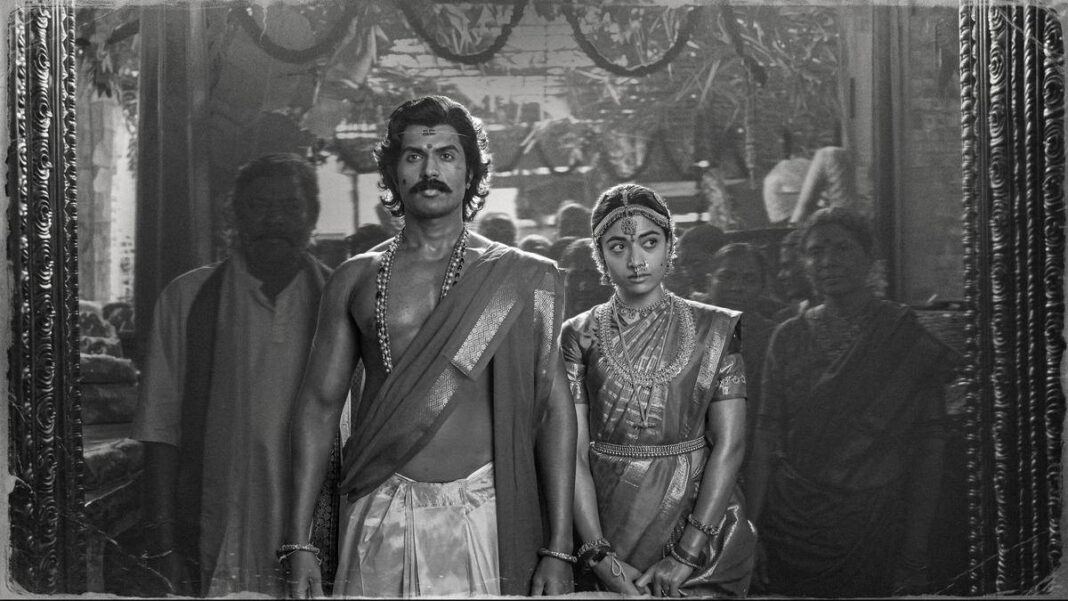
The film opens in the late 1870s during British-governed India. The attention to detail is commendable, with earth-toned visuals conjuring memories of Lagaan, and the architecture successfully recreating the Rayalaseema of that era. Cinematographers Jishnu Bhattacharya and Nirav Shah excel, while production designer Shivam Rao and art director Vithal Kosanam contribute richly to the film’s authenticity.
Plot Dynamics
Ranabaali serves as a companion piece to Sankrityan’s previous work, Shyam Singha Roy, as it ventures into a complete period drama. Unlike the earlier film, this narrative sticks closer to familiar mainstream storytelling, even as it embeds itself in a historical framework. Writer Pramod Tammineni cleverly weaves the oral tradition of Burra Katha from Rayalaseema into the film, presenting Ranabaali as a fictional character inspired by local chieftains.
A slow buildup allows the audience time to absorb this new milieu, sharpened with Deverakonda’s transformation into a rugged, tanned figure shedding his urban persona. The narrative grows increasingly engaging, particularly as it contrasts the contemporary struggles against drought with the story of the Great Madras Famine of 1876-78. This setting highlights the adverse effects of colonial exploitation on the land and its people.
Key Developments
The plot accelerates with the arrival of British commissioner Sir Theodore Hector, portrayed by Arnold Vosloo, whose character is based on historical figures such as Sir Richard Temple. Hector emerges as a ruthless official driven to strip the locals of essential resources, exacerbating the conditions that lead to famine. Throughout his journey, Ranabaali, a young man hardened by the land’s circumstances, becomes a symbol of resilience and resistance.
The film’s ambitious scope is apparent in its exploration of the historical backdrop, with food scarcity serving as a recurring motif. This emphasis on grains, coupled with the depiction of how the British mistreat the locals, demonstrates a layered approach to storytelling, albeit with some narrative fatigue as mainstream tropes occasionally resurface.
Character Arcs and Performances
The story thrives on developing various character arcs, especially those of Rajamma, Ranabaali’s mother, played by Easwari Rao, and Jayamma, portrayed by Mandanna. Rajamma exudes an overtly patriarchal influence, yet Jayamma also possesses a strong agency. The evolution of Jayamma and Ranabaali’s initially tumultuous relationship into a romance becomes one of the film’s more compelling arcs, imbued with moments of tenderness, especially illustrated in the song ‘Endayya Saami.’
While Deverakonda’s fierce portrayal is commendable, it is Rashmika Mandanna who brings warmth and depth to her role. She adeptly transitions between Jayamma’s vulnerability and resilience, making her performance a highlight amid the film’s narrative labyrinth.
Artistic Execution and Thematic Depth
The film showcases vibrant historical visuals juxtaposed with sobering realities of the past, enhanced by Ajay-Atul’s accompanying score, though at times the background music overwhelms the dialogue. The storytelling is particularly engaging up to the intermission, positing significant reflections on famine and collaboration or resistance during dire times.
The film thoughtfully questions colonialism, as seen in scenes where British officers speak Telugu, reflecting their attempts to integrate with the local populace. The filmmakers do not shy away from portraying the brutality of the famine, although some sequences, such as a child being thrown into boiling gruel, verged on excessive. Despite receiving feedback that led to the depictions of violence being toned down, the historical gravity sometimes overwhelms the emotional narrative.
Visually, the film makes provocative contrasts. For instance, a British officer walking over grains while a bride sidesteps them reinforces cultural reverence towards food, although certain violent imagery risks detracting from the film’s intended impact.
Critical Reception
Despite its ambition, Ranabaali faces challenges with pacing and narrative focus, often feeling crowded with themes of revolt, historical dramatization, and folkloric elements. While these components are integral to its message, they render the film occasionally felt overstuffed and convoluted. The final act grapples with ensuring the smooth integration of these multiple threads, and there are moments of emotional manipulation that can feel repetitive in modern cinema.
Ultimately, Ranabaali tells a vital story, shedding light on a significant chapter of Indian history, though it could benefit from a more refined approach. There are profound themes worth exploring, standing alongside familiar motifs from Indian cinema, yet the execution leaves room for improvement.
Ranabaali is currently showing in theaters and offers something for audiences eager to engage with a complex narrative about resistance and resilience amidst historical strife.