
 "
/>
"
/>

Monster: The Lizzie Borden Story (English)
Title: “Monster: The Lizzie Borden Story” Review: Ryan Murphy’s Unraveling of a Historical Figure into Stereotypes
Ryan Murphy, a well-known name in the world of television for his ability to create engaging and provocative narratives, has once again ventured into the realm of true crime. With “Monster: The Lizzie Borden Story,” Murphy tackles the infamous case of Lizzie Borden, a figure shrouded in mystery and controversy due to her alleged role in the brutal 1892 murders of her father and stepmother. However, rather than offering a nuanced exploration of Borden’s life and circumstances, the series succumbs to the pitfalls of cliché and stereotype, presenting a heavily dramatized retelling of events that ultimately collapses under the weight of its own formulaic approach.
At its core, “Monster” aims to delve into the psyche of a woman who, despite facing immense societal constraints, became a symbol of scandal and intrigue. Yet, instead of crafting a rich, layered character study, the series relies on tired tropes that reduce Lizzie to the archetype of the “female serial killer.” Much of the narrative centers around her presumed motivations for murder, leaning heavily on a sensationalized portrayal that strips away the complexities of her identity, her familial relationships, and the historical context in which she lived.
The series’ structure follows the conventions set by other true crime dramas but lacks the same depth or originality. Viewers are treated to a collage of edgy visuals and dramatic music cues that feel almost obligatory in today’s oversaturated television landscape. As the story unfolds, moments that could have been powerful examination points instead become mere vehicles for shock value, relegating potential character development to the background. Lizzie’s struggles with societal expectations and her relationships are overshadowed by an overemphasis on violence and horror, ultimately leading to a missed opportunity for a deeper exploration of her life.
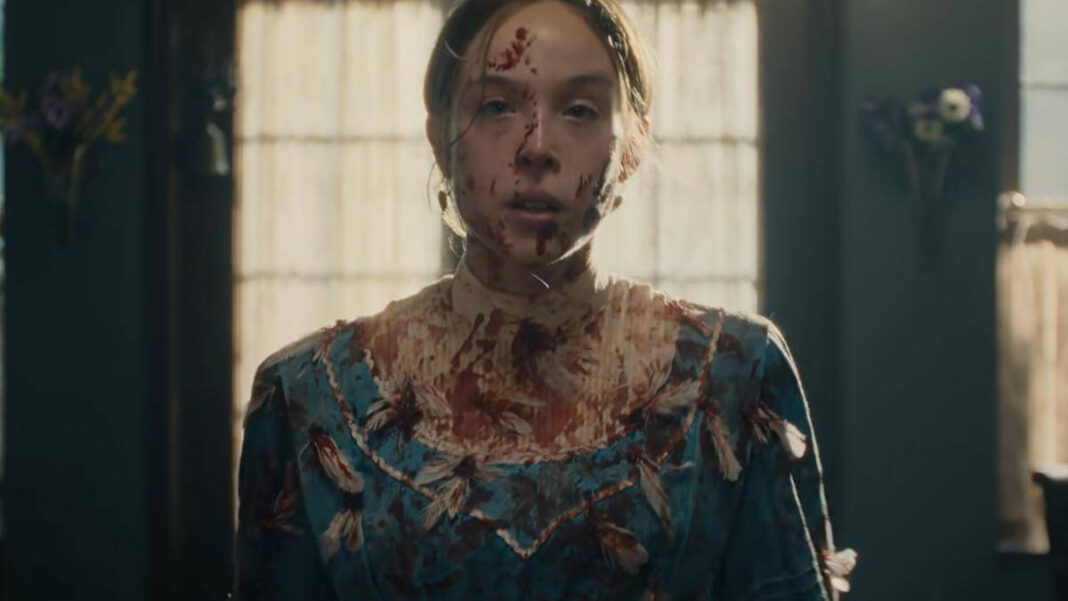
One of the most troubling aspects of “Monster” is its portrayal of female agency. In seeking to depict Lizzie as a capable figure who asserts her autonomy, the series instead pushes her into familiar tropes of the chaotic woman, embodying the stereotype of the “hysterical female.” By framing her actions as the product of madness or instability, the narrative undermines the very real challenges Borden faced—not only as a woman of her time but also as an individual grappling with profound familial dynamics. The series’ decision to highlight bloodshed at the expense of nuanced characterization speaks to a larger issue in the genre: the tendency to sensationalize female violence without understanding the personal or societal influences that lead to such acts.
Additionally, the supporting characters in “Monster” often feel like mere caricatures, serving to amplify Lizzie’s narrative rather than providing any substantive context or emotional gravitas. The portrayal of her family, law enforcement, and the public’s reaction to the murders all lack depth, offering little more than a superficial backdrop to an otherwise chaotic story. The result is a whitewashed interpretation of a deeply complex historical event, where real-life implications are lost in the pursuit of drama.
While the production values are commendable—boasting impressive period costumes and atmospheric set designs—the hollow execution casts a long shadow over the series. Viewers seeking grounded storytelling or historical accuracy may find themselves disillusioned, as “Monster” leans heavily into sensationalism rather than critical engagement with its subject matter. The historical inaccuracies are glaring, particularly in its portrayal of events and the characters involved, leading to discomfort among history enthusiasts and advocates for respectful depictions of real people.
In summary, “Monster: The Lizzie Borden Story” stands as a missed opportunity for a meaningful exploration of one of America’s most notorious figures. Ryan Murphy’s work, while visually arresting, collapses under the weight of clichéd storytelling and shallow characterizations. In the end, the series reiterates age-old stereotypes about female killers rather than challenging them, leaving viewers with little more than a sensationalized reenactment of history. Audiences craving a deeper understanding of Lizzie Borden may ultimately find that “Monster” falls woefully short of its potential, a hack job that leaves its subject as enigmatic as before—lost beneath layers of cliché and spectacle.