 "
/>
"
/>

A Brewing Storm
Mamata Banerjee Vows Opposition Unity in Demanding Removal of Chief Election Commissioner Gyanesh Kumar
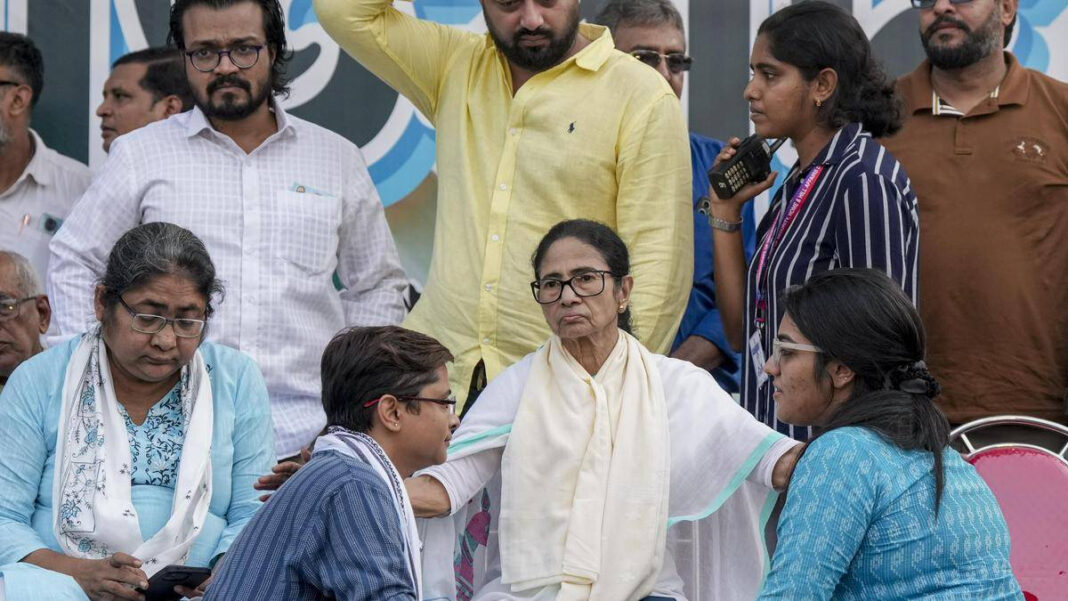
In a significant political development, West Bengal Chief Minister Mamata Banerjee has stepped into the spotlight, rallying opposition parties to unite against what she claims is an overreach by the Election Commission of India. At the heart of her campaign is a call for the resignation of Chief Election Commissioner (CEC) Gyanesh Kumar, whom she accuses of being biased and undermining the integrity of the democratic process.
A Catalyst for Unity
Mamata Banerjee’s stance comes amidst growing concerns about the fairness of electoral processes in India, particularly in light of recent state elections where allegations of partisanship have surfaced. During her speeches and public appearances, Banerjee emphasized the need for a united front among opposition parties, framing the demand for Kumar’s resignation as a non-partisan issue that transcends political affiliations.
As one of the staunchest critics of the ruling Bharatiya Janata Party (BJP), Banerjee has long championed the cause of grassroots democracy and transparency in governance. By calling out the CEC, she aims to not only address specific grievances but also to galvanize opposition forces who have frequently found themselves at odds with an administration that critics allege seeks to manipulate electoral outcomes.
The Allegations Against CEC Gyanesh Kumar
Banerjee’s accusations against Gyanesh Kumar are rooted in claims of partiality towards the ruling party. She has voiced concerns over decisions made by the Election Commission that she believes favored the BJP, particularly in critical electoral phases. These concerns echo those of several other opposition leaders, who have also expressed frustration regarding the Election Commission’s conduct in recent elections.
Gyanesh Kumar, appointed as CEC in the midst of heightened political tensions, has been at the center of scrutiny. Under his stewardship, several incidents—ranging from alleged biased regulations to perceived inaction on misconduct—have stirred skepticism about his impartiality. The Chief Election Commissioner has denied these allegations, asserting the integrity and independence of the Commission, but opposition lawmakers remain unconvinced.
The Call for Opposition Solidarity
In a bid to strengthen her position, Banerjee has extended invitations to various regional and national leaders from across the political spectrum to join her in this movement. This strategy appears to be a calculated move to promote solidarity against a common adversary, reinforcing the idea that the issue at hand is to preserve the sanctity of electoral democracy rather than to pursue partisan agendas.
Political analysts suggest that such a coalition could reshape the dynamics of Indian politics, particularly as the nation approaches pivotal elections. By fostering co-operation among traditionally rival parties, Banerjee hopes to create a formidable alliance that could challenge the BJP’s dominance in the upcoming electoral battles.
Implications for Indian Democracy
The demand for CEC Gyanesh Kumar’s resignation highlights broader concerns about democratic processes in India. Many observers argue that the integrity of electoral institutions is paramount for sustaining democracy, and any perceived bias can lead to widespread disillusionment among the electorate. Should the opposition successfully unite behind Banerjee’s call, it could lead to significant repercussions for both the Election Commission and the ruling party.
As the political landscape evolves, the coming weeks are likely to see intensified discussions on the role of electoral bodies, the accountability of their leaders, and the need for reforms that enhance transparency and fairness. While Mamata Banerjee’s campaign for opposition unity raises critical questions about electoral integrity, it also presents a pivotal moment for the opposition to redefine its strategies and engage with voters disenchanted by the current political climate.
In conclusion, Mamata Banerjee has emerged as a vocal proponent of electoral integrity, calling for a unified response from opposition parties to address the perceived failings of the Election Commission under Gyanesh Kumar. This initiative not only reflects her commitment to democratic principles but also seeks to mobilize a collective effort to safeguard the electoral process in India, a task that resonates deeply with an increasingly discerning electorate. As the political machinery gears up for the forthcoming elections, the implications of this movement will undoubtedly be closely watched by stakeholders across the spectrum.