
Maharashtra government unveils Fodder Development Policy to tackle shortage
The Maharashtra cabinet on Tuesday, September 29, 2026, approved a Fodder Development Policy designed to bolster the dairy sector and mitigate recurring shortages of animal feed, announcing a district-wise plan to cultivate grasses, fodder trees and improved fodder crops across the state. The move comes amid a declared drought in large parts of Maharashtra during the 2026 kharif season.
Policy framework and objectives
Under the new policy, the state will draw up comprehensive lists of fodder-suitable grasses, fodder-producing trees, improved fodder crop varieties, and both traditional and non-traditional fodder sources. These lists will underpin schemes tailored to regional conditions, with the objective of stabilising fodder availability during periods of scarcity.
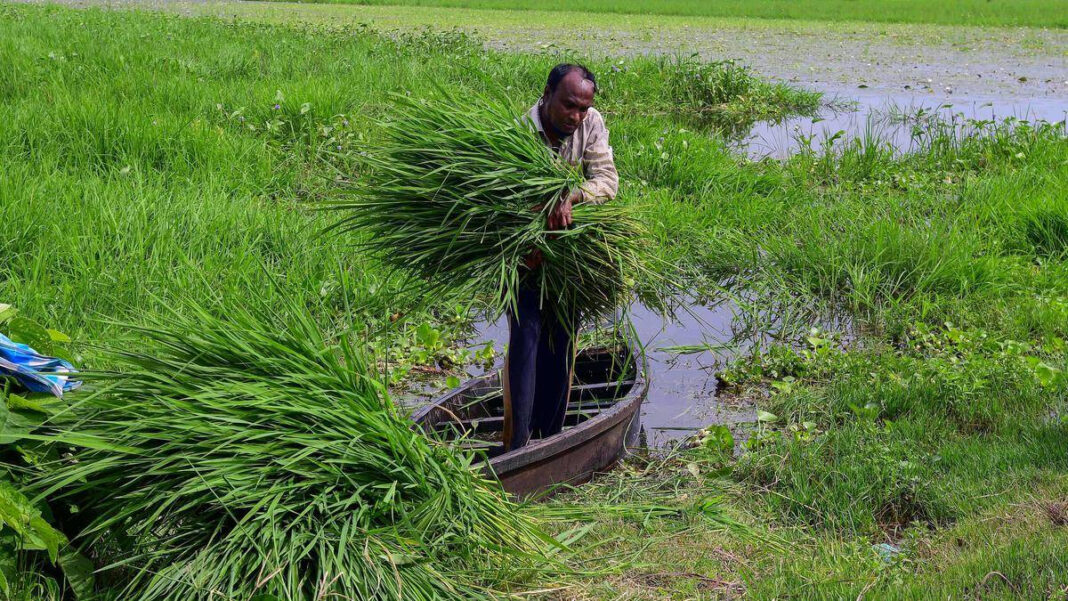
The approach emphasises expanding the area under fodder cultivation and promoting pasture development. It also encourages integrated systems, such as:
- Horti-pasture: cultivating fodder in open spaces between fruit trees in orchards
- Silvi-pasture: growing perennial grasses alongside fodder-yielding trees such as subabu
- Utilising unused or underused land for fodder cultivation
The policy is intended to provide a structured, district-wise response that aligns cultivation efforts with local agro-climatic conditions, supporting dairy farmers and livestock owners through a more secure and diversified fodder base.
Drought backdrop and “Trigger 1” imposition
The announcement follows a difficult monsoon season marked by uneven rainfall. The government has imposed “Trigger 1” in 265 talukas for the current kharif season, signalling drought-related interventions. On Saturday, September 26, Chief Minister Devendra Fadnavis issued a Government Resolution (GR) formally announcing drought in 265 of Maharashtra’s 358 talukas.
Ground truthing and local assessments
Chief Minister Devendra Fadnavis said the administration will carry out on-ground inspections to ensure areas experiencing crop loss are accurately identified, even if they did not meet standard drought triggers owing to atypical weather patterns. He emphasised that rainfall averages would be examined at more granular, mandal-level scales.
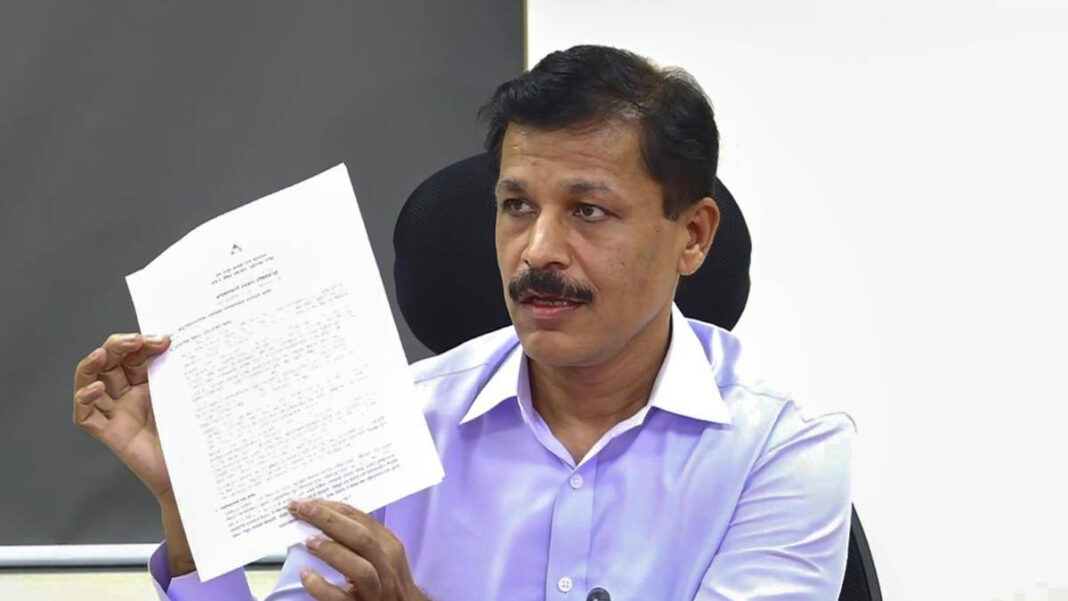
“There is a need of ground truthing as situation has been weird as first two months witnessed rains and next two months had a dry spell. No injustice should happen to farmers, so after ground truthing in talukas where average rainfall has been more yet the farmers suffered crop loss will be considered in second list,” Mr. Fadnavis said.
Officials said a subcommittee has been tasked with assessing conditions in their respective regions and factoring in local rainfall data during the verification process. Ground truthing involves collecting real-world data to validate information derived from remote assessments, ensuring that relief measures correspond to actual conditions on the ground.
Task force and additional measures
To guide implementation, the government has constituted a state-level task force to evaluate livestock populations and current fodder availability, and to recommend steps to bridge the demand–supply gap. Mr. Fadnavis also said the government will issue a separate resolution outlining measures related to water usage, livestock support and drinking water provisions, aligning drought relief with the fodder strategy.
Employment and drought mitigation works: ₹6,728 crore allocated
Complementing the fodder initiative, Maharashtra Employment Guarantee Scheme Minister Bharat Gogawale announced a package of drought-related works to generate employment and create durable rural assets. A total of 375 categories of works—including individual projects, water conservation initiatives and infrastructure development—will be undertaken.
“The focus will be to create permanent assets in villages through these works,” Mr. Gogawale said, adding that ₹6,728 crore has been made available to support employment generation under the scheme. The Centre will contribute 60% of the funds, with the state bearing the remaining 40%.
Division-wise allocations include:
- Amravati division: ₹1,145 crore
- Konkan division: ₹489 crore
- Chhatrapati Sambhajinagar division: ₹1,944 crore
- Nagpur division: ₹119 crore
- Pune division: ₹801 crore
What to expect next
With the policy now approved, the government will move to finalise species lists and operational schemes tailored to each district, while the state-level task force assesses fodder demand and supply gaps. As part of the drought response, ground-truth verification is set to determine additional areas eligible for relief where farmers suffered losses despite overall higher rainfall averages.
In tandem, the forthcoming resolution on water usage, livestock measures and drinking water support is expected to align essential services with the fodder development plan, offering a coordinated response to the current drought conditions and aiming to strengthen resilience in Maharashtra’s dairy and livestock sectors.
Significance
The Fodder Development Policy marks a structured, multi-pronged attempt to stabilise fodder supplies through targeted cultivation, integrated land-use systems and better use of underutilised lands. Combined with drought mitigation works and a commitment to ground-level verification, the initiative seeks to provide immediate relief while laying the groundwork for long-term sustainability in the state’s dairy and livestock economy.