 "
/>
"
/>

| Onion Type | Wholesale Price per kg | Retail Price per kg |
| First Quality | ₹ 50 – 55 | ₹ 65 – 70 |
| Second Quality | ₹ 40 – 45 | ₹ 50 – 55 |
| Third Quality | ₹ 30 – 35 | ₹ 40 – 45 |
| Source: Onion Merchants Association Bengaluru | ||
Drought Damages 62,985 Hectares of Onion Crop in Karnataka; Prices Remain High
In recent weeks, Karnataka has found itself embroiled in an escalating crisis as a severe drought has wreaked havoc on the state’s agricultural landscape. The harsh climatic conditions have inflicted significant damage on onion crops, affecting a staggering 62,985 hectares. As farmers grapple with the aftermath of the drought, the impact is being felt beyond the fields, sending onion prices soaring in local and national markets.
The Impact of Drought on Onion Production
Karnataka is one of India’s key onion-producing states, and the crop plays a crucial role in the livelihoods of countless farmers. However, this year’s monsoon season has been marked by erratic rainfall patterns, leaving many regions, especially in the northern part of the state, parched. The Karnataka government reported that the drought has led to the destruction of a substantial portion of the onion crop, which had already been vulnerable due to fluctuating weather conditions.
Farmers reported losses not only in terms of immediate yield but also with respect to the investments made in the cultivation process. With water scarcity forcing many to rely on costly irrigation methods, the financial burden has intensified. Consequently, many farmers are now left in dire straits, struggling to recover from what has been termed one of the worst droughts in recent years.
Rising Prices and Market Impact
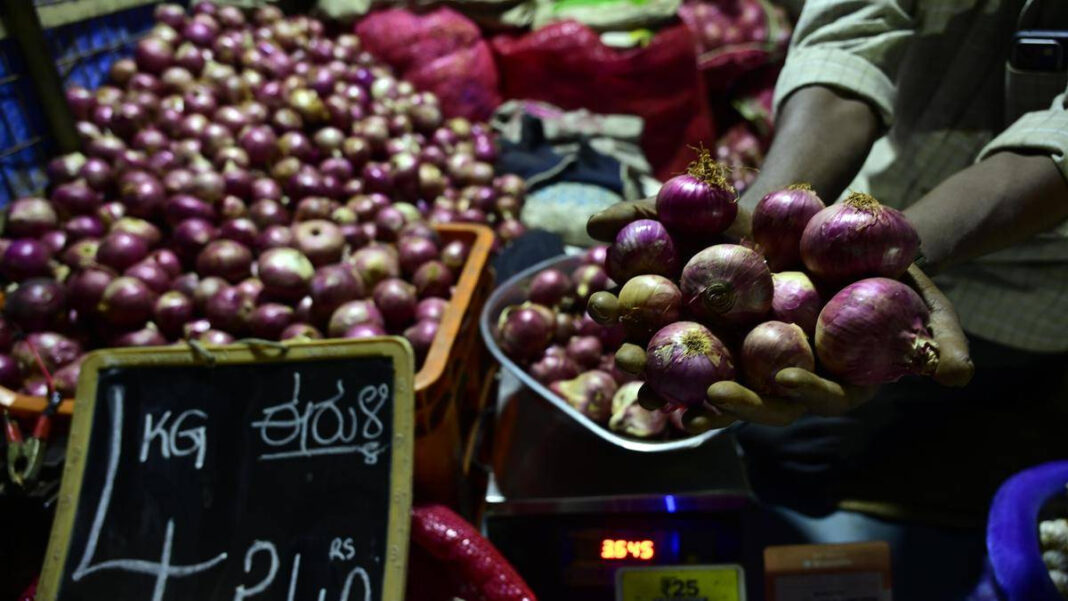
As the extent of the damage becomes apparent, consumers are feeling the pinch as onion prices have skyrocketed. Wholesale prices have surged, with reports indicating a doubling of prices in some markets. This price hike is particularly concerning given that onions are a staple in Indian households, deeply embedded in the country’s culinary culture.
The increase in prices can be attributed to a combination of factors: not only has the drought reduced the available supply, but there are also heightened fears regarding the overall agricultural output in the region for the next harvesting cycle. Retail prices are projected to remain high for the foreseeable future unless there is significant rainfall or measures are taken to mitigate the situation.
Government Response and Recovery Efforts
The situation has prompted action from the Karnataka government, which has announced relief measures for affected farmers. This includes the allotment of financial assistance, input subsidies, and the provision of resources for irrigation and crop management. Officials are also exploring options to introduce alternative crops that can withstand drier conditions in the future.
Furthermore, the government is in talks with various agricultural experts and scientists to assess the long-term impacts of climate change on farming in Karnataka. There is an urgent need to invest in sustainable farming practices and water conservation techniques to safeguard against future droughts.
Looking Forward
As Karnataka works to recover from the effects of this severe drought, the resilience of its farmers and the adaptability of its agricultural practices will be tested. The current situation serves as a poignant reminder of the vulnerabilities inherent in agriculture, particularly in the face of climate variability.
While the immediate challenges remain daunting, the potential for innovation and reform in the agricultural sector could pave the way for a more resilient future. As consumers, we must also recognize the value of supporting local farmers and investing in sustainable food networks, ensuring that the backbone of Karnataka’s agriculture can withstand the trials of nature.
In conclusion, the drought’s impact on Karnataka’s onion crop underscores the urgent need for strategic approaches to agriculture, climate resilience, and food security as the state— and indeed the country— navigates the complexities of an ever-changing climate.