
From idle plots to tapping trails: rubber boom lifts hopes for stakeholders in Keralam
After years of neglect driven by low prices and a shortage of skilled tappers, rubber plantations across central Travancore are springing back to life. A sharp price rally has brought tapping knives back into service, cleared undergrowth from long-idle plots, and drawn renewed interest even in half-acre holdings that once struggled to find caretakers.
Revival after a prolonged slump
Plantations in key rubber belts such as Pala, Erumely, Kanjirappally and Erattupetta had been overgrown and partially abandoned in recent years as farmers grappled with depressed returns and dwindling labour. Stakeholders now report a marked turnaround as prices climb, with both tenancy demand and lease rates rising in tandem.
“There is clearly renewed momentum. Plantations that had long remained abandoned in places such as Pala, Erumely, Kanjirappally and Erattupetta are now in great demand,” said Babu Joseph, general secretary of the National Consortium of Regional Federations of Rubber Producers Societies India. He added that even small plots measuring half an acre are finding takers, reflecting how the price surge is rippling through the market.
Leasing and share-tapping arrangements gain ground
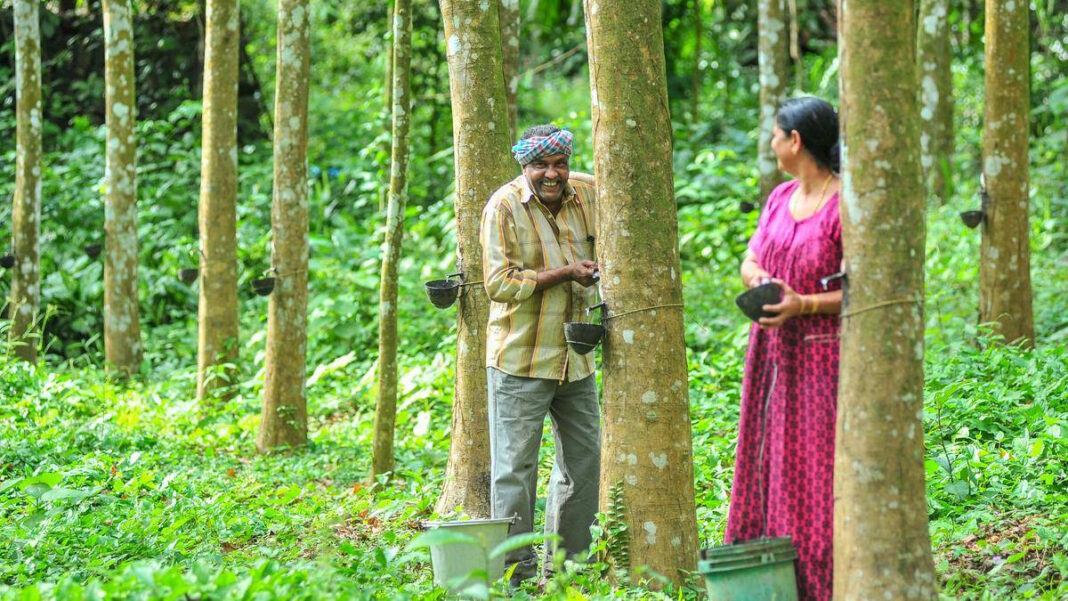
The rebound is being bolstered by flexible operating models. Share-tapping arrangements—under which the output is divided equally between plantation owners and tappers—are seeing wider adoption. With prices holding firm, the model enables owners to revive neglected stands while allowing workers to directly participate in improved returns.
Leasing, too, has become increasingly attractive. Rising lease rates, linked to the stronger price environment, offer owners a viable path to restart production after years of idleness, while providing a lump-sum upfront payment that can offset rehabilitation costs. Industry participants note that the trend is drawing in both experienced lessees and newcomers, who see an opportunity for better margins amid the current market dynamics.
According to Mr. Joseph, many small-scale farmers remain deeply tied to their holdings despite the hardships of the past decade. “Despite setbacks, they rarely consider exiting, even if they become somewhat disengaged,” he said, suggesting the present rally could enable those growers to reinvest in plots that had been left to languish.
Weather remains a critical variable
Even as prices encourage renewed activity, growers are cautious about production risks linked to changing weather patterns. The current season has seen fewer rainy days, allowing tapping to continue longer than usual. Yet higher daytime temperatures have restrained latex flow and depressed yields in several plantations. Looking ahead, heavy rain during the northeast monsoon could disrupt tapping schedules again, underscoring the fragile balance between favourable market conditions and volatile climate trends.
Market surge and its drivers
The immediate catalyst for the revival is the domestic price upswing. Sheet rubber (RSS Grade 4) touched an all-time high of ₹287 a kg on Thursday, October 15, 2026, according to the Rubber Board’s daily price bulletin. Officials attribute the rise to the ongoing conflict in West Asia, robust demand from tyre manufacturers and other industrial buyers, and supply constraints that have tightened availability.
With domestic production on a declining trend and geopolitical uncertainties persisting, officials expect rubber prices to remain firm in the near term. That outlook is fuelling both the appetite for leasing and the willingness of tappers to re-enter the field after years in which many sought other livelihoods.
Institutional support and hopes for new entrants
Rubber Board chairman N. Hari said the renewed interest among small-scale growers is heartening and increasingly visible during visits to rubber-producing societies across rural Kerala. “The momentum is visible in rural areas, especially when we visit rubber-producing societies. I hope this will also serve as a turning point, encouraging younger generations to take up rubber farming as a career,” he noted.
To support the revival, the Board is strengthening labour supply through initiatives such as INR Konnect, an online platform aimed at ensuring an adequate pool of trained tappers. Access to skilled tapping remains a crucial bottleneck, and stakeholders say matching workers with plantations in need will be essential if the current uptrend in prices is to translate into sustained production gains.
Outlook
For now, optimism outweighs caution in Kerala’s rubber heartland. From the hills around Kanjirappally to the plantations near Erattupetta and Pala, activity has picked up as owners clear neglected stands and strike new operating deals. Yet the sector’s recovery will depend on whether current prices hold amid supply tightness and geopolitical uncertainty, and on how well growers and tappers can navigate an increasingly unpredictable climate.
If the momentum continues, industry participants say the revival could mark a generational reset for Kerala’s smallholders—rekindling a crop that has long shaped the region’s rural economy, and potentially drawing a new cohort of young farmers back to rubber.