
Deva: The Original Vibe Master of ’90s Tamil Cinema
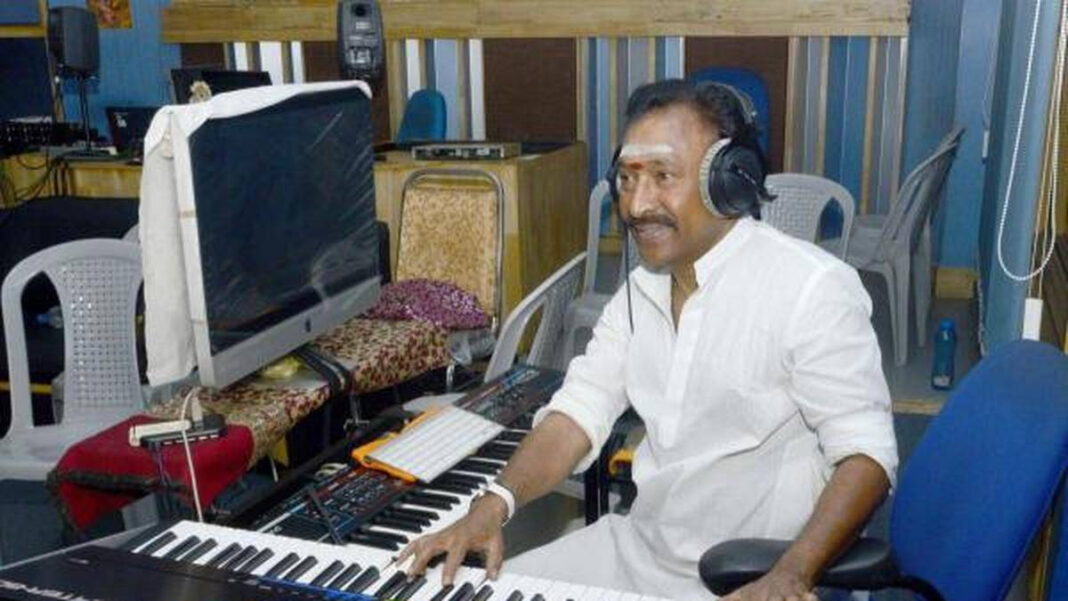
As music lovers reminisce about the vibrant sounds of the ‘90s, one name stands out as a quintessential emblem of that era: Deva. Often regarded as the “Vibe Master” of Tamil cinema, his compositions not only defined the mood of countless films but also captured the hearts of an entire generation. Deva’s music continues to serve as an evergreen time capsule, encapsulating the essence and exuberance of the ‘90s.
The Superstar Vibe
With the festive aura surrounding the cinema industry, there’s no better time to reflect on Deva’s contributions, particularly his collaborations with the legendary Rajinikanth. Deva crafted some of Rajinikanth’s most memorable songs, lending his genius to three of the actor’s biggest blockbusters: Baashha (1995), Annamalai (1992), and Arunachalam (1997). Tracks such as ‘Naan Autokaraan’, ‘Athanda Ithanda’, and ‘Ra Ra Ramayya’ resonate deeply with fans, while songs like ‘Alli Alli Anarkali’ from Arunachalam and the iconic titular theme from Baashha are emblematic of the Tamil masala genre. Deva’s ability to pivot between energetic gaana numbers and romantic melodies further solidified his versatile musical prowess.
A Dive Into Deva’s Gaana Hits
Among Deva’s noteworthy contributions is the infectious track ‘Laalakku Dol Dappi Ma’ from Suriyan (1992), which stands as a jubilant gateway into his diverse repertoire. The song’s catchy beats, paired with memorable lyrics, exemplify the exuberance of Deva’s gaana style. The laughter-rich visuals featuring late sensation S. Janaki and singer Mano leave an indelible mark on those who experienced the song during its prime. Other notable mentions include ‘Anjaam Number Busile’ from Porkkaalam (1997) and ‘Doddabetta Roadu Mela Mutta Barotta’ from Vishnu (1995), which show the playful side of Deva’s music.
Prabhu Deva and Deva: An Iconic Partnership
In Tamil cinema, the collaboration between Deva and actor-dancer Prabhu Deva remains legendary. Songs like ‘Kathadikuthu Kathadikuthu Kaasimettu Kaththadikkuthu’ bring back memories of Prabhu Deva’s captivating performances across various households in Tamil Nadu. The comedic interplay in ‘Thirupathi Ezhumala Venkatesha’ showcases the delightful synergy between music and dance that defined the era and continues to captivate audiences.
Deva’s Contributions to Ajith Kumar’s Rise
The ‘90s also heralded the emergence of Ajith Kumar as a significant star in Tamil cinema, with Deva’s compositions playing a pivotal role in enhancing his burgeoning popularity. Songs like ‘Konjam Naal Poru Thalaiva’ from Aasai (1995) and ‘Kavalai Padathe Sagodhara’ from Kadhal Kottai (1996) were instrumental in cementing Ajith’s status. Even lesser-known tracks, such as ‘Pillayarpatti Hero’ from Vaanmathi (1996), resonated deeply with fans, while ‘Loyola College Laila’ from Kalloori Vaasal (1996) remains a classic of that time.
Architect of the ‘90s Romantic Soundscape
Deva’s mastery extended beyond high-energy gaana tracks to encompass the romantic melodies that defined the decade. Fondly remembered are hits like ‘April Maathathil’ from Vaalee (1999) and ‘Kadhala Kadhala’ from Avvai Shanmugi (1996), alongside unforgettable love songs such as ‘Nalam Nalamariya Aaval’ from Kadhal Kottai and ‘Oru Mani Adithal’ from Kaalamellam Kadhal Vaazhga (1997). These tracks encapsulated the essence of young love and remain entrenched in the hearts of listeners, evoking nostalgic memories of simpler times.
A Lasting Legacy
As Tamil Nadu mourns the passing of Deva, it is evident that his musical genius will continue to echo through the generations. He was not only a prolific composer but also a pivotal figure who encapsulated the energy and ethos of an era. The exuberant melodies and memorable lyrics he crafted will forever remind those who cherish the vibrant spirit of the ‘90s cinema. In the hearts of fans, he will forever remain our eternal vibe master, leaving behind a legacy that shaped the future of Tamil music.