
‘Street Fighter’ Movie Review: Fists, Fetishes, and a Fighting Chance at Cult Status
The transition of video games to Hollywood has always been a challenging endeavor, particularly for fighting games. Unlike action-adventure or story-driven genres, fighting games primarily focus on the premise of picking a vibrant fighter and pitting them against another in combat. While films like Mortal Kombat and Tekken have tried to carve a niche in cinema with varying degrees of success, the beloved franchise Street Fighter makes a bold return to the big screen with a fresh adaptation that raises eyebrows and expectations alike.
Overview of the Film
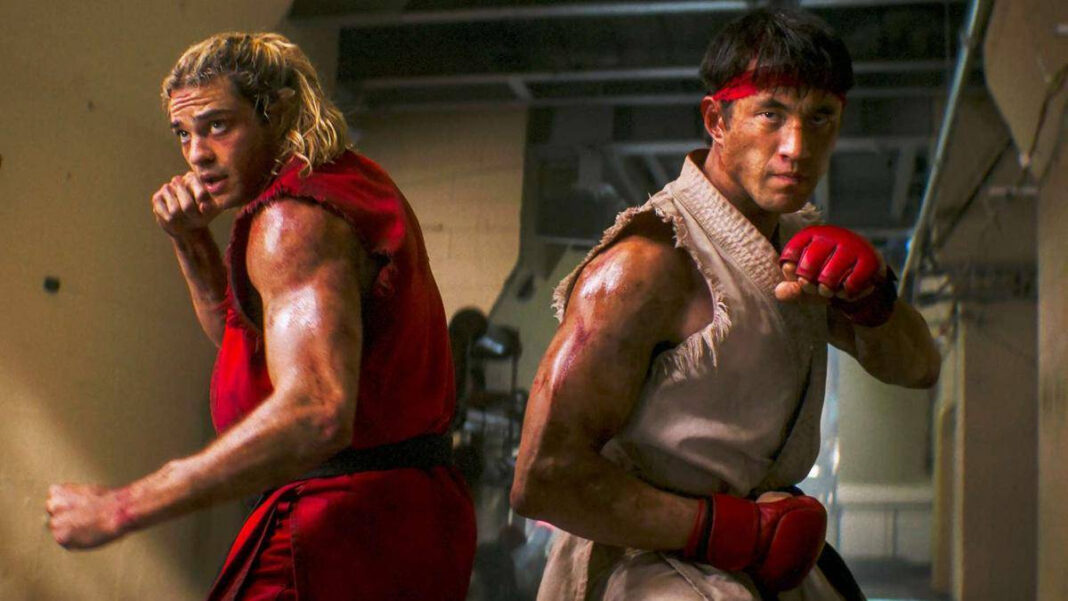
Directed by Kitao Sakurai and co-written by Sakurai and T.J. Fixman, the new Street Fighter film introduces viewers to a cast of eccentric martial artists gathered for a World Warrior Tournament. The film picks up the narrative in 1987, where Ryu (played by Andrew Koji) emerges victorious against Sagat, unintentionally stirring dark forces associated with Akuma (Joe “Roman Reigns” Anoa’i). As a result of this victory, Ryu’s mentor, Gouken (Don Lee), is killed, straining his bond with adoptive brother Ken Masters (Noah Centineo).
Six years later, the nefarious M. Bison (David Dastmalchian) organizes another tournament in Metrolao City, prompting Chun-Li (Callina Liang) to recruit fighters from around the globe. However, the screenplay quickly dissolves into a barrage of witty banter and absurd non-sequiturs, leaving a somewhat coherent plot in its wake as the story belabors the comedic elements of its characters.
Character Breakdown
The film presents a colorful array of characters notable for their striking personalities:
- Andrew Koji as Ryu: Emotionally reserved and perpetually unimpressed.
- Noah Centineo as Ken Masters: A blend of charisma and emotional baggage.
- Callina Liang as Chun-Li: The rational adult among chaotic fighters.
- Andrew Schulz as Dan Hibiki: The comic relief with surprising depth.
- David Dastmalchian as M. Bison: A dictator exuding a peculiar mix of dominance and vulnerability.
- Cody Rhodes as Guile: The embodiment of traditional machismo.
- Vidyut Jammwal as Dhalsim: A nod towards unexpected casting choices.
- Curtis “50 Cent” Jackson as Balrog: Merging musical talent with brute force.
- Jason Momoa as Blanka: Essentially playing a heightened version of himself.
- Orville Peck as Vega: Combining flamboyance with menace.
- Joe “Roman Reigns” Anoa’i as Akuma: More of a cameo than a character.
- Don Lee as Gouken: The plot’s sacrificial mentor figure.
- Eric André as Don Sauvage: Infusing the film with his characteristic humor.
Tonal Shifts and Visual Flair
One of the more outrageous aspects of Street Fighter is its unabashed embrace of sexual undertones. This film oscillates between moments of intense physicality and a playful exploration of various character fetishes. Dastmalchian’s Bison exudes a domineering allure, while the film imbues Guile’s bravado with unspoken queerness. These thematic explorations unfold amidst sex-tinged choreography and a focus on character aesthetics that flirt with the absurd.
Visually, the film pays homage to arcade-era fan service through its clever integration of cheesy one-liners and signature combat moves like the Dragonlash Kick and Hadouken. Particularly noteworthy is the animated flashback sequence crafted by Titmouse, encapsulating the 2D anime style that resonates with nostalgic viewers.
A Nostalgic Journey
The film’s embrace of the 1990s culture, accentuated by grainy segments highlighting Ken’s celebrity downfall, enriches its playful tone. Nostalgia is further amplified by nostalgic musical choices, featuring tracks by MC Hammer and Montell Jordan that transport audiences back to a kitsch-laden era of pop culture.
Adding to the film’s vibrancy is the musical collaboration between Leo Birenberg and Zach Robinson, known for their work on Cobra Kai. Their dynamic scoring elevates emotional beats, particularly through the reappearance of 4 Non Blondes’ “What’s Up” as a humorous motif that coincides with the unfolding bond between Ryu and Ken.
Critical Reception and Cultural Impact
Despite its over-the-top antics, Street Fighter never transcends its own sense of absurdity. The screenplay leans heavily into self-deprecating humor, creating an unintentional yet entertaining commentary on nostalgia and pop culture. While the film may struggle to achieve critical acclaim, its brazen silliness and unabashed horniness suggest that it could eventually garner a cult following.
As the film caters to fans of the franchise and newcomers alike, it’s clear that Street Fighter revels in its chaotic charm, navigating the fine line between absurdity and authenticity that defines cult classic status.
Street Fighter is currently running in theaters, beckoning those ready for a bumpy ride filled with punchlines and punches.