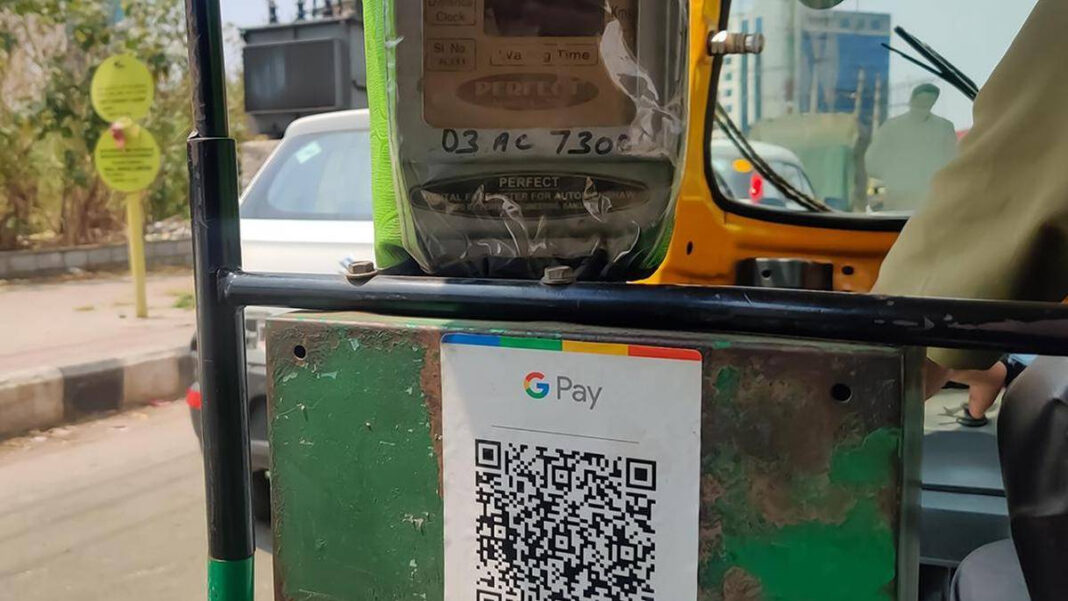

Image used for representational purposes only. File
| Photo Credit: Getty Images/iStockphoto
The National Payments Corporation of India (NPCI) has indefinitely postponed the implementation of the Merchant Discount Rate (MDR) on UPI transactions, originally scheduled for October 15, to a date “immediately after Diwali”, without specifying an exact date.
Also read: Banks and govt. should bear UPI charges, say merchants
According to government sources, the decision to delay the implementation of MDR on UPI was made in the Prime Minister’s Office following strong appeals from traders.
Praveen Khandelwal, founder and secretary-general of the Confederation of All India Traders (CAIT) and a Bharatiya Janata Party (BJP) Lok Sabha Member, welcomed the decision, saying that it would protect traders’ interests and sustain digital payment momentum during the festive season.
The MDR was to be levied at 0.4% on UPI transactions exceeding ₹2,000 at medium and large merchant establishments. Transactions related to the capital market and those done in strategic sectors would face different MDR rates.
“The UPI and Services Steering Committee today decided that, keeping in mind the festive season, Merchant Discount Rate (MDR) on select Person-to-Merchant (P2M) UPI transactions shall be implemented immediately post Diwali at a date to be notified separately,” the NPCI said in a statement on Tuesday (October 13, 2026).
The Supreme Court has directed the NPCI, the Union government, and the Reserve Bank of India (RBI) to file affidavits by late October explaining the rationale for imposing MDR on specified UPI transactions.
“We sincerely thank Prime Minister Narendra Modi Ji and Finance Minister Nirmala Sitharaman Ji for understanding the concerns of traders and taking a positive decision,” Mr. Khandelwal said on Tuesday (October 13).
CAIT said the decision followed a meeting on September 30, when a delegation of around 20 trade leaders led by Mr. Khandelwal met Finance Minister Nirmala Sitharaman and “highlighted the implications of the proposed 0.40% MDR on UPI transactions exceeding ₹2,000”.
“CAIT supports digital payments, but the system must remain affordable and sustainable for merchants, especially small businesses,” Mr. Khandelwal cautioned in his statement.
Decision “timely and pragmatic”
The traders’ body described the decision to delay the rollout as “timely and pragmatic”, particularly during the festive and wedding season, when millions of traders and MSMEs depend on higher business volumes.
“Additional transaction costs could have placed an avoidable burden on merchants operating on thin margins and discouraged the wider acceptance of digital payments,” CAIT’s statement said.
Separately, The Hindu has learnt that, earlier this month, liquefied petroleum gas (LPG) distributors had approached the Petroleum and Natural Gas Ministry seeking a complete exemption from MDR or any other payment infrastructure-related levies.
The distributors argued that they have no autonomy to regulate cylinder prices and receive fixed commissions on sales, and that MDR levies would not bode well for their earnings.
They also added that this could create conditions for a return to cash or a payment economy where consumers pay in a staggered manner to circumvent the ₹2,000 threshold, creating a “logistical inconvenience”.
(With inputs from Saptaparno Ghosh)
Published – October 13, 2026 02:16 pm IST