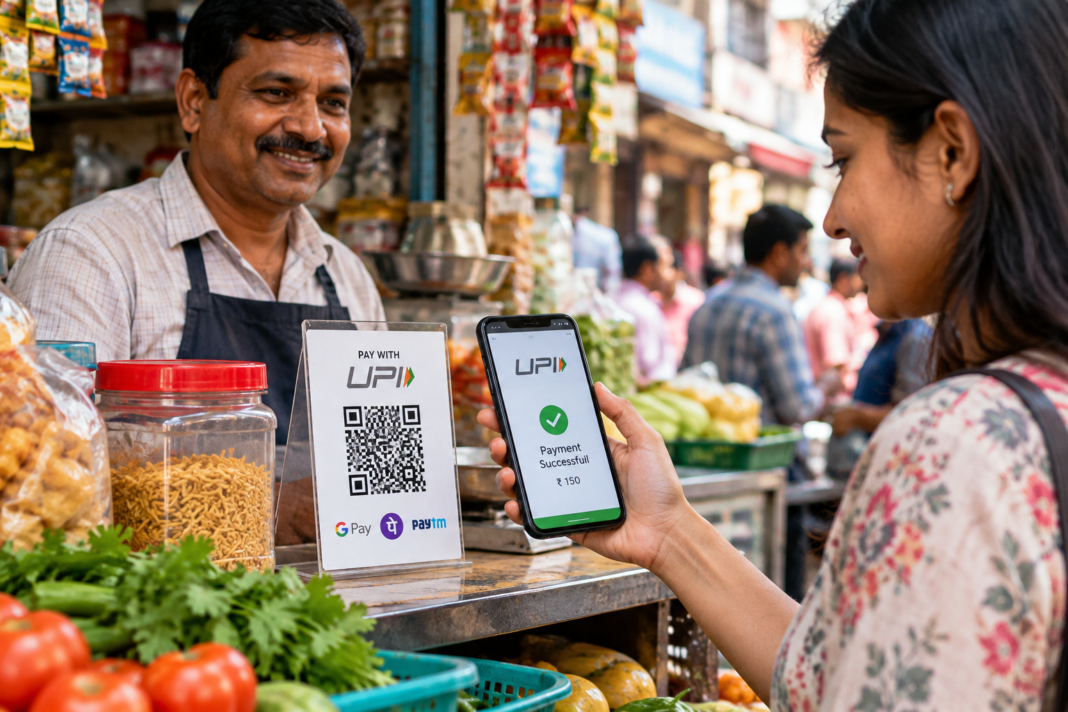

Digital payments have become a familiar part of everyday life in India. From buying groceries at a local shop to paying electricity bills or ordering food online, people can now complete many transactions using a smartphone. What once required cash or a visit to the bank can often be done in just a few seconds.
This change is not limited to big cities. Small shopkeepers, street vendors, students, working professionals and families are increasingly using digital payment methods to manage their daily expenses. The growing use of the Unified Payments Interface (UPI) has played a major role in making these transactions easier and more accessible.
The Growing Use of UPI in Daily Life
One of the biggest changes in India’s payment system is the popularity of UPI. It allows users to transfer money directly between bank accounts through supported mobile applications.
For example, a customer buying vegetables can scan a QR code, enter the amount and complete the payment without searching for cash. The shopkeeper receives confirmation, and the transaction is usually completed within seconds.
This convenience has made digital payments useful for both small and large purchases. People use them to pay taxi fares, split restaurant bills, recharge mobile phones and send money to family members.
How Small Businesses Are Benefiting
Digital payments have also changed how small businesses handle money. Local grocery stores, tea stalls, pharmacies and independent service providers can accept payments through QR codes without needing an expensive card machine.
For shopkeepers, digital transactions can reduce the need to keep large amounts of cash on hand. A digital transaction history may also help them review payments and maintain basic financial records.
However, digital payments are not completely free of challenges. Business owners need to understand transaction confirmation, refunds, fraud prevention and the costs associated with different payment services. A screenshot of a payment should never be treated as final proof that money has reached an account.
Making Everyday Payments More Convenient
One major advantage of digital payments is convenience. People can pay bills, shop online and transfer money without visiting a bank or payment counter. This can save time, particularly for those with busy schedules.
Digital transactions can also make it easier to track spending. Bank statements and payment histories allow users to review previous transactions and identify where their money goes. This information can support better budgeting when used regularly.
For families, students and workers living away from home, digital transfers can also make sending money to relatives more straightforward.
Challenges People Should Not Ignore
Despite their benefits, digital payments require care. Online fraud, fake payment requests, fraudulent QR codes and misleading customer-support messages remain important concerns.
Users should never share their UPI PIN or one-time password with anyone. A UPI PIN is generally required to authorise a payment, not to receive money. People should also verify the recipient’s name and amount before confirming a transaction.
Internet connectivity, smartphone access and digital literacy can create additional difficulties, especially for people who are unfamiliar with mobile applications. Cash therefore continues to be useful in many situations.
The Importance of Responsible Digital Payments
As digital payments become more common, financial awareness is becoming increasingly important. Users should keep their payment applications updated, enable appropriate security features and check their bank statements regularly.
If a transaction fails or appears suspicious, they should use the official bank or payment application’s support channels. Suspected financial fraud should be reported promptly through official reporting channels, including India’s cybercrime helpline at 1930 where applicable.
Businesses can also help customers by displaying clear QR codes, checking payment confirmations and avoiding pressure on customers to make hurried transactions.
What the Future May Look Like
Digital payments are likely to remain an important part of India’s financial system. Improvements in payment technology, wider digital access and better awareness may make transactions more convenient for individuals and businesses.
At the same time, progress should not be measured only by how many people use mobile payment applications. Safety, reliability, accessibility and consumer confidence are equally important.
Digital payments have already changed many ordinary activities, from purchasing daily essentials to paying household bills. Used carefully, they can make financial transactions faster and easier. The key is to combine convenience with awareness so that people can benefit from digital services while protecting their money and personal information.
Short Summary
Digital payments are transforming everyday life in India by making shopping, bill payments and money transfers more convenient. UPI has helped individuals and small businesses accept and send payments quickly. However, users must remain alert to online fraud, verify transactions and protect their payment credentials. Responsible use and digital awareness will be essential as India continues moving towards a more connected payment system.