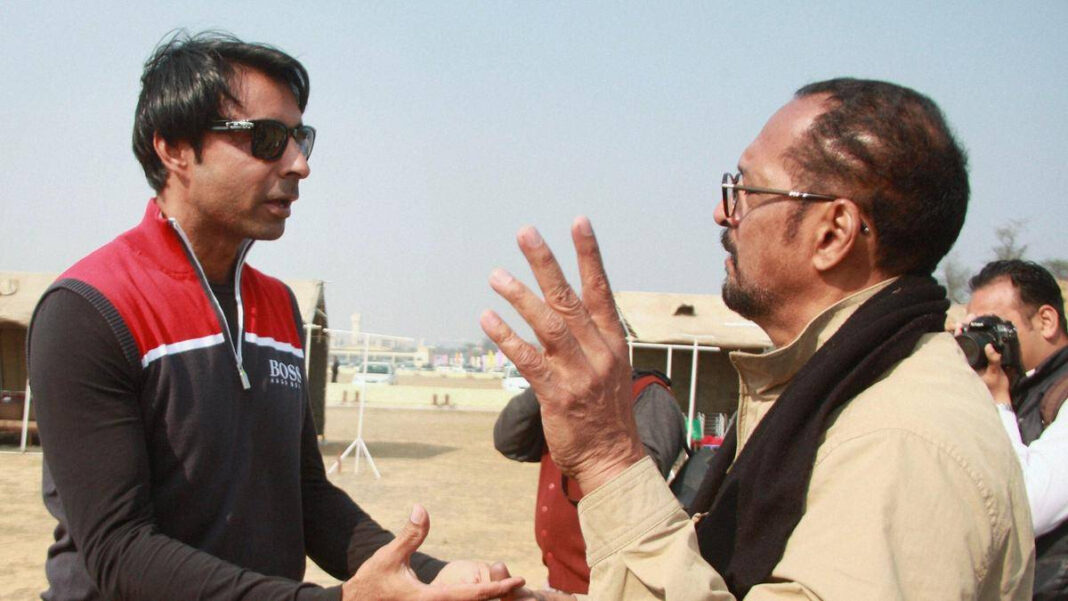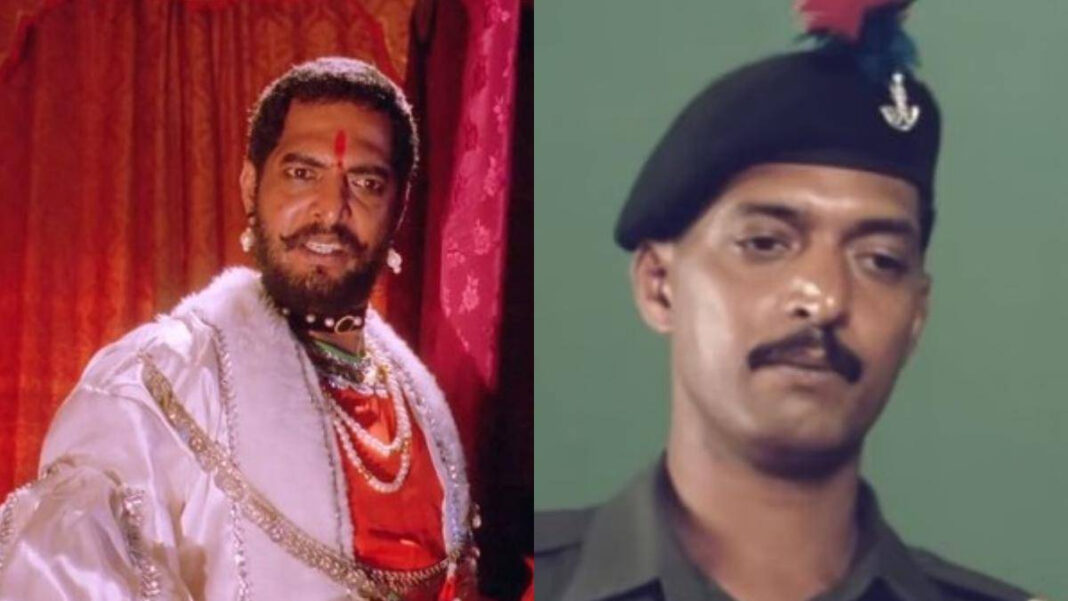
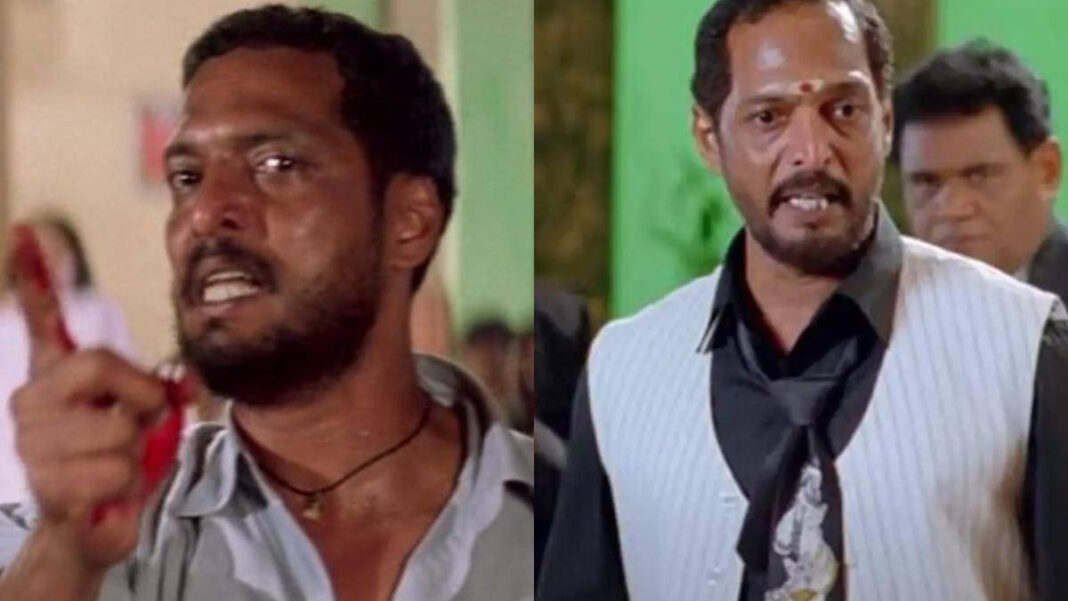

With a voice that could unsettle, intimidate, amuse and move audiences, Nana Patekar had the knack for turning even an ordinary line into a memorable dialogue.
Also Read: Shah Rukh Khan pens long note as a tribute to Nana Patekar
Over a career spanning nearly five decades, the veteran actor delivered countless such moments that remain etched in the history of Indian cinema.
From the anger of Krantiveer to the realism of Ab Tak Chhappan and the deadpan comedy of Welcome, Patekar’s dialogues became an important part of his legacy.
Here are some of his most memorable screen dialogues:
1. “Dhande mein koi kisi ka bhai nahi, koi kisi ka beta nahi” from ‘Parinda’ (1989)
Vidhu Vinod Chopra’s Parinda was a landmark crime drama about two brothers, played by Jackie Shroff and Anil Kapoor, caught in Mumbai’s violent underworld.
In the movie, Patekar essayed the role of Anna, a ruthless gangster who controlled a criminal empire and had little room for sentiment when it came to business. The dialogue gave an insight into Anna’s worldview that the underworld operates on profit and personal relationships had little value.
Nana Patekar: 7 underrated films of the veteran actor
The film earned him the National Award for Best Supporting Actor and remains one of the defining performances of his career.
2. “Aa gaye meri maut ka tamasha dekhne” from ‘Krantiveer’ (1994)
If one film best represents Patekar’s ability to turn dialogue into a weapon, it is Mehul Kumar’s Krantiveer. He played Pratap Narayan Tilak, an alcoholic and disillusioned man who becomes an unlikely crusader against corruption and communal hatred.
The line comes in one of the film’s most intense sequences, when Pratap confronts those who have gathered around him moments before he is hanged till death.
Rather than treating death as a moment of surrender, Patekar’s character turns the situation into an accusation against the people watching him, combining anger, sarcasm and fearlessness to make a commentary on the system. The scene was one of the most remembered moments of 1990s Hindi cinema.
3. “Bata ismein Musalman ka khoon kaunsa aur Hindu ka kaunsa?” from ‘Krantiveer’
Krantiveer gave Patekar several politically-charged lines but this one perhaps best captures the film’s argument against communal hatred.
Pratap’s question about whether one can distinguish between Muslim and Hindu blood is deliberately simple in its logic. But Patekar delivers it with the fury of someone who has watched political and religious divisions destroy ordinary lives.
4. “Sau mein se assi beimaan, phir bhi mera desh mahaan” from ‘Krantiveer’
Another memorable line from Krantiveer, it is remembered for Patekar’s sharp take on corruption and patriotism. The dialogue captures Pratap’s complicated feelings about his country. He is angry about the corruption and problems around him, but his anger comes from his love for the country.
5. “Ek machhar saala aadmi ko hijda bana deta hai” from ‘Yeshwant’ (1997)
Yeshwant gave Patekar another character that suited his style: a volatile police officer operating in a city where crime, corruption and bureaucracy constantly test his patience.
As Inspector Yeshwant Lohar, Patekar delivered an extended monologue about how seemingly insignificant things can reduce a man to helplessness. The opening reference to a mosquito became the part audiences remembered most.
6. “Maut se badhkar koi dost nahin hai” from ‘Ghulam-E-Mustafa’ (1997)
In Ghulam-E-Mustafa, Patekar played a gangster whose life was defined by violence, loyalty and fatalism.
The line about death being a greater friend than anyone else reflected the character’s bleak understanding of life. For Mustafa, death was not simply something to fear; it was an ever-present companion.
7. “Hum sab system ka hissa hain, system decide karta hai, apun follow karta hai” from ‘Ab Tak Chhappan’ (2004)
Patekar found another memorable character in Shimit Amin’s Ab Tak Chhappan, a gritty crime drama inspired by Mumbai’s encounter-policing culture.
He played Inspector Sadhu Agashe, an encounter specialist whose job involves eliminating criminals outside the conventional judicial process.
The line about everyone being part of the system captures the film’s central conflict. Agashe is both a part of the system and someone who enforces it. Patekar’s restrained delivery made the line even more powerful.
8. “Bhagwan ka diya sab kuch hai. Daulat hai, shohrat hai, izzat hai” from ‘Welcome’ (2007)
While he made a name for himself as a powerful performer with Krantiveer and Yeshwant, the one role that earned Patekar a different kind of fandom was his character of gangster Uday Shetty in Anees Bazmee’s Welcome.
Patekar demonstrated that the same voice and mannerisms could generate huge laughs. The dialogue about wealth, fame and respect became a defining Uday Shetty moment and a recurring theme for the character. His chemistry with Anil Kapoor, who played Majnu Bhai, became one of the film’s biggest attractions.
9. “Control Uday!” from ‘Welcome’ (2007)
Some of Patekar’s most memorable lines did not require a long monologue. “Control Uday!” became a catchphrase because it perfectly captured the exasperation that his character feels. In Welcome, Uday Shetty is constantly caught between his gangster persona and the chaos created by his sidekick Majnu Bhai.
10. “Aalu lelo, kanda lelo” from ‘Welcome’
In one of the truly wildest moments from Welcome, Patekar’s Uday Shetty is shown selling vegetables as a street hawker while dressed in a suit. It was all part of the fake movie that the gangster-turned-actor was shooting in the film.
The absurdity of the situation is what makes the scene so memorable and the “Aalu lelo, kanda lelo” line became memorable because of Patekar’s delivery, turning a simple vegetable seller’s call into another classic Uday Shetty moment.
Published – October 08, 2026 03:39 pm IST