
NIO-Goa experts identify 14 breach-prone stretches along river Godavari in Konaseema
Experts from the National Institute of Oceanography (NIO), Goa, have identified 14 vulnerable stretches along the embankments of the Gouthami and Vasista branches of the Godavari in Dr. B. R. Ambedkar Konaseema district, prompting the administration to initiate immediate mitigation planning.
Overview
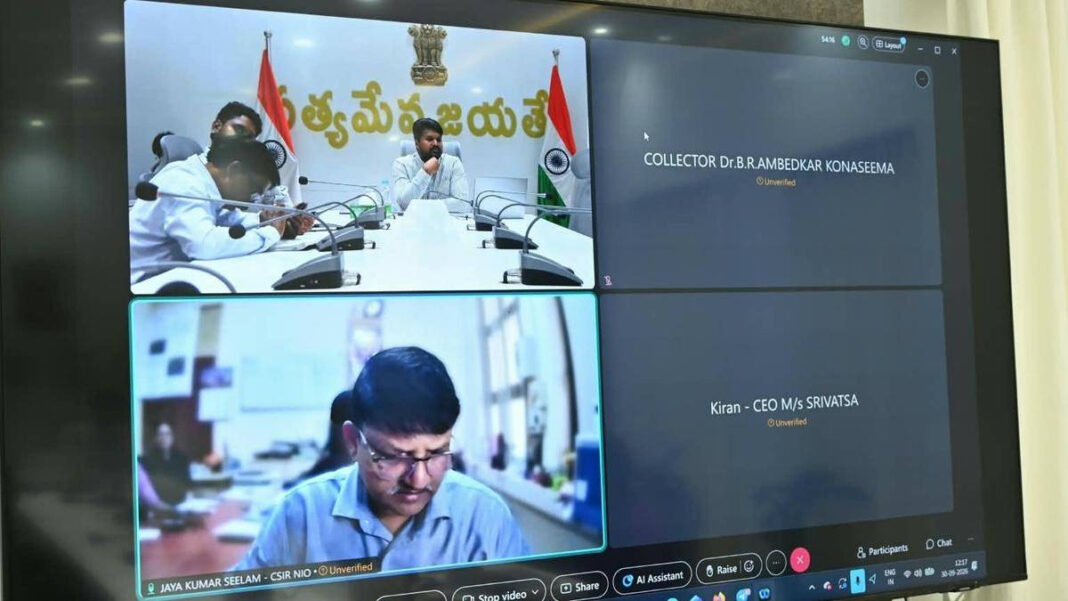
The assessment, led by NIO-Goa Chief Scientist Jaya Kumar Seelam, was presented during an online review meeting held on Wednesday in Amalapuram with revenue and water resources department officials. Dr. B. R. Ambedkar Konaseema District Collector R. Mahesh Kumar chaired the review, which focused on flood risk reduction measures along the riverbanks and the potential socio-economic impacts on local communities.
Flood profile and regional context
Originating in Maharashtra, the Godavari river meets the Bay of Bengal in the Dr. B. R. Ambedkar Konaseema and West Godavari districts. The region faces at least two flood events each year, placing sustained pressure on river embankments and infrastructure and heightening the risk to villages, agricultural lands and local assets along the Gouthami and Vasista distributaries.
Key directives from the district administration
Following the NIO-Goa briefing, District Collector R. Mahesh Kumar directed officials to prepare a Detailed Project Report (DPR) and conduct a comprehensive socio-economic study to assess the potential impacts on habitations, crops and public and private assets in the event of embankment breaches along both river branches.
Officials were also instructed to systematically record water pressure at each of the 14 identified breach-prone locations to support design decisions for strengthening the embankments.
Recommended protection measures
According to Mr. Mahesh Kumar, the NIO-Goa team has recommended the riprap method—placing stones along the embankment—to stabilize vulnerable stretches.
“The NIO-Goa experts have recommended the riprap method, in which stones are placed along the embankment. We will also examine the possibility of using geo-textile in some locations to minimise the cost of strengthening the embankments,” he said.
Silting and drainage concerns
Beyond embankment stability, the administration flagged the effects of silting at the confluence points of two major irrigation drains—Konavaram drain and Rameswaram drain. Officials were directed to carry out a focused study on how sediment build-up at these junctions is contributing to the submergence of nearly 15,000 acres of agricultural fields in the district.
Next steps
The district authorities will proceed with the DPR preparation, water pressure monitoring and socio-economic assessments as directed. The findings are expected to guide the choice and prioritization of embankment-strengthening measures, including the potential use of geo-textile where feasible to optimize costs.
Significance
With the Godavari’s recurrent flood cycles and the documented vulnerability of multiple stretches along the Gouthami and Vasista branches, the identification of high-risk locations and the initiation of detailed studies mark a critical step toward protecting villages and agricultural livelihoods in Dr. B. R. Ambedkar Konaseema district. The combined focus on embankment reinforcement and better-managed drainage is aimed at reducing the frequency and impact of inundation across the region.