 "
/>
"
/>

‘Close engagement’
Modi and Trump Review Bilateral Ties Amid Concerns Over Russia Sanctions
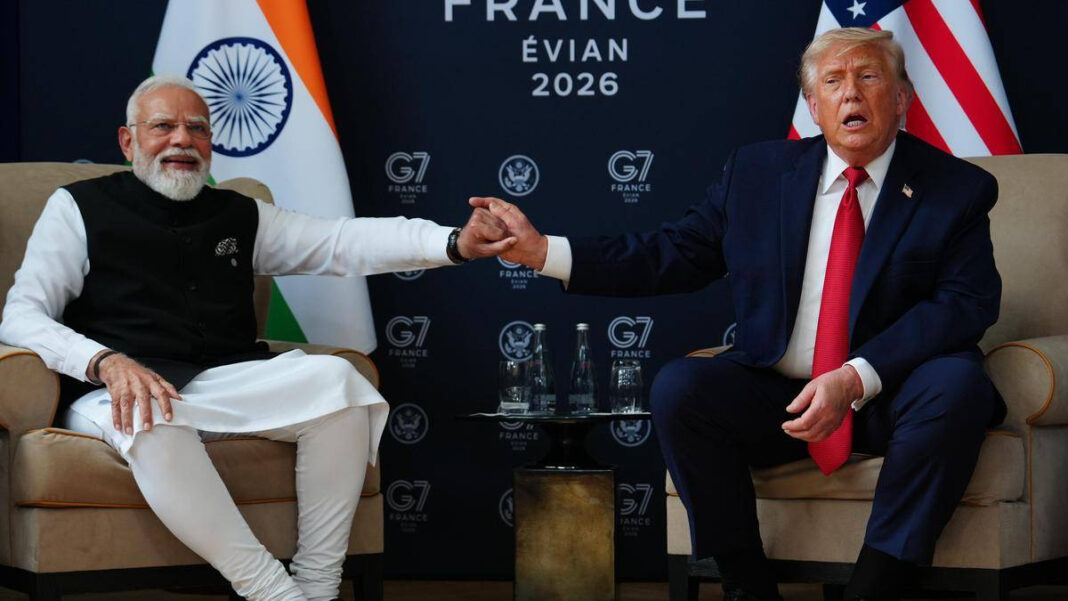
In a world increasingly defined by a complex web of geopolitical alliances and economic interdependencies, the bilateral relationship between India and the United States has emerged as a focal point of international diplomacy. Recently, Indian Prime Minister Narendra Modi and former U.S. President Donald Trump participated in a review of their countries’ ties, particularly in light of the implications of sanctions imposed on Russia. This meeting underscored the evolving dynamics of international relations as nations navigate the challenges posed by a shifting global order.
A Historical Context
The relationship between India and the United States has undergone a significant transformation since the Cold War era, evolving from a period of suspicion and disengagement to one characterized by extensive cooperation in trade, defense, and technology. As two democracies with growing economies, India and the U.S. have found common ground on numerous fronts, including counterterrorism, climate change, and trade partnerships.
However, the geopolitical landscape has shifted dramatically in recent years, particularly with the resurgence of Russia under President Vladimir Putin and the increasingly assertive posture of China. The sanctions imposed on Russia following its military actions in Ukraine have raised pertinent questions about their impact on India—particularly considering India’s long-standing defense ties with Moscow.
The Current Geopolitical Climate
The meeting between Modi and Trump came against the backdrop of heightened tensions in Eastern Europe, with the war in Ukraine prompting a reevaluation of international alliances. The U.S. has actively pursued a policy of isolating Russia through economic sanctions, while India has maintained a more cautious approach, balancing its traditional relationship with Moscow against its burgeoning partnership with Washington.
During their discussions, Modi emphasized the importance of maintaining strategic autonomy for India, a principle deeply rooted in Indian foreign policy. India’s purchasing of Russian oil at discounted rates and its ongoing defense agreements have drawn scrutiny from the Biden administration, which aims to align its allies with a unified stance against Russia.
Key Discussion Points
-
Defense Cooperation: One of the main topics of discussion was the enhancement of defense cooperation between India and the United States. With tensions in the Indo-Pacific region rising, particularly concerning China, both leaders recognized the necessity of stronger collaboration in defense technology and military training. The U.S. has been keen to supply advanced weapons systems to India, and the two countries are exploring opportunities for joint military exercises and intelligence sharing.
-
Economic Engagement: Trade relations were another focal point of the discussions. With the U.S. aiming to strengthen its economic ties with India to counterbalance China’s influence, Modi and Trump discussed avenues to enhance trade, investment, and economic cooperation. Areas such as technology, manufacturing, and agriculture were highlighted as potential sectors for a collaborative approach.
- Energy Security: A notable concern for both leaders was the issue of energy security amidst fluctuating global oil prices and the fallout from ongoing sanctions on Russia. Modi and Trump explored strategies to diversify India’s energy sources, including increased investments in renewable energy, while also addressing the impact of Russian oil on global markets.
The Path Forward
The review of bilateral ties between Modi and Trump indicated a mutual recognition of the need to adapt to a rapidly changing geopolitical landscape. With the challenges posed by Russia and the importance of sustaining a resilient partnership in light of world events, India and the U.S. appear poised to reinforce their strategic relationship.
As nations increasingly navigate the dichotomy of globalization and national interests, the relationship between India and the United States serves as a model for how countries can pursue cooperation while maintaining their sovereignty. While challenges remain, the commitment to dialogue and collaboration between Modi and Trump signals a promising future for one of the world’s most significant bilateral partnerships.
In conclusion, as India and the U.S. continue to confront emerging global threats and opportunities, their ability to align their interests while respecting their respective strategic goals will be critical. The path forward will not be without complexities, but with strong leadership, the potential for a robust and enduring partnership remains bright.