 "
/>
"
/>

Trump’s Unexpected Offer: A Look at U.S.-China Relations and Taiwan’s Defense
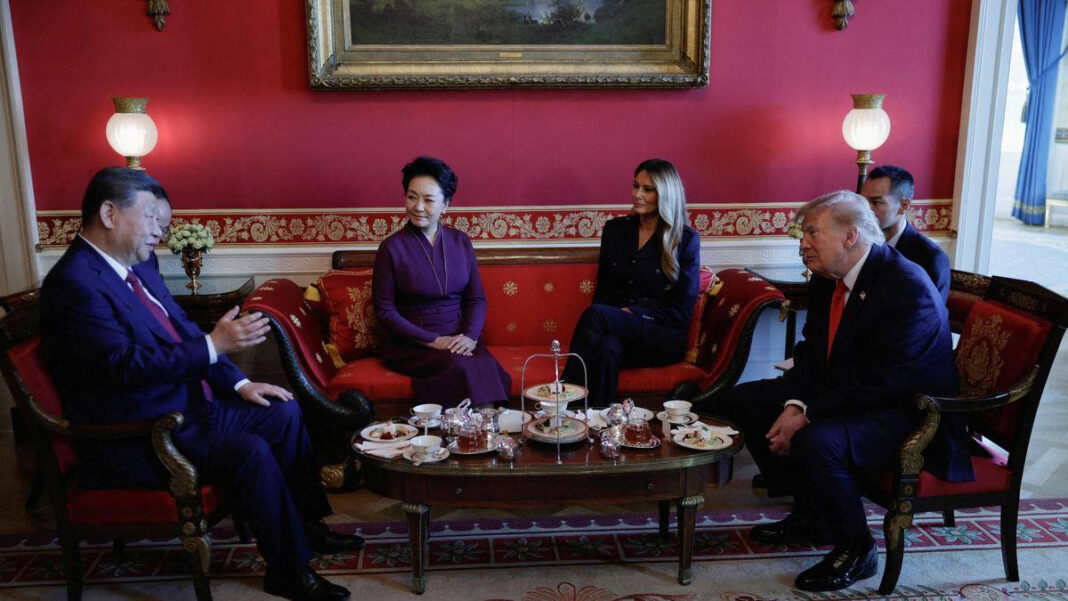
In a move that has sparked considerable discussion and debate regarding U.S.-China relations and the geopolitics of the Taiwan Strait, former President Donald Trump reportedly asked Chinese President Xi Jinping if he would be interested in purchasing U.S. arms during a conversation related to arms sales to Taiwan. This revelation, brought to light by a former envoy, has reignited conversations about the complexities of international diplomacy and the tense relationship between the United States and China.
Context: U.S.-China Communication
The relationship between the U.S. and China has always been fraught with tension, particularly regarding issues related to Taiwan. The U.S. has a longstanding policy of strategic ambiguity—in which it supports Taiwan’s right to self-defense while also maintaining unofficial relations with Beijing. The sale of arms to Taiwan, which the U.S. deems a necessary measure for the island’s defense against potential aggression from China, is often a point of contention.
Trump’s Proposal
During a discussion about U.S. arms sales to Taiwan, Trump’s inquiry to Xi about the possibility of China procuring American military equipment raises eyebrows for several reasons. First, the idea of the U.S. offering arms to China contradicts the longstanding policy of containment against perceived military expansions by Beijing. It also underscores the complex interplay and often contradictory nature of Trump’s foreign policy approach, which oscillated between confrontation and unexpected overtures.
Implications for Taiwan
The implications of such an offer must be considered in the broader context of Taiwan’s security. Taiwan has long been perceived by Beijing as a breakaway province and has faced numerous threats of military action aimed at reintegration with the mainland. The Taiwanese government has vigorously pursued military enhancements, often facilitated through arms sales from the U.S., to shore up its defenses.
Trump’s proposal suggests a level of pragmatism, perhaps aimed at defusing tensions or seeking better trade arrangements. However, it also raises questions about Taiwan’s security guarantees. If China were to take the U.S. up on an offer to purchase arms, it could fundamentally alter the balance of power in the region, leading to increased insecurity for Taiwan and emboldening Beijing’s military ambitions.
Diplomatic Consequences
This revelation highlights the challenges faced by U.S. diplomats navigating an increasingly complex world order. The idea of maintaining dialogue with adversaries while ensuring regional allies feel secure is a delicate balance—one that requires astute understanding and nuanced strategy. Trump’s unsolicited offer could be interpreted as a signal of willingness to engage with China on military matters, which could either escalate tensions or foster unexpected cooperation.
Conclusion: A New Chapter in U.S.-China Relations?
As the global community continues to analyze the ramifications of this exchange, a potential shift in U.S.-China relations emerges. The notion of selling arms to China, even rhetorically, is unprecedented and could represent a significant alteration in how diplomatic conversations are approached. With both nations vying for influence in the Asia-Pacific region, how this dynamic unfolds will be crucial in determining the future landscape of international relations.
In summary, Trump’s question to Xi reflects not only the unpredictable nature of modern diplomacy but also the intricate balancing act that defines U.S.-China relations. As stakeholders in the region watch closely, the implications could resonate far beyond mere arms sales—shaping the future of security, alliances, and international order in the years to come.