
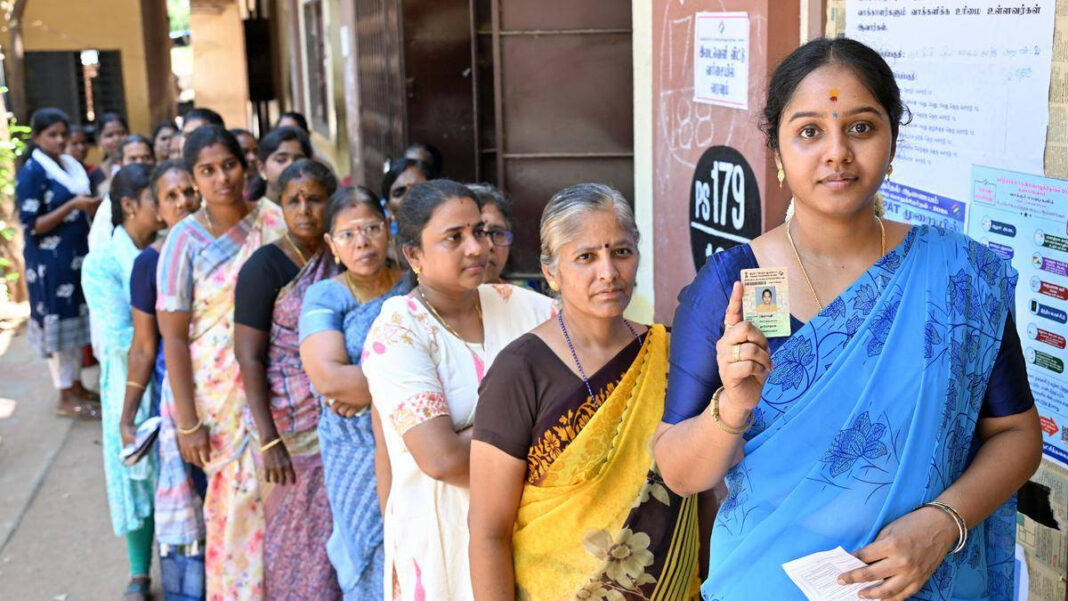

Should voting be a fundamental right?
The question of whether voting should be recognised as a fundamental right has long animated debates about India’s democracy. As the country’s electoral landscape evolves and expectations on participation, accessibility and fairness intensify, the inquiry pivots on four interlinked themes: how adult suffrage took shape in India, what the law says about the right to vote, why accurate electoral rolls matter, and what the path forward could be.
Understanding the foundations of adult suffrage
Any discussion on the status of the vote must begin with the history and practice of adult suffrage in India. The development of the franchise reflects constitutional choices, political priorities and an administrative commitment to inclusion. Over time, the franchise has come to symbolise both a right and a responsibility, and it has required sustained investment in electoral infrastructure, administrative capacity and public trust.
Exploring what shaped adult suffrage involves examining the principles that guided its adoption and expansion, the social and political movements that demanded representation, and the institutional design that made mass electoral participation a defining feature of India’s democratic experiment. It also requires engaging with the tensions that accompany a vast and diverse electorate: inclusion and exclusion, access and barriers, the integrity of the process and the responsiveness of institutions.
The legal status of the right to vote
At the core of the debate is a legal question: Is the right to vote a fundamental right, or does it derive its force from statute and procedure? The answer has practical implications. If voting is treated as a fundamental right, it would attract the highest constitutional protection and a robust standard of scrutiny for any limitation. It could impose stronger positive obligations on the state to facilitate participation, minimise barriers and provide effective remedies for violations.
If, on the other hand, voting is recognised primarily through statutory enactments and subordinate rules, legislatures and election authorities have wider room to shape eligibility, procedures and safeguards. This approach emphasises the administrative character of elections, the need for orderly processes and the role of statutory remedies. The legal classification thus affects the balance between individual entitlement and institutional control, and it influences how citizens can seek redress when they are unable to vote or when their participation is impeded.
Beyond classification, the legal status of voting intersects with other constitutional values and rights. Participation in elections is closely connected to equality, non-discrimination, dignity and expression. The framework within which courts, legislatures and administrators situate the franchise determines the extent to which these values inform electoral policy and practice.
Why accurate electoral rolls matter
Accurate and up-to-date electoral rolls are the bedrock of credible elections. They determine who can vote, where they can do so, and whether the system can deliver a fair and inclusive process. Errors in the rolls—such as omissions, duplications, outdated entries or incorrect details—can disenfranchise eligible voters, inflate the rolls or create procedural hurdles that undermine participation.
Maintaining accurate rolls is both a logistical and normative challenge. It requires regular verification, efficient coordination between agencies that issue identity and address documentation, and user-friendly mechanisms for citizens to check and correct their details. It also demands vigilance against errors that disproportionately affect particular communities, regions or occupational groups, as well as safeguards to prevent abuse or manipulation.
Public confidence in elections is inseparable from confidence in the rolls. Transparent processes for registration and corrections, accessible voter services, and timely publication of draft and final rolls contribute to that confidence. Technology can assist with scale and speed, but it must be complemented by strong due process protections, clear accountability and inclusive outreach.
What lies ahead
The way forward involves choices about law, administration and democratic culture. If the franchise is to be strengthened, institutions must decide how to articulate the right to vote and how to align procedures with that articulation. This could include clarifying the legal character of the vote, improving the remedies available when eligible voters are left out, and ensuring that restrictions are narrowly tailored and justified.
On the administrative front, the priorities are well understood: make enrollment simple and ongoing; integrate data responsibly while protecting privacy; ensure that migration, urbanisation and mobility do not translate into disenfranchisement; and build systems that work across languages, regions and levels of digital access. Effective public communication and doorstep facilitation can bridge the gap between eligibility in principle and participation in practice.
Strengthening electoral rolls is a continuous process. It calls for regular audits, open channels for civil society and citizens to flag errors, and fair, timely adjudication of claims and objections. It also requires preparing for contingencies—such as natural disasters, displacements or public health emergencies—that can disrupt registration and polling arrangements.
Ultimately, the debate about recognising voting as a fundamental right is a debate about the kind of democracy India seeks to practice. Whether through constitutional reform, statutory refinements or administrative innovation, the aim remains the same: ensuring that every eligible citizen can vote easily, securely and meaningfully, and that elections reflect both the letter and spirit of equal citizenship.
Conclusion
The question of making voting a fundamental right forces attention on first principles and everyday realities alike. It invites a reckoning with history, a clear-eyed assessment of law and policy, and a commitment to administrative excellence. Above all, it underscores that the integrity of India’s democracy depends not only on the existence of the franchise but on its effective and equitable exercise by all who are entitled to it.