 "
/>
"
/>

An Uncertain Wait for Filmmakers Selected in IDSFFK After Union I&B Ministry “Ban”
Documentary filmmakers Afiya Khalid and Rizwan Rahman find themselves grappling with disheartening news as their film, Sanitised Republic: Cast(e) & Contracts, faces yet another obstacle in obtaining the necessary censor exemption from the Union Information & Broadcasting Ministry (I&B Ministry) for screening at the 18th International Documentary and Short Film Festival of Keralam (IDSFFK). This documentary has now been barred from screening at three consecutive festivals due to government intervention.
Background or Overview
The film, which documents the experiences of sanitation workers during the COVID-19 pandemic, has run into issues with censorship stemming from a specific audio clip featuring Prime Minister Narendra Modi’s announcement of the lockdown. Despite the filmmakers’ prompt action to remove the segment that drew the Ministry’s ire, they were subsequently asked to eliminate a news screenshot of Modi as well. Khalid expressed her frustration, stating, “Even after removing that, they have not cleared the film.”
The documentary provides a critical examination of the lives of sanitation workers at Delhi’s Kalawati Saran Children’s Hospital and Lady Hardinge Medical College, highlighting the struggles these individuals faced as their jobs vanished amid the pandemic’s aftermath.
Key Developments
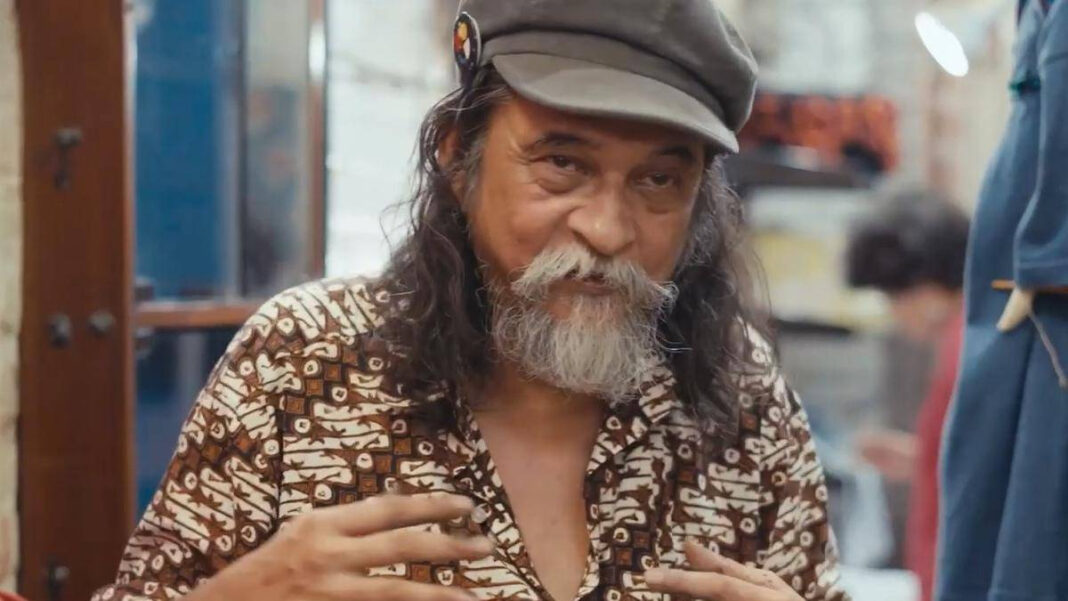
Alongside Khalid and Rahman’s work, Spandan Banerjee’s documentary, Parliament Street, also waits in the shadows of uncertainty as it lacks the I&B Ministry’s censor exemption. Banerjee describes how the denial seems rooted in misunderstandings regarding the film’s title, similar to the prior controversy surrounding another film named Beef, which was barred from last year’s IFFK. He emphasizes that his documentary, focused on an alternative shop called People Tree, co-founded by artist Orijit Sen, addresses minor histories and cultural memory without any contentious content. “I feel so bewildered as to what could be the reason, because they haven’t told us anything,” Banerjee lamented, reminiscent of the awards his previous works earned at IDSFFK.
Other films facing similar bans include Sankaraa’s The Mali and the Parasite, which chronicles the resistance of tribal communities in Odisha against displacement due to Vedanta Limited’s mining activities, and Bipuljit Basu’s Redlight to Limelight, showcasing the video production unit run by sex workers and their children. A further entry in this troubled category is Sharanya Deyy’s short film In Search of Buddha, which follows two filmmakers chasing the elusive truth behind a forgotten Naxal leader.
Context
This pattern of censorship at film festivals has raised alarm among filmmakers, who view it as a severe infringement on artistic freedom. As the festival draws closer, the Kerala High Court is expected to address the I&B Ministry’s decisions regarding censorship on Monday. In light of these challenges, a collective of filmmakers has approached festival organizers to guarantee that the five documentaries lacking exemptions still partake in the jury evaluation process for potential awards. They have expressed their willingness to protest by suggesting the cancellation of this year’s awards if the Ministry does not authorize all documentaries for screening.
Statements and Reactions
Commenting on the situation, Khalid articulated the critical intersection between caste dynamics and contractual labor in India, underscoring, “Caste has so much to do with contractualization. Workers from oppressed castes are subjected to extreme forms of discrimination. Caste is very important to be looked at in everything in India, not to be talked about in an abstract manner but in a foundational issue directly.” This perspective further enriches the discourse around the social conditions depicted in their respective films.
What Happened Next
As the filmmakers await clarity from the I&B Ministry, the collective consciousness surrounding film censorship in India grows only more pronounced. The outcomes could shape the future of artistic expression and documentary filmmaking in the country significantly. Filmmakers continue to push for transparency and ethical treatment from government entities, hoping to ensure that vital narratives do not remain silenced.
Conclusion
The waiting game for filmmakers participating in the 18th IDSFFK epitomizes a larger struggle faced across the nation regarding censorship and creative expression. The decisions made by the Union I&B Ministry will not only impact the current festival but also set a precedent for future artistic endeavors in India. As filmmakers seek to amplify marginalized voices through their work, the resolution of this situation is critical to uphold the principles of artistic freedom and social commentary.