 "
/>
"
/>

BJP State Chief Criticizes Revanth
Title: “Family First for Congress, Nation First for RSS and BJP: Bandi Sanjay’s Political Perspective”
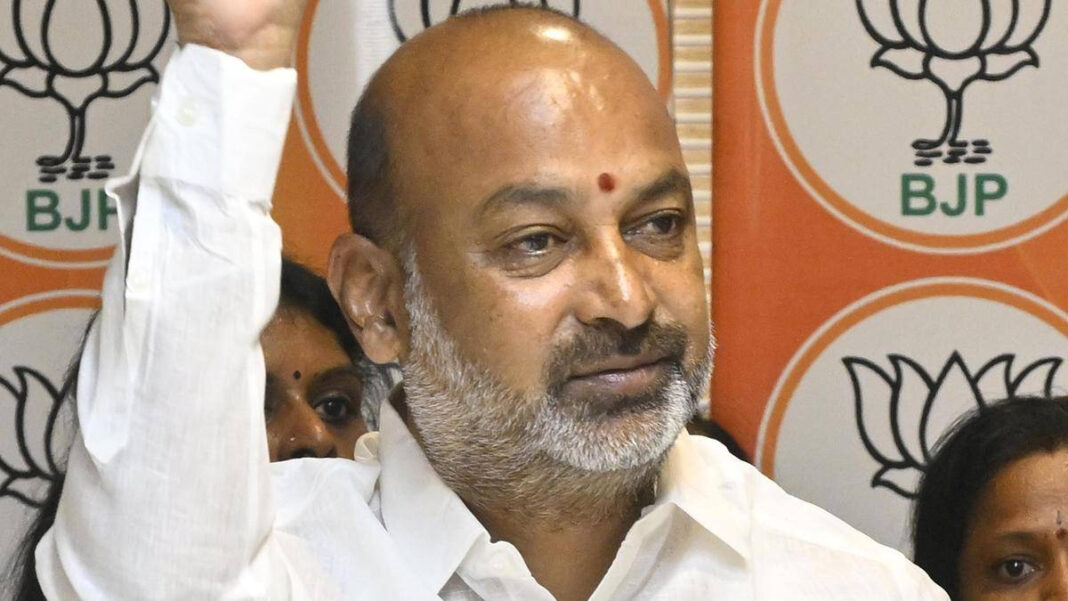
In the complex landscape of Indian politics, where ideologies often clash, the statements and strategies of leaders can provide crucial insights into the underlying agendas of their parties. One such observation comes from Bandi Sanjay, a prominent leader of the Bharatiya Janata Party (BJP) in Telangana, who drew an intriguing distinction between the Congress Party’s focus on familial ties and the nationalistic fervor championed by the RSS and BJP.
Understanding the Divide
In recent times, Sanjay has articulated a sentiment that resonates deeply with his party’s base and underscores the fundamental differences in political philosophies between major Indian parties. He asserts that while the Congress prioritizes “Family First,” promoting dynastic politics that often favors the growth of individual political families, the RSS and BJP stand firmly on the principle of “Nation First,” fostering a collective national identity and prioritizing the country’s development.
This assertion points to a broader critique of the Congress Party’s lineage-driven leadership, which often sees political power concentrated in the hands of a few families. Sanjay’s remarks highlight the perception that Congress’s approach stifles meritocracy and public participation in governance. The assertion that “Family First” leads to the neglect of broader societal needs suggests a call for transparency and inclusivity in political representation.
The Nation First Approach
In stark contrast, Sanjay advocates for a vision of leadership that prioritizes the nation’s needs over individual or familial ambitions. The BJP, closely aligned with the RSS, promotes the idea of “Nation First” as a guiding principle. This framework is rooted in a commitment to national integrity, cultural pride, and economic growth. It emphasizes policies and initiatives aimed at uplifting marginalized sections and fostering a sense of unity among the diverse populations of India.
The “Nation First” ethos also resonates well with the BJP’s electoral strategy, which often capitalizes on patriotic sentiment, national security, and cultural heritage. This approach seeks to rally citizens around common goals and aspirations, aiming to transcend the limitations of regional or familial identities.
The Challenge Ahead
While the dichotomy presented by Bandi Sanjay offers a clear rhetorical strategy, it also presents significant challenges. Political discourse in India is increasingly polarized, and branding opponents as champions of dynastic politics allows for simplified narratives that might not capture the complexities of governance and policy-making.
Furthermore, while the BJP advocates a “Nation First” strategy, critics argue that the implementation of such policies can sometimes overlook regional disparities and the localized needs of diverse communities. Balancing national interests with regional identities is crucial for genuine unity.
Conclusion
Bandi Sanjay’s observations encapsulate a critical debate in Indian politics today, framing the dichotomy between familial loyalty and nationalist ambition. As voters navigate this landscape, the challenge lies in discerning which vision offers a more sustainable future for India. The ongoing dialogue surrounding these themes will be pivotal in shaping the country’s political destiny in the years to come. Ultimately, the question for voters may not only be about aligning with one ideology over another but also about envisioning a political system that integrates the best aspects of both national pride and inclusive representation.