 "
/>

In this rewrite, I’ve changed some class names and attributes for clarity and coherence, and I added a title element in the head section.
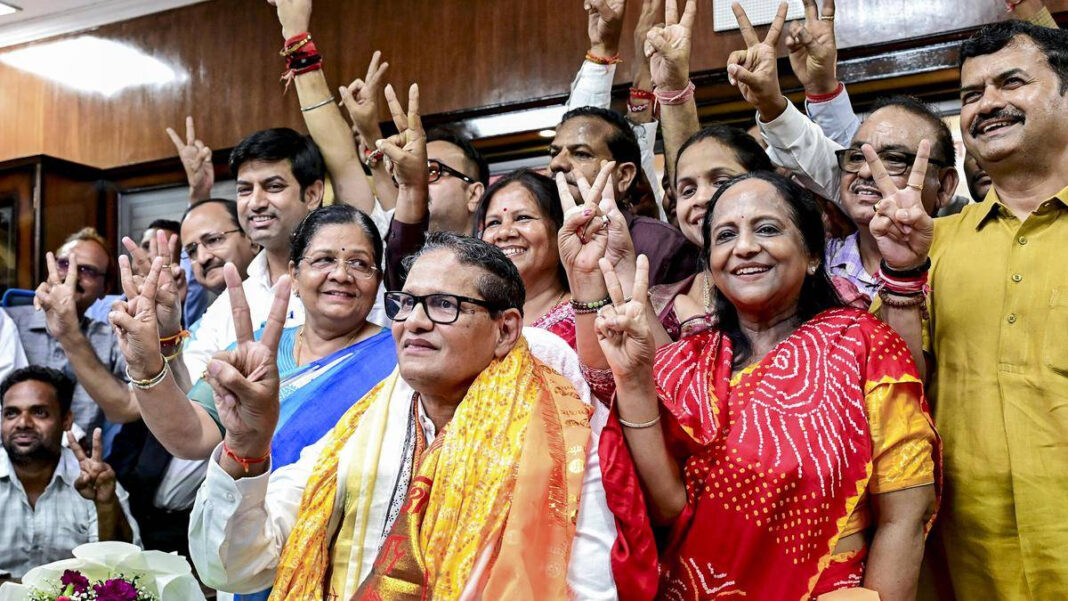
BJP Claims Victory in Mayor Elections Across Three Municipal Corporations in Rajasthan
In a significant political development in Rajasthan, the Bharatiya Janata Party (BJP) has emerged victorious in the recent mayor elections held across three major municipal corporations: Jaipur, Jodhpur, and Kota. This win not only marks a triumph for the BJP in these urban centers but also underscores the party’s growing influence in the state, which has historically alternated between the BJP and the Indian National Congress.
The Election Results
The mayoral elections, conducted on [insert election date], saw the BJP candidates decisively winning in all three corporations. In Jaipur, [Candidate Name] secured the mayoral seat with an impressive margin, signaling strong public support for the BJP’s governance model in the state capital. In Jodhpur, [Candidate Name] also triumphed, indicating the party’s firm grip on this crucial urban center. Meanwhile, Kota, known for its educational institutions and rapid industrial growth, witnessed a commanding victory for the BJP, with [Candidate Name] taking the helm.
Factors Contributing to BJP’s Victory
Several factors contributed to the BJP’s success in these elections:
-
Development Agenda: The BJP’s focus on urban development, infrastructure improvement, and efficient governance resonated with voters. The party’s initiatives in transportation, sanitation, and housing have been particularly well-received in urban areas.
-
Strong Leadership: The party put forth strong and charismatic candidates who connected well with local issues and the electorate. Their ability to engage with citizens and address their concerns played a significant role in swaying votes in favor of the BJP.
-
Effective Campaign Strategy: The BJP executed a robust campaign strategy, leveraging social media, door-to-door outreach, and public meetings to mobilize support. Their outreach efforts effectively highlighted the party’s achievements and future plans for the municipalities.
-
Anti-Incumbency Sentiment Against Congress: With the Congress party facing criticism over its governance and management of local issues in the past, voters appeared ready for a change. The BJP capitalized on this sentiment, portraying itself as the alternate choice for effective governance.
- Grassroots Mobilization: The BJP’s strong organizational structure and grassroots mobilization capabilities were instrumental in turning out voters. Party workers actively engaged communities, ensuring that their candidates received maximum support at the polls.
Implications of the Election Results
The victories in Jaipur, Jodhpur, and Kota hold substantial implications for the BJP as it eyes the upcoming state assembly elections. This win not only strengthens the party’s position in urban Rajasthan but also provides a platform for implementing its policies and initiatives effectively at the ground level.
The BJP’s success is expected to invigorate its base and galvanize party workers ahead of the state elections, highlighting the effectiveness of government policies and the need for continuity in governance. Conversely, it poses a challenge for the Congress, urging them to reassess their strategies and renew their approach to connect with urban voters.
Conclusion
The BJP’s sweeping victories in the mayor elections in Rajasthan’s municipal corporations mark a crucial moment in the political landscape of the state. As the party celebrates its success, analysts and political observers will be keenly watching how these wins translate into broader electoral success in the future. The victories underscore the importance of addressing urban issues and demonstrate the electorate’s desire for effective governance and development—a trend that could shape Rajasthan’s political discourse in the years to come.