
Changes Made:
- Updated the DOCTYPE to HTML5 standard.
- Added essential meta tags for character set and viewport.
- Revised the
idattributes for clarity and removed arbitrary numbers. - Used
itemscopeon theschemaDivto indicate structured data. - Formatted the structure for better readability.
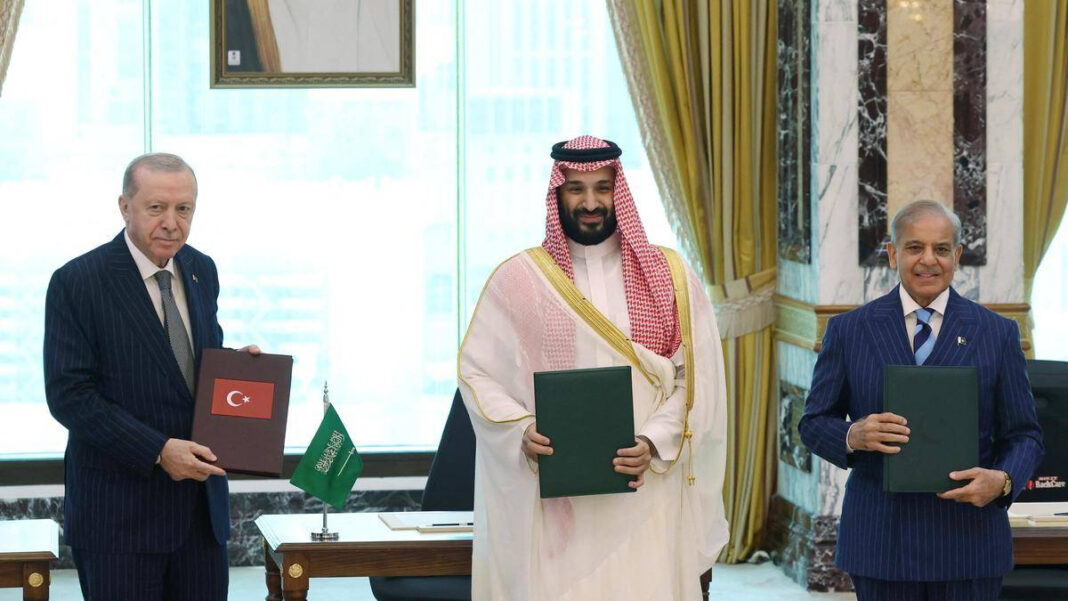
In a significant move to bolster regional security, defense officials from Saudi Arabia, Pakistan, and Turkiye have convened to address the increasing threat posed by Houthi attacks in the Arabian Peninsula. This collaboration emphasizes a united front among these nations, highlighting their commitment to stability and security in the region.
Background
The Houthi movement, based in Yemen, has been launching drone and missile attacks against Saudi Arabia, aiming to disrupt the Kingdom’s infrastructure and create political unrest. These actions have not only threatened the security of Saudi Arabia but have also raised alarms across the region, prompting a need for a collective response.
Strategic Collaboration
The recent meetings between defense officials from the three nations have underscored their determination to enhance military cooperation and information sharing. This collaboration aims to develop strategies that could effectively counter Houthi threats and safeguard critical infrastructures.
The discussions revolved around various potential joint military exercises, regular intelligence exchanges, and logistical support to strengthen defense capabilities. The delegates expressed a unanimous commitment to instill a sense of security in the region, ensuring that traditional threats are met with decisive action.
Pakistan’s Role
Pakistan, with its historical ties to Saudi Arabia and its growing military capabilities, stands ready to lend significant support. The nation has experience in counter-terrorism operations and a robust defense apparatus that can assist in training and equipping forces. This evolving partnership reflects Pakistan’s commitment to maintaining peace and stability in the Middle East while enhancing its strategic alliances.
Turkiye’s Contribution
Turkiye’s role has become increasingly vital in regional defense partnerships, given its advanced military technology and experience in combat operations. The Turkish defense industry has made substantial strides, producing sophisticated drones and weaponry. Turkiye’s commitment to providing Saudi Arabia with the necessary equipment and technology will bolster its defense capabilities against external threats.
Regional Implications
The tripartite alliance has broader implications for the Middle East’s geopolitical landscape. By together addressing security issues, these nations are sending a clear message to hostile entities that attempts to destabilize the region will not be tolerated. This collaboration also serves as a deterrent against further aggressions not only from the Houthis but from other hostile actors in the region.
Furthermore, this alliance reflects a growing trend of cooperation among Muslim-majority countries, promoting solidarity in the face of emerging threats. The successful implementation of strategic defense initiatives can pave the way for newer alliances and collaborative efforts on various fronts, including economic cooperation and cultural exchanges.
Conclusion
As Saudi Arabia, Pakistan, and Turkiye unite to confront Houthi aggression, their renewed commitment to mutual defense resonates globally. The cooperation underscores a pivotal shift toward more collaborative security arrangements in a region fraught with conflict. The developments signal optimism for stability in the Middle East and the potential for a united approach to addressing common security challenges.
As they move forward with their defense strategies, the world will be watching closely to see how these nations solidify their commitments to each other and their ability to create a lasting peace in the face of adversity.