 "
/>
"
/>

Iran’s President Highlights Terrorism in Rare Wartime Address to the United Nations
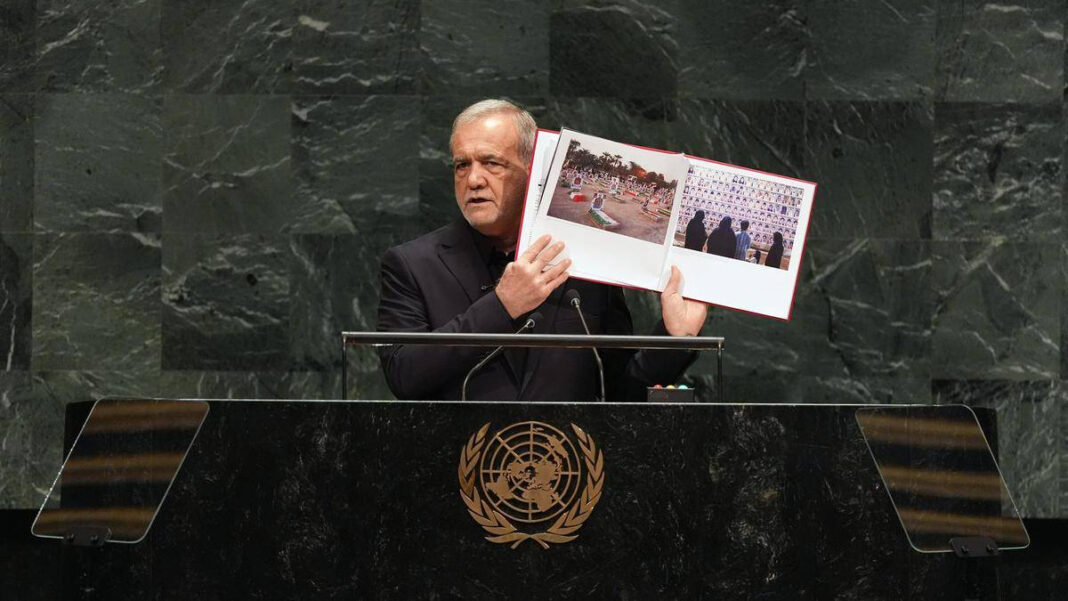
In a landmark address to the United Nations, Iranian President Ebrahim Raisi articulated a deeply emotional and politically charged narrative, asserting that Iran has been a victim of terrorism. This speech, delivered amid intensified regional conflicts and global tensions, marks a significant moment in Iran’s diplomatic efforts to reframe its image on the world stage.
Context of the Address
President Raisi’s speech comes at a time of heightened conflict within the Middle East, particularly following recent escalations involving regional adversaries. The Iranian government has long maintained that it faces external threats from terrorist groups and hostile nations. By positioning Iran as a victim of terrorism, Raisi seeks not only to garner international sympathy but also to bolster domestic support against perceived aggressions.
Key Themes in Raisi’s Speech
-
Victimhood Narrative: Raisi stressed that Iran has experienced significant losses due to terrorist activities, underscoring examples such as the assassination of Iranian military leaders and attacks on civilians. By framing these incidents as acts of terror, he aims to shift the global narrative away from Iran’s contentious geopolitical maneuvers toward a story of susceptibility and suffering.
-
Condemnation of International Terrorism: The President condemned all forms of terrorism, linking external interference in Iranian affairs to broader patterns of violence seen in other nations, particularly those influenced by Western powers. He called for a united international stance against terrorism, underscoring that attacks against any nation ultimately threaten the global community.
-
Regional Stability and Security: Raisi emphasized Iran’s role in the fight against terrorism within the region, asserting that Iran has been instrumental in combatting groups like ISIS. He argued that international cooperation is essential for ensuring regional stability and security, subtly advocating for greater respect for Iran’s role in the complex geopolitical landscape.
- Critique of Western Policies: In a pointed critique of the United States and its allies, Raisi highlighted how foreign interventions have exacerbated regional conflicts rather than alleviating them. He asserted that the imposition of sanctions and military actions have often led to increased instability and suffering, contributing to the rise of extremist groups.
Impact and Implications
Raisi’s address to the UN represents a strategic move to reshape Iran’s international perception, particularly amidst growing global scrutiny due to its nuclear ambitions and regional posturing. By framing Iran’s narrative around victimhood, he aims to cultivate a more favorable stance among countries that might sympathize with its plight.
This approach is likely to resonate with various factions both domestically and globally—appealing to nationalistic sentiments at home while trying to rally support from nations sensitive to issues of sovereignty and anti-terrorism narrative.
Moreover, Raisi’s remarks could further polarize discussions at the UN and within international diplomatic circles, as Iran’s definition of terrorism often contrasts sharply with those of Western powers. The call for a united front against terrorism could either foster dialogue or lead to increased contention depending on how nations respond to Iran’s self-portrayal.
Conclusion
President Raisi’s rare wartime address to the United Nations encapsulates a critical moment in Iran’s attempts to navigate a complex international landscape. By articulating an agenda focused on its experiences with terrorism, Iran seeks to reposition itself as a victim deserving of empathy and support. As the geopolitical climate continues to evolve, how the global community reacts to such narratives will be pivotal in shaping the future of Iran’s diplomatic relations.