
By The Sampadak Express
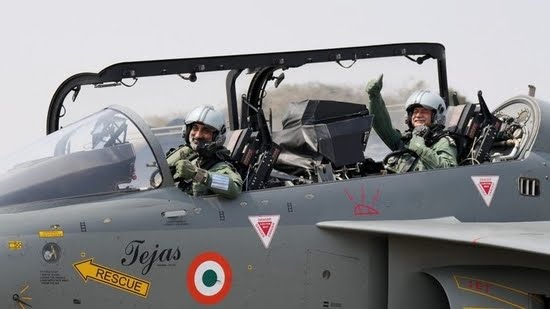
Amid growing anxiety over India-US trade tariffs, significant progress is being made in the defence sector, particularly concerning the supply of aircraft engines. General Electric (GE), the US-based aircraft engine giant, is set to deliver the first of the 99 F-404 engines to Hindustan Aeronautics Limited (HAL) by the end of this month, after a delay of two years. This long-awaited delivery is a critical step forward in the production of Tejas Mark 1-A fighters, a project that has seen delays raising concerns within the Indian Air Force (IAF) over the timely readiness of the aircraft.
The F-404 engines, which power the Tejas MK 1A, are integral to the IAF’s plans to modernize its fleet with indigenously developed fighter jets. The delay in the engine’s delivery has caused significant concern, particularly as the IAF has voiced frustration over the slow pace of production. However, according to two officials familiar with the matter, the first of the contracted engines has already undergone testing and is expected to be delivered to HAL by the end of March.
Under the contract signed in 2021, GE is committed to delivering a total of 99 F-404 engines, valued at approximately USD 716 million. The expected delivery schedule for the engines includes 12 units in 2025, followed by 20 engines annually to meet the contract’s requirements. This contract marks a critical component of India’s efforts to enhance its air combat capabilities with the Tejas fighter jet program.
In parallel with this development, HAL, despite being a public sector entity, is actively collaborating with GE to manufacture the more powerful GE-414 engines in India. This collaboration is part of a broader initiative under the iCET (Initiative on Critical and Emerging Technologies), an agreement between India and the US National Security Advisors. The GE-414 engine will power the advanced multi-role combat aircraft (AMCA), a fifth-generation fighter jet being developed by the Defence Research and Development Organisation (DRDO). This transfer of technology is a key element in India’s long-term strategy to achieve self-reliance in defence production.
The delays in the delivery of the Tejas MK 1A aircraft, which are being produced by HAL, have been a source of frustration for the IAF. The IAF Chief himself has expressed concerns about the slow pace of production, further amplifying the urgency to resolve the matter. In response to these challenges, the Ministry of Defence, under the leadership of Defence Secretary R. K. Singh, has set up a committee to explore potential business models for the development of the AMCA. This committee will focus on finding a way to incorporate private sector participation in the fifth-generation fighter jet program, without delving into the technical aspects of the AMCA itself.
The move aims to ensure that India has additional options for fighter jet production beyond HAL, addressing the country’s future national security needs. The committee’s formation underscores the growing recognition of the need to diversify India’s defence manufacturing capabilities and reduce dependency on state-run entities for critical defence equipment.
While the US has made an offer to supply India with the F-35 fighter, a proven fifth-generation aircraft, India is also exploring alternatives. The French option, which includes the potential production of Rafale fighter jets and the M-88 engine in India, is being considered under the Aatmanirbhar Bharat (self-reliant India) initiative. This approach emphasizes domestic manufacturing and aims to bolster India’s defence capabilities while reducing reliance on foreign suppliers.
The developments in both the engine supply for Tejas and the ongoing discussions about the fifth-generation fighter jet demonstrate the growing strategic partnership between India and the United States, while also highlighting India’s ambition to strengthen its indigenous defence industry. As the country moves forward with these projects, the balance between foreign collaboration and self-reliance will continue to shape the future of India’s defence sector.