
By The Sampadak Express
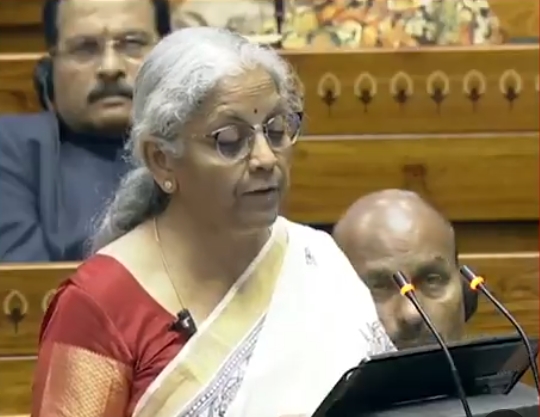
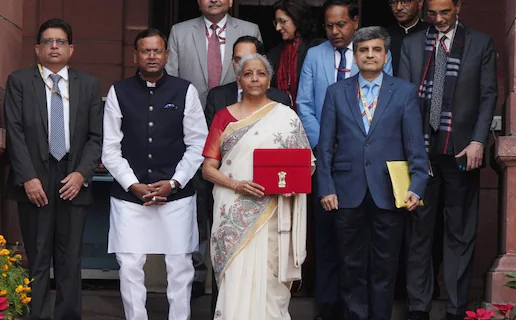
In a significant move to ease the financial burden on the middle class, Union Finance Minister Nirmala Sitharaman announced on Saturday that no income tax would be payable for individuals earning up to ₹12 lakh, or ₹12.75 lakh including standard deductions, under the new tax regime as part of the Union Budget 2025. The announcement was met with enthusiastic applause and cheers from BJP MPs, including Prime Minister Narendra Modi, as Sitharaman presented the details of the budget in Parliament.
This major tax relief aims to benefit a wide range of taxpayers and reduce the overall tax burden on the middle class, enabling them to have more disposable income. Alongside this relief, Sitharaman introduced a revision of tax slabs under the new regime, which applies to individual income earners.
Revised Tax Slabs Under the New Regime
Under the revised structure, tax rates have been adjusted to provide significant savings across income brackets:
Income up to ₹4 lakh: No tax
Income between ₹4 lakh and ₹8 lakh: Tax at 5%
Income between ₹8 lakh and ₹12 lakh: Tax at 10%
Income between ₹12 lakh and ₹16 lakh: Tax at 15%
Income between ₹16 lakh and ₹20 lakh: Tax at 20%
Income between ₹20 lakh and ₹24 lakh: Tax at 25%
Income above ₹24 lakh: Tax at 30%
This progressive tax structure is designed to reduce the financial strain on middle-income earners while ensuring higher income earners contribute more towards the nation’s revenue. The Finance Minister stated that these changes will help reduce the tax burden significantly for the middle class and increase household consumption, savings, and investments, ultimately boosting the economy.
Further Tax Relief for Senior Citizens and Other Amendments
In addition to the income tax revisions, Sitharaman also announced some key changes to tax provisions that will benefit senior citizens and enhance tax compliance:
The Tax Deducted at Source (TDS) rates will be rationalized to ease compliance for individuals.
The tax deduction limit for senior citizens will be doubled to ₹1 lakh, providing greater financial relief to elderly taxpayers.
The deadline for filing updated tax returns will be extended from the current deadline to four years, giving taxpayers more time to make amendments.
These measures are part of the government’s ongoing efforts to streamline the tax system and provide more financial support to vulnerable sections of society.
A New Direct Tax Code for Simplified Compliance
A major highlight of the Union Budget 2025 is the announcement of a New Direct Tax Code, which is set to be introduced next week. This new code aims to simplify the tax filing process, reduce compliance burdens, and make tax laws more accessible and user-friendly for individual taxpayers. Sitharaman had earlier hinted at this reform in the July 2024 Budget presentation, emphasizing the need to reduce the complexity of the existing Income Tax Act, which dates back to 1961.
The new tax code is expected to make substantial changes, including:
Scrapping the concepts of financial year (FY) and assessment year (AY), which often led to confusion among taxpayers.Taxing income from life insurance policies (currently not taxed under the 1961 law) at a possible rate of 5%.Standardizing the tax rate on dividend income at 15%, instead of the current system where it is taxed according to the individual’s income slab.
Importantly, the new code will not offer an option between the old and new tax regimes, making it a more straightforward approach for taxpayers.
Key Differences from the 1961 Income Tax Act
The existing Income Tax Act, which has been in place since 1961, contains 23 chapters and 298 sections, covering personal and corporate taxes, taxes on securities transactions, gifts, and wealth. The new direct tax code is expected to simplify the laws by reducing the volume of regulations and ensuring clarity in tax obligations.
One of the biggest anticipated changes is the removal of complex classifications like financial year and assessment year. This is likely to resolve confusion that has long existed in the filing process.
In conclusion, the government’s reform measures aim to create a more transparent and equitable tax system, particularly benefiting the middle class and senior citizens. With these adjustments, the Union Budget 2025 is poised to stimulate the economy by encouraging greater spending and saving, while also simplifying compliance for taxpayers across the country.