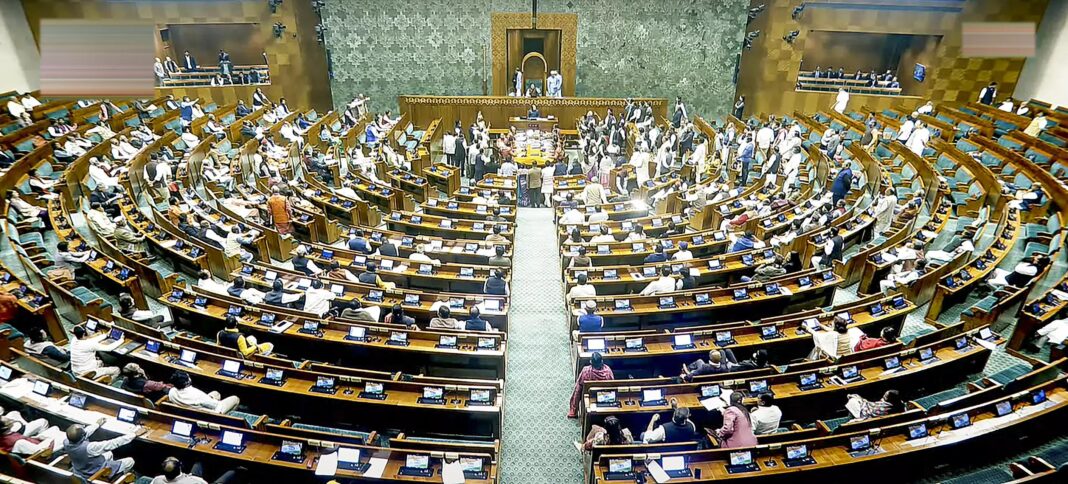

The Union Cabinet has approved two crucial bills aimed at implementing the “One Nation, One Election” plan, which seeks to hold simultaneous elections for the Lok Sabha and state assemblies. If passed in Parliament without amendments, this initiative could be rolled out as early as 2034, marking a significant change in India’s electoral landscape.
Timeline for Implementation
Under the current plan, if the bills pass in the Winter Session of Parliament, the first possible simultaneous elections would take place in 2034. The bills, based on recommendations from a high-level committee led by former President Ram Nath Kovind, align the terms of state assemblies with the Lok Sabha’s full five-year tenure.
The committee’s report specifies that the President of India would announce an “appointed date” during the first sitting of the Lok Sabha following a general election. This date would trigger adjustments in the terms of state assemblies, ensuring their elections occur in sync with the Lok Sabha elections.
Importantly, the “appointed date” would be declared during the first sitting of the Lok Sabha elected in 2029. With the current Lok Sabha’s term ending in 2024, the earliest window for implementation is 2034. State assembly elections held after this date would have their terms adjusted to align with the Lok Sabha’s cycle.
Electoral Logistics and Challenges
The Election Commission of India (ECI) will be pivotal in implementing this ambitious initiative. A senior official emphasized that securing political consensus and passing the bills is just the first step—significant logistical challenges remain. One of the primary hurdles will be the need for a massive increase in Electronic Voting Machines (EVMs) to facilitate simultaneous voting for both the Lok Sabha and state assemblies.
The ECI has estimated that it would take two-and-a-half to three years to procure and deploy the required number of EVMs. Key components such as chips would take seven to eight months to procure, and manufacturers like ECIL and BEL will need to scale up production to meet the demand.
Tight Timeline Ahead
Even if the One Nation, One Election bills are passed by late 2025 or early 2026, the ECI will face a narrow window to complete all logistical preparations for simultaneous elections in 2029. Officials have warned that the timeline is extremely tight, requiring robust planning and implementation in a short span of time.
In conclusion, the Union Cabinet’s approval of the One Nation, One Election bills marks the beginning of a transformative shift in India’s electoral process. However, successful implementation will depend on political will, logistical readiness, and overcoming significant challenges in the years ahead.