
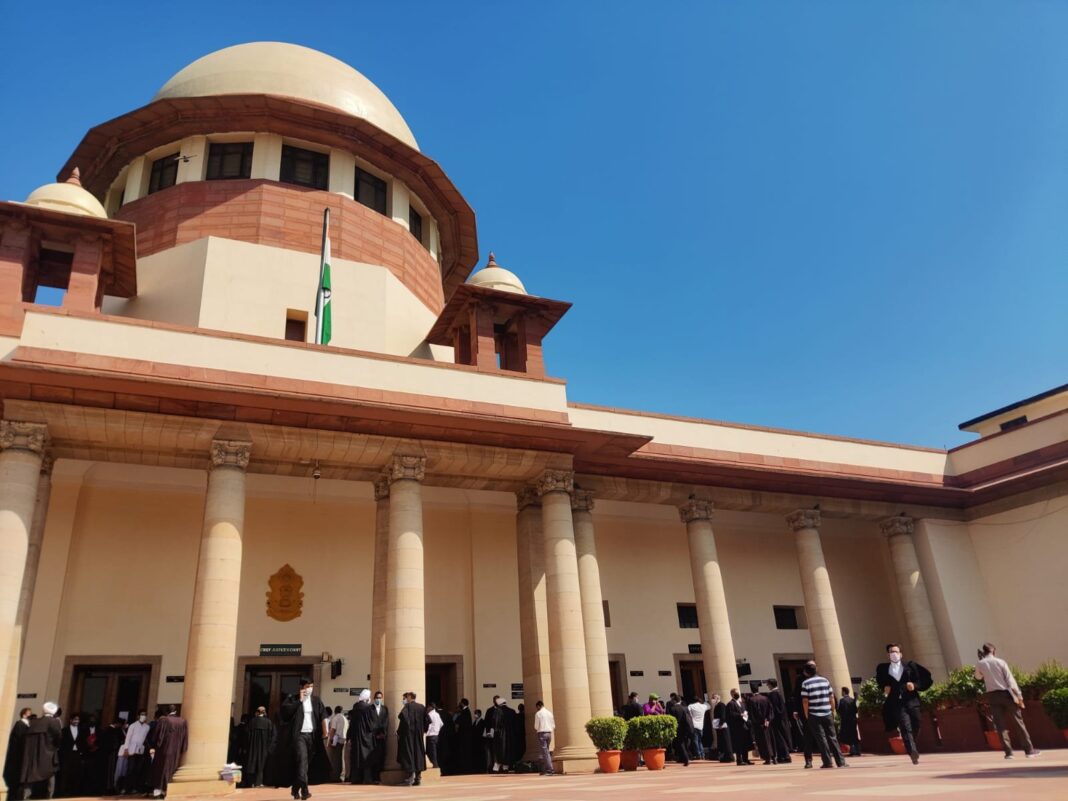

The Supreme Court of India on Thursday emphasized that judges should avoid flamboyance and live modestly, while performing their duties with utmost diligence. The court’s remarks came during a suo motu case concerning the termination of two women judicial officers by the Madhya Pradesh High Court.
A bench led by Justice BV Nagarathna was hearing the case when it came across a Facebook post made by one of the terminated officers, Aditi Kumar Sharma, where she shared her experience in court. The bench responded sternly, stating, “A judge has to live like a hermit and work like a horse. So many sacrifices a judicial officer has to make. There is no place for flamboyance for a judge.”
The case centers on the termination of two civil judges, Aditi Kumar Sharma and Sarita Chaudhary, who joined the Madhya Pradesh judicial service in 2018 and 2017, respectively. In 2023, six women judicial officers were dismissed. While the Supreme Court prompted the Madhya Pradesh High Court to reconsider its decision, the court reinstated four of the officers but upheld the termination of Sharma and Chaudhary, placing adverse remarks against them in a sealed cover before the top court.
The bench also advised that judicial officers must refrain from using social media, stressing that public platforms like Facebook can jeopardize the integrity of the judiciary. Senior advocate R. Basant, a former high court judge, supported this stance, saying judges should be willing to stay off social media, adding that those unwilling to do so should reconsider joining judicial service.“
Judges should not comment on judgments on social media,” the bench added, emphasizing that such platforms are open forums and could undermine judicial independence. It further stated that judicial officers must exercise restraint, underscoring the importance of judicial ethics.
However, Basant noted that Sarita Chaudhary had not been formally instructed to avoid Facebook, and he argued that her post did not breach any propriety. Senior advocate Gaurav Agarwal, assisting the court as amicus curiae, pointed out that the two officers had been rated highly for their performance until 2019, with their ratings dropping thereafter due to concerns about low case disposal rates.
Records submitted by the Madhya Pradesh High Court showed that while Sharma had earned “very good” and “good” performance ratings in 2019 and 2020, her performance declined in 2021 and 2022, with her case disposal rate remaining low. Sharma, who had suffered a miscarriage and learned of her brother’s cancer diagnosis, explained that these personal challenges contributed to her performance issues.
Sharma’s counsel, senior advocate Indira Jaising, argued that her termination was arbitrary and motivated by personal and professional rivalries. She called for her reinstatement with back wages and seniority.
The bench observed that the criteria for assessing judicial officers should apply equally to male and female judges, especially when discussing targets for case disposal in the district judiciary.
The case also highlighted procedural concerns, with Agarwal noting that the adverse remarks against Chaudhary were communicated to her only after her termination, denying her an opportunity to defend herself. The court agreed to continue hearing arguments on the matter.
The ongoing proceedings underscore the delicate balance between judicial independence, ethical conduct, and the professional responsibilities of judicial officers.